
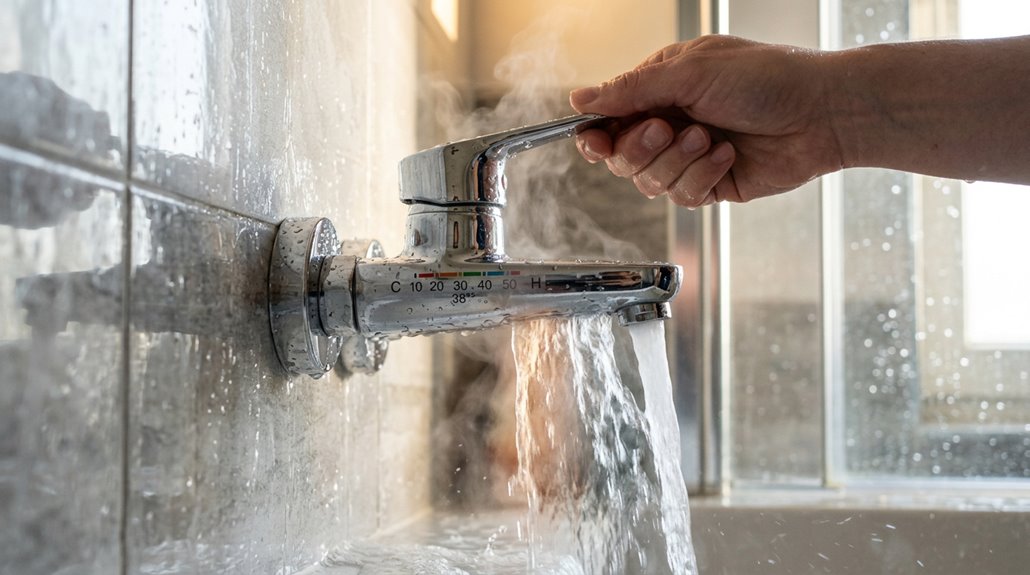
When you move that lever, you’re not actually setting a temperature; you’re shifting how hard hot and cold water push against each other inside the valve. Move it left, cold pressure wins; move it right, hot pressure dominates. Your shower can still scald you even when the handle points toward cold, because it’s all about pressure balance, not actual temperature. A mechanical stopper prevents dangerous extremes.
If you want to understand why your shower temperature swings wildly when someone flushes the toilet, consider that significant pressure changes occur behind the wall as other fixtures draw water from the same supply line.
The Basic Principle: Hot and Cold Water Mixing
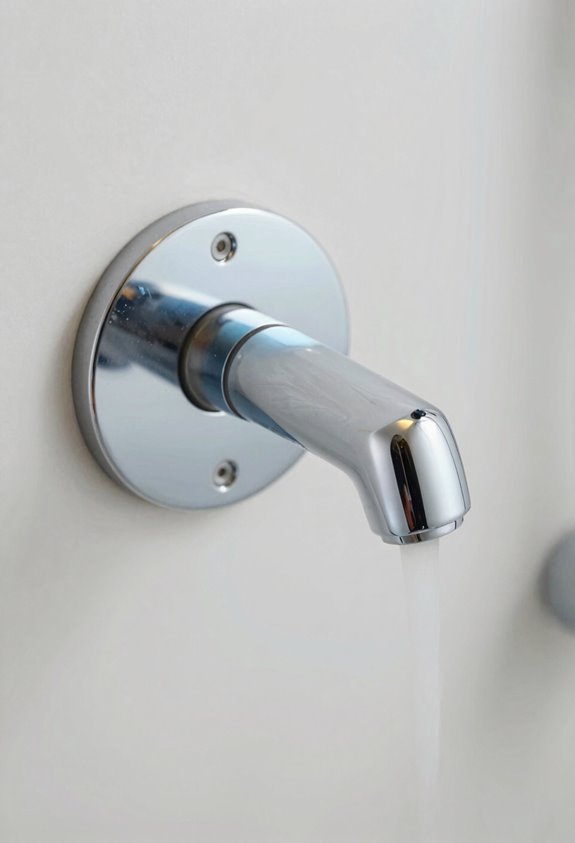
Think of your shower faucet like a traffic cop directing two streams of water toward the same intersection. This is what’s happening behind your bathroom wall. When you adjust that lever, you’re not actually changing the water’s temperature directly. Instead, you’re controlling how much hot water and cold water blend together. A pressure balancing valve does the real work here, managing the ratio of hot-to-cold water to reach that sweet spot where you won’t yelp in shock. The valve responds to water pressure rather than sensing actual temperature. This means extreme lever positions can still catch you off guard with scorching water if the hot side’s pushing harder. You’re orchestrating a water dance. Shift the lever one way, more hot water joins the mix; shift it the other, cold water takes over.
How a Single-Control Lever Adjusts Temperature
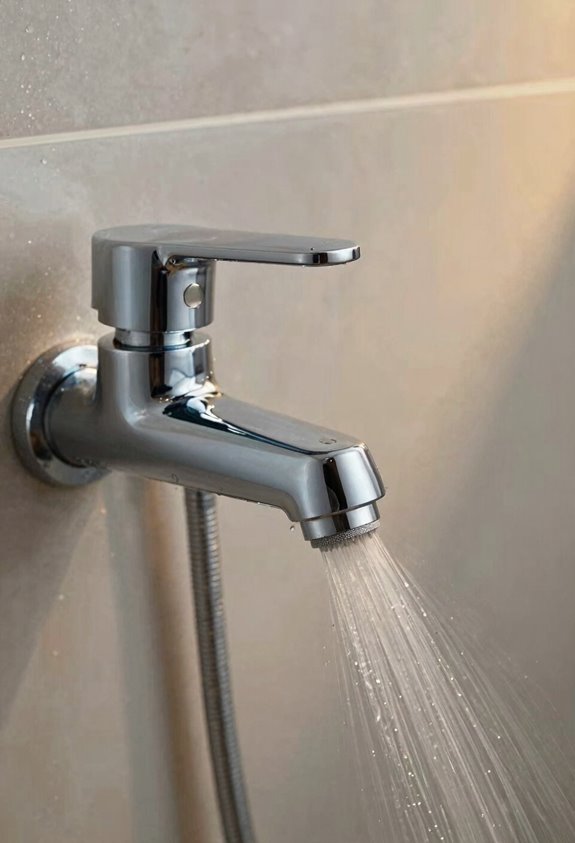
The single lever you’ve been twisting around is simpler than you’d think, and demonstrates elegant design in its simplicity.
When you move that lever, you’re not actually changing the water’s temperature directly. Instead, you’re adjusting the pressure balancing between hot and cold water supplies. Think of it like a seesaw: push the lever one way, more hot pressure comes through; push it the other way, cold dominates.
| Lever Position | Hot Pressure | Cold Pressure |
|---|---|---|
| Far Left | Low | High |
| Center | Balanced | Balanced |
| Far Right | High | Low |
The valve mechanically shifts these pressures until you’ve got the mix you want. No thermometer involved, just physics working to help you find that perfect shower temperature.
Why Your Lever Position Doesn’t Equal Actual Temperature
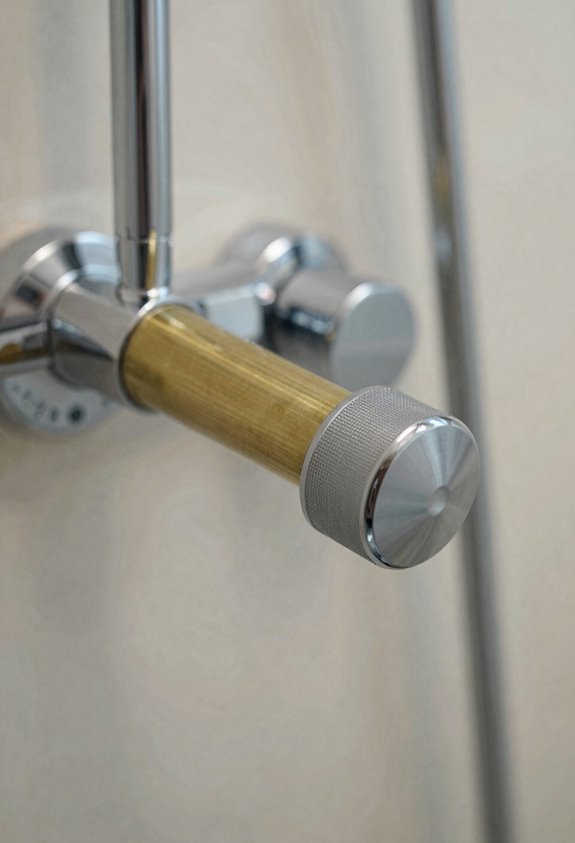
When you move that lever, you’re not actually telling your shower what temperature you want. You’re shifting the balance between hot and cold water pressure, which is fundamentally different from what most people assume. Your lever position doesn’t equal your actual water temperature because the valve is playing a pressure-balancing game, not actually sensing or controlling how hot the water really is. You can move that lever all the way toward the hot side and still end up scalded, even though it feels like you’ve got it figured out. This mechanical limitation is the core reason some showers are wildly unpredictable no matter how carefully you adjust them.
Pressure Ratio, Not Temperature
What’s really wild is that when you move your shower lever, you’re not actually telling the valve what temperature you want. You’re just shifting the balance between hot and cold water flowing in. Your valve cares way more about pressure ratio, that’s just the proportion of hot water versus cold water, than actual temperature.
Mechanical Balance Limitations
The problem with your shower lever is that it’s basically just a mechanical dumb switch. It doesn’t actually know what temperature you want, which means your lever position doesn’t reliably equal any specific temperature you’re trying to dial in.
- Supply pressure constantly shifts, so the same lever spot produces different temps depending on whether someone’s using the kitchen sink
- There’s no actual thermometer inside measuring anything. Just mechanical parts balancing pressure, which is far less precise than your brain expects
- A mechanical stopper limits how far the lever moves, but that doesn’t prevent dangerously hot water if pressure conditions suddenly change
Your shower valve can’t think, can’t sense, and can’t adjust on the fly. It just sits there mechanically reacting to whatever pressures hit it. You’re fighting physics itself.
Pressure-Balancing Valves: Safe but Imprecise
I’ve got to be candid. Pressure-balancing valves sound safer than they actually are, because they’re not really controlling temperature at all, just juggling the pressure of hot and cold water coming into your shower. When you move that lever toward hot, you’re changing how hard each water source pushes against the valve, which can sneakily spike your temperature way beyond what feels safe, even though your hand position looks identical to moments before. The valve’s got a mechanical stop, basically a physical barrier to prevent scalding, but it’s not a thermostat actually measuring degrees. Under certain conditions like when water pressure shifts in your building, you might still get blasted with dangerously hot water without warning.
How Pressure Balancing Works
How pressure-balancing valves work involves a clever mechanical approach. Rather than reading temperature like a smart thermostat, they maintain equal pressure between hot and cold water supplies. This prevents sudden temperature fluctuations.
- Your handle adjusts the hot-to-cold water ratio, which indirectly changes outlet temperature
- The valve maintains equal pressure between both supplies, preventing sudden temperature shocks
- A mechanical stopper sets the maximum temperature with no thermostat involved
When you move that lever toward hot, you’re not commanding heat directly. Instead, you’re shifting how much hot versus cold water gets mixed together. The pressure-balancing valve monitors both supplies to ensure neither overpowers the other, which provides reliable temperature control and safety.
Temperature Control Limitations
While pressure-balancing valves do a solid job keeping you from getting scalded by sudden temperature swings, they have a significant limitation: they can’t actually feel the water temperature like you can. These valves adjust pressure, not actual heat. You move that lever left, thinking you’re getting cooler water, but there’s no thermostat reading what’s happening. A mechanical stopper sets the maximum temperature to prevent burns, yet you’re basically guessing at the sweet spot. Your ideal temperature today might feel totally different tomorrow, creating annoying temperature control limitations. You’re essentially mixing hot and cold pressure rather than dialing in one specific, consistent temperature. It’s safe, but precise control is not achievable with this system.
Safety Concerns With Levers
Pressure-balancing valves are effective safety devices, but they have a significant limitation: the lever position does not indicate actual water temperature.
Consider these key points:
- The valve balances water pressure, not actual heat, so the extreme left position can still deliver scalding water.
- A mechanical stopper sets the maximum temperature, but you cannot fine-tune it precisely for different showers.
- Temperature control is limited because the system contains no thermometer to measure actual water temperature.
Thermostatic Valves: Precise Temperature Control
Ever notice how some showers keep that perfect warmth no matter what, even when someone flushes the toilet or turns on the kitchen sink. That’s a thermostatic valve at work.
A thermostatic valve senses the incoming water temperature directly, then automatically adjusts the hot-cold mix to maintain exactly what you’ve set. Inside, there’s usually a wax insert or similar temperature-sensing element that responds to heat changes instantly, with no lag and no sudden shocks.
You can dial in your ideal temperature with a dedicated handle, then adjust flow separately without affecting that perfect setting. It’s independent control, which means you won’t need constant readjustment while showering.
Why Does Pressure Spike When You Turn Up the Heat?
Have you ever cranked your shower handle toward the hot side and felt a sudden blast of scalding water that nearly knocked you back. That happens because pressure-balancing valves don’t actually measure temperature like a thermostat does. Instead, they work by managing water pressure, and when you adjust the lever, things get tricky:
- Turning the handle increases hot-water pressure while decreasing cold-water pressure
- If hot water demand spikes elsewhere in your home, the pressure imbalance grows worse
- Your valve can’t sense the temperature spike fast enough to compensate
How Temperature Limit Stops Keep You From Scalding Yourself
What’s actually stopping that handle from turning all the way to scalding-hot when you’re reaching for the shower? Temperature limit stops are mechanical gatekeepers that live inside your faucet, basically saying “nope, you’re not going there.” They work by restricting how far the internal valve can rotate toward the hot side, which sounds fancy but really just means they physically block your handle from going too far. Think of them like training wheels for your shower. You can adjust where that limit sits, usually by removing your handle and twisting a small stop piece. These devices don’t actually measure temperature; they just prevent the hot-to-cold balance from getting dangerously unbalanced. Most are set around 120°F, that sweet spot where you get hot showers without turning yourself into a lobster.
How to Dial In Your Shower’s Hottest Temperature
Now that you know temperature limit stops are basically your shower’s bouncers, keeping the scalding heat at bay, those stops aren’t actually measuring anything. They’re just physical blockers. So if you want your shower dialed in perfectly, you’ve gotta do some detective work yourself.
Here’s how to tackle it:
- Locate your valve’s limit stop (usually a small screw or rotating collar on the handle stem)
- Adjust it slightly, then test with a thermometer to check the actual temperature
- Fine-tune incrementally until you hit that sweet spot around 110–120°F
Taking ten minutes to get this right means safer showers forever. You’re basically customizing your own safety net.
Why Your Shower Temperature Fluctuates (And What Each Cause Means)
Ever wonder why your shower feels like a sauna one second and an ice bath the next. It’s frustrating, and the cause is straightforward: your pressure-balancing valve responds to supply pressure changes, not actual temperature. When someone flushes a toilet or starts the washing machine elsewhere in your home, water pressure shifts. If hot-water pressure drops while cold-water pressure rises (or vice versa), temperature swings wildly. Your lever’s adjusting the hot-to-cold mix, but it can’t predict these pressure fluctuations. That’s where thermostatic valves come in handy. Unlike standard valves, they actually sense outlet temperature and adjust automatically, keeping things consistent. No more temperature surprises. A thermostatic valve uses actual temperature sensing rather than relying on pressure ratios to maintain stable water temperature.
Should You Upgrade to a Thermostatic Valve?
If you’re tired of temperature fluctuations every time someone flushes a toilet or starts the dishwasher, a thermostatic valve might be worth the investment. Unlike older valves that only balance pressure, thermostatic valves lock in your desired temperature. While they cost more upfront and require professional installation, the safety benefits are significant. These valves prevent sudden scalding water from reaching you, and you’ll eliminate the need to constantly readjust your shower temperature.
Pressure-Balancing vs. Thermostatic
What’s the difference between the two main types of shower valves, and why should you care?
Pressure-balancing and thermostatic valves work in fundamentally different ways. Pressure-balancing valves work by adjusting water pressure, not actual temperature. Think of it like this:
- They change the hot-to-cold ratio based on lever position rather than sensing real heat
- They can still let dangerously hot water through if you move the lever too far
- A mechanical limiter sets the maximum temperature, not true heat control
Thermostatic valves operate differently. They actually sense water temperature directly using wax inserts, maintaining your perfect setpoint. You get independent flow control without messing with temperature. They cost more and might need professional installation, but they provide superior safety and precision. With thermostatic valves, you maintain consistent water temperature even when incoming water pressure or supply temperature fluctuates, preventing sudden scalding.
Safety And Temperature Control
The difference between a scalding accident and a comfortable shower comes down to how much control you actually have over your water temperature. Thermostatic valves provide superior temperature regulation compared to pressure-balancing systems, which only juggle hot and cold pressure. A thermostatic valve senses your water’s temperature using wax inserts or built-in thermostats. You set a safe maximum, usually 120°F to prevent burns, then adjust flow separately. This design maintains consistent temperature even when someone flushes a toilet elsewhere in the home. The higher cost and need for professional installation are offset by the improved burn prevention and temperature stability these valves provide.
Cost-Benefit Analysis For Upgrades
So, should you actually spend the extra money on a thermostatic valve? What to consider:
- Upfront costs are higher – You’re looking at more cash initially, plus professional installation since wall work’s involved
- Long-term comfort wins – Your shower stays perfectly warm regardless of pressure fluctuations elsewhere in your home
- Water savings potential – You can adjust flow independently while soaping without losing temperature stability
Thermostatic valves aren’t cheap. However, if you’re tired of temperature swings or you’ve got multiple shower heads fighting for consistency, they’re worth the investment. The primary benefit is eliminating temperature fluctuations and gaining direct control over your shower experience, which justifies the higher upfront cost for most households.