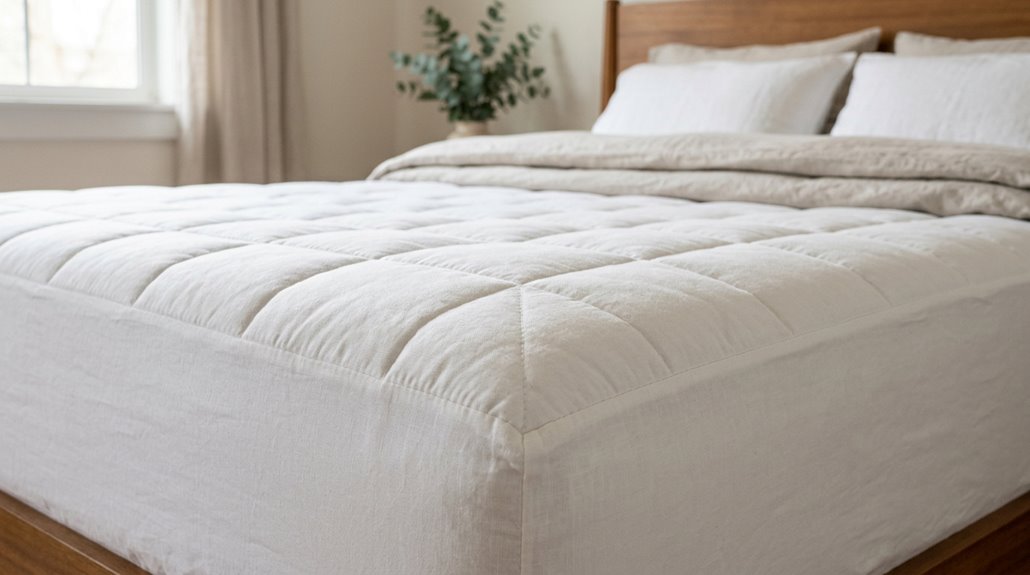
Most mattress pads last one to three years with regular use. The lifespan depends on ten factors working together: your pad’s material (natural fibers outperform synthetics), how often you sleep on it, your weight, and your sleep position (side sleepers create indents).
Additional factors include maintenance practices such as washing method, whether you rotate it monthly, and your bedroom’s humidity level. By addressing these basics properly, you could extend the lifespan to five years, reducing replacement frequency.
How Long Mattress Pads Actually Last
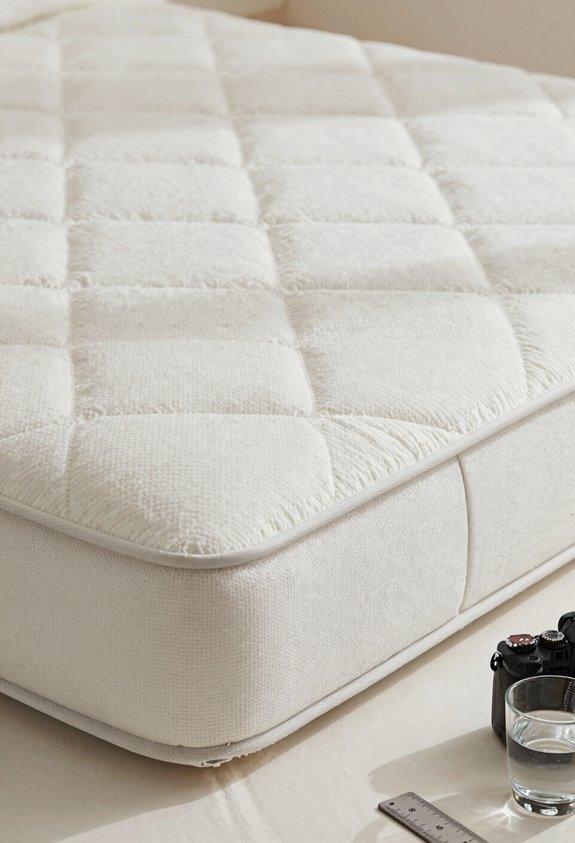
Ever wonder why your mattress pad suddenly feels like sleeping on a bag of rocks?
Mattress pad longevity really depends on how you use it. Basic pads show wear around 12–18 months with daily use, while higher-quality ones stretch closer to three years. Guest bed pads can hang on for 4–5 years since they get occasional use instead.
Extending your pad’s lifespan involves fabric quality, regular washing, and smart care and protection. Machine washing speeds up wear and tear. Spot-cleaning or dry-cleaning according to instructions keeps pads fresher longer.
Watch for replacement indicators: persistent lumpiness, visible thinning, stubborn odors, or allergen buildup that cleaning won’t fix. These signs indicate it’s time for something new.

SAFEGUARD YOUR INVESTMENT: Keep your expensive mattress in pristine condition with our Premium Full Bamboo Mattress Protector. Our ultra-soft mattress cover protects from dirt, water and normal wear & tear, so it stays clean and comfortable.
SAFEGUARD YOUR INVESTMENT: Keep your expensive mattress in pristine condition with our Premium King Bamboo Mattress Protector. Our ultra-soft mattress cover protects from dirt, water and normal wear & tear, so it stays clean and comfortable.

ULTRA SOFT: Niagara Queen Mattress Topper is made from rayon derived from bamboo fiber and fits mattresses 8-20 inches deep. The mattress topper queen is 60x80 inches in size, gentle on sensitive skin, and ultra-soft.
Material Type: How Fiber Affects Durability
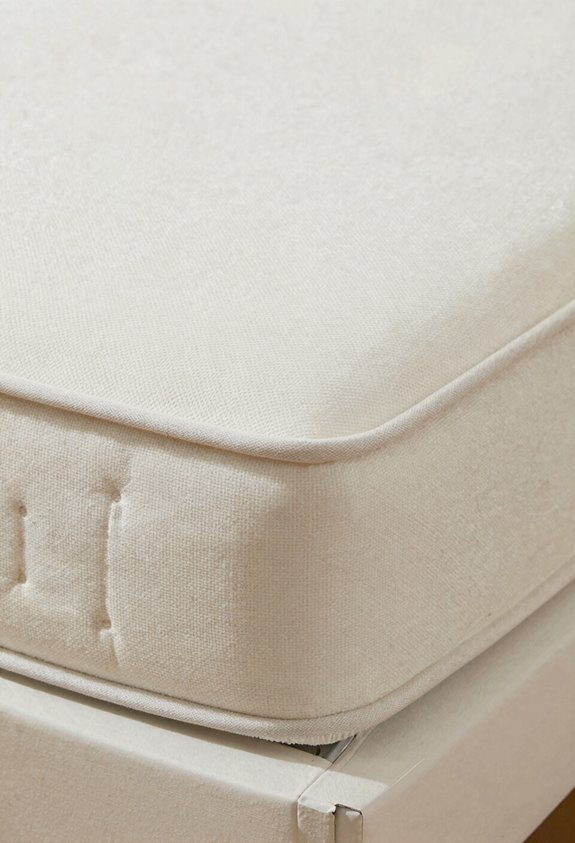
I’ve noticed that what your topper’s made of, whether it’s natural or synthetic stuff, how densely packed it is, and how well that material holds up over time, basically determines whether you’re replacing it in two years or getting a solid seven years out of it. Natural fibers like latex and wool tend to be tougher and more resilient because they bounce back better, while synthetic options and down fillings break down faster because they compress and lose their fluffiness quickly. Material composition directly impacts durability and cost-effectiveness when selecting a topper.

PREMIUM AUSTRALIAN MERINO WOOL : Experience unparalleled comfort with our wool mattress topper Queen, filled with Australian Merino wool. Known for its exceptional softness, this wool also excels in regulating temperature and wicking moisture.supportive sleep that enhances your nightly rest.

【100% Australian Wool – Natural Comfort】60x80 inches. Filled with 500GSM of pure Australian wool, this mattress topper adds a luxuriously soft cushioning layer while maintaining a slim profile. Enhances mattress comfort without altering its firmness—ideal for those who prefer gentle, cloud-like support.

【100% Australian Wool – Natural Comfort】60x80 inches. Selected 200gsm of premium Australian wool, this naturally thin layer adds just the right amount of delicate comfort to your mattress pad. It's lightweight and comfortable, allowing you to sleep peacefully in a soft embrace.
Synthetic Versus Natural Fibers
When you’re shopping for a mattress pad, what it’s actually made of significantly affects how long it will last. Natural fibers like wool are durable, lasting roughly 3–5+ years because of their resilient structure. Memory foam performs differently depending on density. Synthetic memory foam with lower density wears out faster, lasting 2–3 years, while denser versions last 3–5 years. Latex toppers are the most durable option, lasting 5–7 years depending on care. Pillow toppers filled with feather or synthetic materials compress at different rates; natural fills outperform synthetic ones. Gel-infused options fall in the middle range at 3–6 years. Choosing the right material directly impacts your pad’s lifespan.
Density Impact On Longevity
Pad longevity depends on how you actually use your pad. A heavy sleeper with daily wear will flatten even premium toppers quicker than lighter usage, so care and usage matter just as much as the material itself.
Material Breakdown And Wear
How your mattress pad actually holds up depends on what you’re sleeping on. Memory foam toppers last about 3–5 years, though cheaper options break down faster than premium choices. Latex toppers are the most durable, lasting 5–7 years, especially if you choose natural varieties. Down and feather toppers feel luxurious but only last 2–3 years before flattening out. Wool toppers sit somewhere in the middle at 3–5 years.
Foam density matters significantly. Higher-density foam resists wear better, while lower-density foam crumbles quicker. To extend your mattress pad’s lifespan, invest in quality materials and practice proper care. Protective covers make a measurable difference in durability.
Daily Use Frequency: Why Sleep Habits Matter
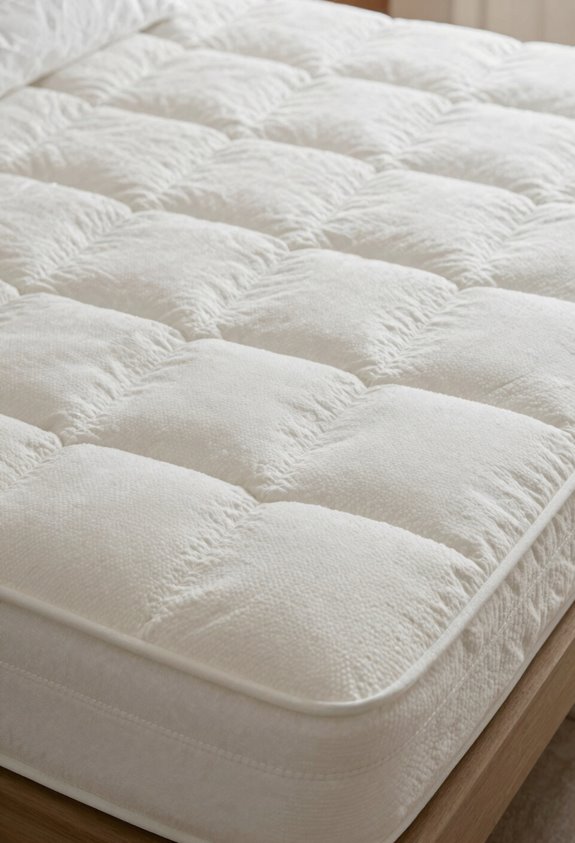
Your sleep habits significantly affect how long your mattress pad lasts. If you’re using that pad nightly, it will break down faster than expected. Regular daily use typically results in a lifespan of 1–3 years, while guest beds can easily last 4–5 years because they receive less frequent use.
The primary cause of faster wear is the combination of daily use plus washing cycles. Heavier sleepers typically notice their pads wearing out around 12–18 months, and lower-quality material accelerates this process. Higher-quality pads can reach 3 years if you treat them properly and use protection.

GEL MEMORY FOAM MATERIAL: Our memory foam mattress topper readily conforms to the curves and shape of your body, distributes weight evenly to alleviate pressure points for better sleep.

Ergonomic Body Contouring: Designed to adapt to your natural cues, this memory foam mattress topper evenly distributes body pressure and supports you in any sleep position—back, side, or stomach. Enjoy better alignment and deeper, more restful sleep every night
Cooling Gel Infused Memory Foam: Our memory foam mattress topper provides ergonomic pressure relief, helping alleviate back, neck, and shoulder pain. The flexible design perfectly contours to your body and is 100% compatible with a mattress without losing its shape
Body Weight and Sleep Position: Pressure’s Effect on Wear
When you lie on your mattress pad night after night, you’re asking it to handle whatever pressure your body applies. Not all bodies apply the same amount. Your body weight and sleep position are the biggest culprits behind wear and indentation. Side sleepers create localized compression in the hips and shoulders, leading to faster thinning. Heavier sleepers accelerate this damage considerably, causing permanent dents and sagging that reduce comfort and support.
| Factor | Impact on Lifespan |
|---|---|
| Heavy body weight | Significantly shortens lifespan |
| Side sleeping position | Creates localized indentation |
| Daily use + heavy sleeper | Severe compression stress |
| Even weight distribution | Extends mattress pad life |
| Robust density padding | Mitigates uneven wear |
You can mitigate this damage with even weight distribution and by choosing denser pads that resist pressure damage.

MAXIMUM ABSORBENCY - IMPROVIA Reusable Underpad is a revolutionary Incontinence Pad that provides faster and more effective fluid absorption. It is the only absorbent pad that wicks the fluid to the edges – serving as a barrier for 100% leakproof protection.

Maximum Absorbency & Fluid Control – Utopia Bedding reusable underpads are designed for optimal fluid absorption, quickly drawing moisture away from the surface and providing a dry surface for longer periods. Unlike other bed pads, it channels liquids towards the edges, helping prevent leaks and keeping beds and furniture dry.

Mattress Pad: Our Queen size microfiber mattress pad measures 60 by 80 inches and fits mattresses up to 16 inches deep.
Your Mattress Base: Why Foundation Condition Matters
Ever notice how a wobbly bed frame can ruin even the comfiest mattress pad? Your mattress base is the foundation for everything above it. I learned this when my old foundation started sagging, and suddenly my topper felt flat and uncomfortable.
A worn mattress base doesn’t distribute your weight evenly, which accelerates indentation and reduces durability. If your foundation creaks, settles unevenly, or shows visible wear, moisture gets trapped underneath, encouraging mildew that destroys longevity.
Replacing a worn foundation extends your topper’s life. When you pair a solid mattress base with a quality pad, you maximize both support and durability. Investing in proper foundation care directly improves sleep quality and extends product lifespan.

Optimized Airflow for RV Mattresses: Improve circulation under your camper or motorhome mattress with this breathable ventilation pad, designed to reduce heat and moisture buildup and maintain a fresher sleeping surface.

OEKO CERTIFIED: GRT king size waterproof mattress pad is certified to OEKO-TEX standard 100, we use premium fabric and do not contain any chemicals to give you and your family a restful night's sleep.

100% WATERPROOF & STAIN RESISTANT SHIELD: Engineered with an advanced TPU backing, this mattress protector provides a highly effective barrier against liquids. Whether it's bed wetting, pet accidents, spilled drinks, or cooking oils, it blocks moisture and resists stubborn stains. Keep your expensive mattress dry, clean, and safe from permanent damage
Heat and Humidity: Environmental Threats to Pad Life
Beyond what happens underneath your pad, there’s another silent enemy working against it: the air around you. Heat and humidity damage your mattress pad’s lifespan. Moisture creeps in and promotes mold, mildew, and funky smells. High temperatures accelerate degradation of the foam and fibers inside, breaking down the padding’s loft faster than expected. Direct sunlight makes it worse by drying out and weakening the fabric. Using breathable covers and a protective moisture barrier genuinely extends your pad’s life by creating a physical barrier against environmental damage.
SAFEGUARD YOUR INVESTMENT: Keep your expensive mattress in pristine condition with our Premium Queen Bamboo Mattress Protector. Our ultra-soft mattress cover protects from dirt, water and normal wear & tear, so it stays clean and comfortable.

Unique Style: Stand out with our classic quilted design. It locks in filling for even support and helps regulate temperature—stylish and practical
ULTRA SOFT: Niagara King Mattress Topper is made from rayon derived from bamboo fiber and fits mattresses 8-20 inches deep. The mattress topper king is 78x80 inches in size, gentle on sensitive skin, and ultra-soft.
Cleaning and Care: Extending Life Through Maintenance
How’d you like to know the secret to keeping your mattress pad feeling fresh and bouncy for years. Regular cleaning changes everything. Clean your pad every three months to tackle dust mites, dirt, and allergens that would otherwise pile up. Before tossing it in the wash (if it’s machine washable; always check the label first), spot clean any stains with approved cleaners, making sure they dry completely. Use protective covers, which prevent moisture damage. Air out your pad regularly to fight odors. When applicable, rotate or flip it too. These habits extend your mattress pad’s lifespan significantly.
【100% Australian Wool – Natural Comfort】54x75 inches. Filled with 500GSM of pure Australian wool, this mattress topper adds a luxuriously soft cushioning layer while maintaining a slim profile. Enhances mattress comfort without altering its firmness—ideal for those who prefer gentle, cloud-like support.

【550GSM Merino Wool Fleece with 140GSM Wool Fill】This mattress pad combines a 550GSM Merino wool fleece top layer with a 140GSM middle layer of 100% wool fill, creating the lightest and most breathable feel in this series. The longer, denser wool fleece adds a soft, fluffy first-touch feel, while the lighter wool fill underneath provides gentle cushioning without making the topper feel overly thick or bulky.
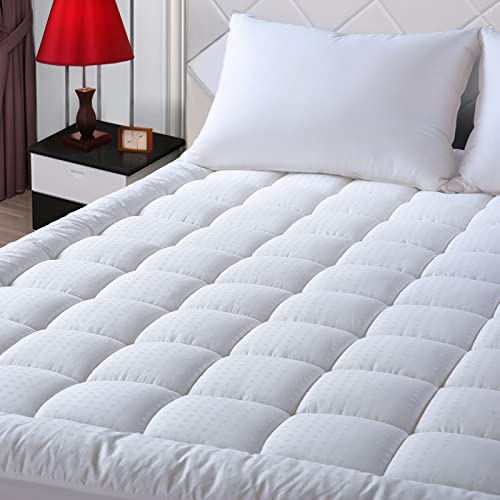
Queen Mattress Pad 60x80 inch,21 inch Deep Pocket, 49 oz Elastic & Hollow Down Alternative Microfiber
Rotation Schedules: Distribute Wear Evenly
You’d be shocked at how much difference a simple flip or turn makes. Your body weight creates permanent indentations over time. That’s where quarterly rotation comes in. Every three months, rotate your mattress pad to distribute wear evenly across the sleep surface, which extends its lifespan significantly.
If your pad has different zones (like foot and head areas), rotate it strategically to balance the wear distribution. Think of it like sharing the burden across your whole pad rather than letting one spot take all the wear.
Combined with proper care instructions and regular washing, this rotation habit keeps your pad comfortable and functional for years longer than pads that aren’t rotated.

Gel Memory Foam Material: Our memory foam mattress topper readily conforms to the curves and shape of your body, distributes weight evenly to alleviate pressure points for better sleep.


Pressure Relieving Plush Contouring Memory Foam: Designed for use over your existing mattress, high‑density gel‑infused plush memory foam hugs your body curves to minimize pressure points for restful sleep. It refreshes worn mattresses and softens hard beds to extend mattress lifespan, perfectly suited for side, back and stomach sleepers with full contour support
When to Replace Your Mattress Pad
Even if you’re rotating your pad like a champ, eventually it will wear out. Knowing when that moment arrives saves you from sleeping on basically a flat pancake. Watch for visible wear like thinning fabric, flattening, or worn elastic edges that indicate replacement time. Most mattress pads last about 1–3 years with regular use, though guest bed pads stretch to 4–5 years since they get less use. If your pad stops protecting against spills and allergens effectively, or smells linger after washing, it’s done. Follow care instructions carefully. Machine washing sometimes accelerates wear. Your lifespan depends on how hard you’re using that thing daily versus occasional use. When you notice these wear indicators, upgrade your mattress pad.
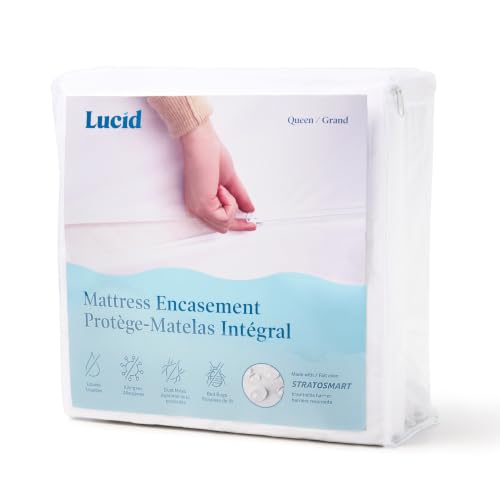
FULL 6-SIDED WATERPROOF PROTECTION: This zippered mattress protector encases all six sides of your mattress in a fully waterproof StratoSmart barrier; a watertight zipper and secure elastic seal every edge for complete coverage
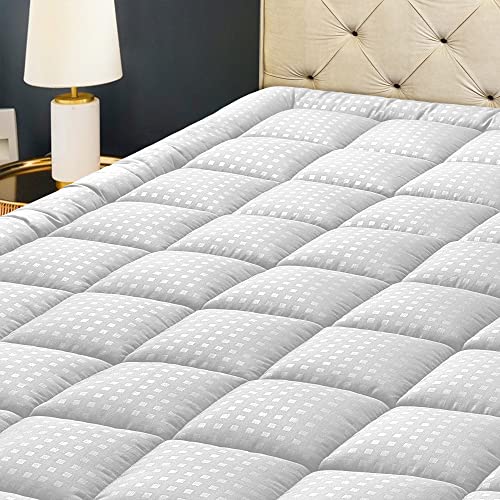
❤Breathable & Cooling Mattress Pad❤: The microfiber top makes the surface feel cooling and breathable. The luxury mattress pad protector is as breathable as clouds. It makes you feel super comfortable without extra heat. Silent protection that doesn't disrupt your valuable sleep, makes you sleep well all night

Unique Style: Stand out with our classic quilted design. It locks in filling for even support and helps regulate temperature—stylish and practical
Maximizing Your Pad’s Lifespan: A Practical Guide
Want your mattress pad to actually stick around longer than a year? Protecting your investment starts with smart choices. Grab a mattress protector and maybe a memory foam topper; they’re like bodyguards against stains and wear and tear. Rotation and airing out aren’t boring chores. They’re lifespan-extenders. Flip yours monthly and let it breathe in sunlight when you can.
Washing care matters too. Follow manufacturer instructions religiously: gentle cycles, no harsh cleaners, complete drying. Skip those shortcuts; they’ll wreck your pad faster than you’d think. With protectors shielding everything and proper rotation happening regularly, your pad will stay surprisingly fresh. Getting your money’s worth requires these basic maintenance steps.

100% Waterproof - Top protection against perspiration, bed wetting, liquids and stains; 10-year quality guarantee.

A Smart Bedroom Investment: Protect your mattress with our high-value solution designed to defend against spills, stains, and everyday wear and tear. The waterproof barrier keeps your mattress fresh, dry, and protected—extending its life so you can sleep easy knowing it's covered for years to come.

Cooling Mattress Cover - -> using innovative Cooling yarn to pull heat away from the body and create the perfect sleeping environment.