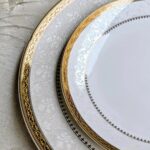

The range is wide, from simple white porcelain trimmed in gold to hand-painted eclectic plates, shimmering iridescent glazes and the cobalt pattern Royal Copenhagen is known for.
Your pick depends on whether the plates will reach the dinner table, as Coordinated Dinnerware Sets do, or hang on a wall as Decorative Wall Plates.
Daily use favors a Coordinated Dinnerware Set bought in one go, because two whites from different makers show their difference the moment the plates stack.
Display is more forgiving: Gold-rimmed Patterned China can pull Blue Floral, Pink Floral and Green Floral pieces into one cohesive stack, and Decorative Wall Plates reward mixing.
1. Glamorous Porcelain Dinnerware

Plain white porcelain with a thin gold rim is the version I’d pick when the food should do the talking.
The gold frames each plate and bowl without adding pattern, so a rose gold spoon or any other flatware can sit beside it without a clash.
Buy the bowl and plates as one white, since even a slight mismatch between a cool and a warm white shows up as soon as they stack. Mixing whites on one table shows up fast against a gold line.
2. Coordinated Dinnerware Sets

A coordinated set puts the platter, plates, cup and saucer in one pattern, so the table looks finished before you add anything else.
Purple and white is a bolder choice than the usual blue or pink, and I like it with silver cutlery on a simple white cloth.
Check what a set includes before buying. A serving platter and cup-and-saucer pairs make it feel complete; a plate-only set leaves gaps.
3. Royal Copenhagen

Royal Copenhagen is the Danish name to look for if blue and white is your color scheme.
Royal Copenhagen is best known for its Blue Fluted pattern, and blue and white pieces mix well when a platter and teapots share the same palette.
Start with one piece, like a platter or a teapot, and add to it over time. It’s a good route for a collector.
4. Luxury Coffee Cups

Gold trim on a coffee cup shows its age first at the rim, where lips and washing wear it down.
The seller of this set noted gold loss on the rims of 2 cups, while the rest of the set was in lovely shape.
When you buy vintage, ask for close photos of every rim and saucer edge. A little rubbing is the price of old china, and I’d accept it for painted figures like these.
5. Luxury Tea Cups

Blue flowers on white, a gold edge and a matching tray: that is a tea set meant to be carried out whole.
Buy the cup together with the teapot and sugar bowl, and the tray does half the styling for you.
Against a green surface the blue reads crisp. I’d keep the rest of the table plain and let the florals be the only pattern.
6. Luxury Teapots

A floral teapot with gold on the rim earns its place at the table, and pouring from it into a matching cup and saucer is the moment the set pays off.
Buy the pot and cup as a pair so the pattern lines up.
Serve it with something plain. A slice of green cake keeps the plate quiet, so the florals stay the focus.
7. Decorative Wall Plates

Symmetry does the work on this wall. Blue-and-white patterned plates and green cabbage-leaf plates mirror each other left to right, so two very different styles read as one planned arrangement.
White paneling is a good backdrop for it. I’d keep to those 2 plate types and not add a third, because the green already brings in a second color without a second pattern.
8. Hand-painted Eclectic Plates

Lettering is what makes small hand-painted plates feel like yours. Checks, shells and cherries are pretty, but a plate that says "nice things" or "london calling" gives a shelf or a table something to talk about.
I’d mix the painting styles freely but hold the plates to a similar size, which anchors a mismatched group. Set them out as a small cluster and let each pattern have its own spot.
9. Gold-rimmed Patterned China

Gold rims are the thread that lets blue, pink, green and brown china sit in one stack. The patterns can all differ, and the gilded edge reads as the shared detail.
I’d make sure every piece has the gold line.
One rimless plate among them looks like it wandered in from another set. Overlapping plates and bowls, as here, also shows off the rims better than laying them flat and apart.
10. Green Floral Table Setting

Match the placemats to the green in the plate pattern, and the whole table settles into one color. Green florals on white china, a white napkin with a gold ring and plain glassware leave the pattern as the only decoration.
A wooden table suits this well. I like the plates and bowl bought as a pair, since the same green in both keeps the setting calm.
11. Embossed Cream China

Raised floral borders give cream china its pattern without any added color. Stacked plates show that edge best, and a covered tureen with matching embossing pulls the stack into a set.
Buy the tureen with the plates, not separately, so the relief and the cream tone match. I’d choose this over bright white when you want a softer table.
12. Blue-and-white Patterned Plates
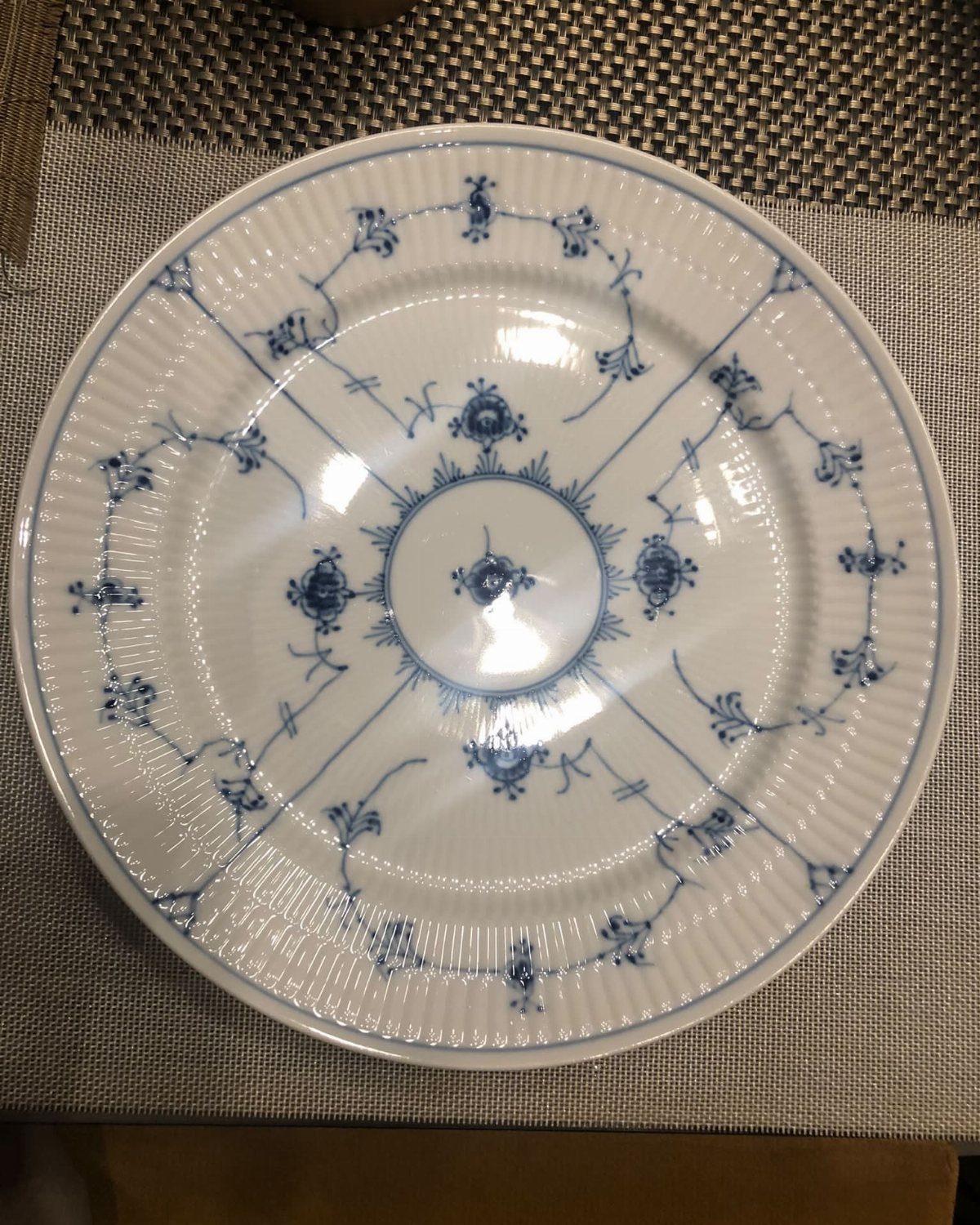
A pale background lets fine blue detail read clearly, whether the pattern is floral or geometric. Under a patterned plate, a neutral, lightly textured placemat stays out of the way and leaves the attention on the blue and white.
I’d serve plain food on it, so the painted border isn’t competing with a busy plate. Choose the pattern with the most detail you can find, because it’s what gives a white plate its character.
13. Red-rimmed Floral China

Small sprigs and a red rim give white china a cheerful, slightly old-fashioned look without a heavy pattern. The red line does the outlining, so the florals can stay tiny and the plates still read as a set.
I’d buy the teapot, cups and sugar bowls with a matching rim red, because red is the one color that exposes two shades drifting apart. Keep the table linen white and let the rims be the accent.
14. Pink Floral China

Pink and green flowers on cream china feel softer than the same pattern on bright white. A covered dish alongside the plates is what makes it a serving set instead of a few pretty plates.
Linen suits it.
I’d set the plates on a white cloth and put fresh flowers nearby that echo the pink, so the pattern and the table speak the same color. Buy the dish and plates together so the cream matches.
15. Colorful Floral Table Setting

Teal under ornate white china makes the florals stand out, and blue glassware picks up the same cool note. Silver cutlery and a silver candlestick keep the metals consistent, so nothing fights the plates.
A bunch of green grapes is a cheap way to add a natural color without buying more decor. A solid cloth and plain glasses keep the table calm, since the plates already carry all the pattern.
16. Pastel Floral China Collection

Pastel florals with gold rims are easy to collect piece by piece, because the gold edge ties plates and teacups together even when the flowers differ. A tray gathers them into one display and keeps them from looking scattered.
Choose a tray with its own gold rim, as here, so it looks like it belongs with the group. I’d stick to soft colors across every piece; one bold plate would pull the eye from the rest.
17. Iridescent Glazed Plates

A crystalline blue and teal glaze is the pattern on this plate, so it needs no painted border at all. The shimmer shifts as you move it, which makes it a better showpiece than a daily dish.
I’d rest it on plain off-white fabric and keep everything around it quiet. One plate like this is enough; a second competing glaze would cancel the effect.
18. Butterfly and Flower Plates

Blue flowers with one yellow butterfly give a white scalloped plate a single point of surprise. The yellow is the small accent, and the scalloped edge adds shape without extra decoration.
I’d choose this for a table where you want one detail to draw a second look. Pair it with plain white pieces so the butterfly is the only thing in the design that moves the eye.
19. Blue Floral China

Gold display stands turn blue floral plates into something you look at, not just stack in a cabinet. Against a dark blue wall, the white porcelain stays bright and the gold keeps the plates from sinking into the background.
I’d buy a stand for each plate and group the serving pieces beside them. Keep to one blue across the set, since a second shade will show against that deep wall.
20. Cream Floral China

Cream china with pink, blue and yellow flowers is a softer pick than bright white, and the gold rim keeps it from looking faded.
Three flower colors on one plate also means it will sit comfortably beside plain solid linens in almost any of those shades.
Cream varies a lot between makers and even between production runs, so a plate and bowl bought months apart can look noticeably different side by side. I’d stack them on an open shelf, where the rims show.
21. Colorful Rose China

Pink roses give this white china its main pattern, and the gold rim finishes each plate with a bit of formality.
Since the florals are colorful and busy, I’d keep everything else on the table plain and let the roses carry the color.
Stacks display the rims well, so store and show them that way. Building a set means confirming the gold line runs around every plate’s rim, since a missing or worn band stands out fast on a table.