
The ideas here run from wire organizers that go in with no tools to pull-out drawers that cost more and take longer to assemble.
What separates the Glass-Front Dish Cabinet and Open Dish Shelves from Pull-Out Dish Drawers or the Under-Counter Dish Cabinet is how much of your dinnerware you’re willing to leave in view.
Open shelves and lit glass turn plates into decor, while drawers, plate racks and under-counter organizers keep everything inside a cabinet.
Lit glass shelves flatter plain white dishes, while patterned sets compete with the bulbs and every stray mug shows, so think about how tidy you really stay.
1. Freestanding Kitchen Storage Cabinet

A freestanding cabinet is the fastest fix for a kitchen that ran out of built-in storage, because nothing gets bolted down and nothing gets installed.
Glass doors keep dishes visible and dust-free, and a flat top leaves room for a rice cooker or other small appliances.
Pick a finish with a plan, whether it matches your counters and walls or contrasts with them on purpose, since a freestanding unit is the one piece in the room that has to look chosen rather than added.
A darker color hides the scuffs a daily-use cabinet picks up.
Keep the top tidy. A cabinet holding dishes inside and appliances outside only reads as organized if the surface isn’t piled with clutter.
2. Mobile Kitchen Island

Wheels are what make a kitchen island worth buying in a small room.
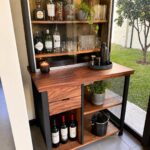
A white mobile island with a wooden top and open shelving can sit beside the counter during prep and roll out of the way when you need the floor.
I like the drop-leaf versions best: fold the leaf down for daily traffic, raise it when you need extra surface for a coffee station or serving drinks.
Look for built-in towel and spice racks, which put small items on the island’s sides instead of crowding your drawers.
Open shelves hold dishes you reach for often, but they show everything, so stick to pieces you like looking at.
3. Pull-Out Dish Drawers

Bowls and glass jars are awkward in a standard base cabinet, where the back of the shelf swallows them. Pull-out drawers fix that by bringing the whole contents forward when you open them, so nothing hides behind something else.
A white base cabinet with two deep drawers, like this one, keeps heavy items low and within easy reach. Stack bowls by size and store jars upright in a single row.
Choose drawers over a fixed shelf if you cook daily or have trouble bending to reach into a dark cabinet. Expect to pay more than for a plain shelf unit, and plan for more assembly time.
4. Spice and Grain Cabinet

Spices and dry grains belong together in a cabinet of their own, away from dishes.
2 shelves is enough: glass jars with cork lids on top, a grain dispenser on the bottom with a small tray of extra jars beside it.
A light gray finish keeps the contents as the focus. Matching jars make the shelves look planned, and labels on each one save you from opening lids to check.
I’d put the jars you reach for most at eye level and the dispenser lower, where its weight is easier to handle. This is storage for people who cook often enough to want everything in sight.
5. Glass-Front Dish Cabinet

Glass shelves with interior lighting turn a tall white cabinet into the one spot in the kitchen where dinnerware gets to be seen.
Light passes through each shelf, so plates, bowls, cups and glassware all stay visible instead of the bottom ones going dark.
White dishes suit this setup best: they look clean under the lights, and the cabinet never feels busy. Mixed patterns would fight the lighting.
A pantry section with jars beside the cabinet, as in this layout, gives you a place for everyday food so the glass side stays reserved for dishes. The cost is that you have to keep it neat.
6. Open Dish Shelves

Light wood open shelving with built-in lighting makes dishes part of the room’s decor. Plates, glass jars of food and a few small appliances can share the same unit, so you’re not opening doors to find your daily items.
Lit shelves are the feature I’d pay for here; they make the whole run look finished instead of bare. Keep the dishes you use every day on the open sections, since anything you stack there gets handled constantly.
Open storage asks for discipline. Whatever sits on the shelf is on display, so a few matching jars beat a random mix of containers.
7. Dish Cabinet with Plate Racks

Wooden plate racks inside a white cabinet keep plates standing on edge instead of stacked, so you can pull out one dish without lifting five.
Bowls sit on the shelves between the racks, and a hook on the underside of a shelf gives a mug its own spot.
I’d choose this over a plain shelf if you wash and put away dishes daily. Upright plates dry and store in the same place, and nothing gets chipped from sliding stacks.
The racks take up some shelf depth, so measure your largest dinner plate before buying. Bowls fit well in the open space beside the racks, while the hooks are best saved for the mugs you actually reach for.
8. Under-Counter Dish Cabinet

2 shelves of wire organizers turn a low cabinet under the counter into a tidy home for plates and bowls. Each organizer holds its own stack, so you lift one pile at a time instead of unstacking the whole shelf.
Plates can sit on one level and bowls on the other, with your everyday set within easy reach.
Under-counter storage suits a compact galley or apartment kitchen because it uses space you already have, with no wall mounting and no floor space lost.
Wire racks cost far less than a custom drawer system and go in with no tools. They don’t slide out, though, so you’ll be reaching into the cabinet each time.
Frequently Asked Questions
Are portable kitchen islands a good idea?
Yes, especially for renters and small kitchens.
Because it rolls, a portable island can park next to your counter for chopping and mixing, then slide aside when you’re done, and since there’s nothing to install, you get extra surface and shelving without touching the walls or floor.
A drop-leaf model gives you extra surface only when you need it.
What are the downsides of kitchen storage carts?
Strength is the main one: carts usually aren’t as sturdy as built-in cabinets, so they carry less weight.
Check the weight rating on the box before you stack heavy stoneware on one, since most carts in the $60–$150 range are rated well below what a full set of dinner plates weighs.
Anything on an open shelf stays in view, so I’d save those spots for the dishes and bowls you actually enjoy looking at and put the mismatched everyday stuff behind a door.
Is it cheaper to buy or build a kitchen island?
A DIY build can come in cheaper if you already own the tools and have a weekend to spare, and it lets you pick the exact top material, height and shelf spacing.
The savings come from doing all the labor yourself, which includes the time to learn any skill you don’t have yet. If you’d rather not spend that time, buying is the simpler route.
What is a sideboard or credenza?
A sideboard and a credenza are close cousins: low, wide cabinets with doors, drawers or both, and they usually sit along a kitchen or dining room wall to hold dishes and linens.
They suit drinkware, dinnerware and other entertaining essentials. Buffet tables belong to the same family of dining room storage.