
Renting or owning settles most of the choices here, since some of these ideas need drilling and others need nothing at all.
An easel needs no drilling, and a Wallpapered TV Wall or a Marble Accent TV Wall can be done in a weekend, while a Wood-Paneled TV Wall, Modern Gypsum TV Unit Designs, a Media Wall, or a TV Wall with Linear Fireplace mean building into the wall, with studs, power and cable routing to plan first.
Prices climb as you move from a freestanding piece you can take with you to built-in cabinetry, so I’d save the bigger spend for a place you expect to stay in.
1. Wood-Paneled TV Wall

Vertical slats do the work of a feature wall without paint or wallpaper, and the grooves add shadow and texture that a flat wall can’t.
I like them best when the shelves and lighting are built into the paneling, so the TV reads as part of one surface instead of a screen stuck on a wall.
A floating wooden console below keeps the floor visible, which helps a smaller room feel less crowded. Keep the slat tone close to the console so the whole wall looks planned.

High-Quality Wall Panels: Our acoustic panel set is crafted with high-density polyester fiber, premium medium-density fiberboard, and a solid wood veneer. This combination provides an elegant look, superior sound damping, and excellent sound deadening, significantly improving room acoustics

1. Premium Flexible PVC & Stylish Wood Grille Patterns Crafted from thickened flexible premium PVC, this wall panel boasts a variety of trendy wood grille textures. It flawlessly adheres to both flat and curved surfaces, creating a high-end customized wood grille interior look without expensive solid wood materials.

Adds Warmth, Texture & Character** – Instantly elevate your space with sleek slatted panels that bring depth and style to living rooms, bedrooms, offices, and feature walls
2. Custom Cabinet TV Wall
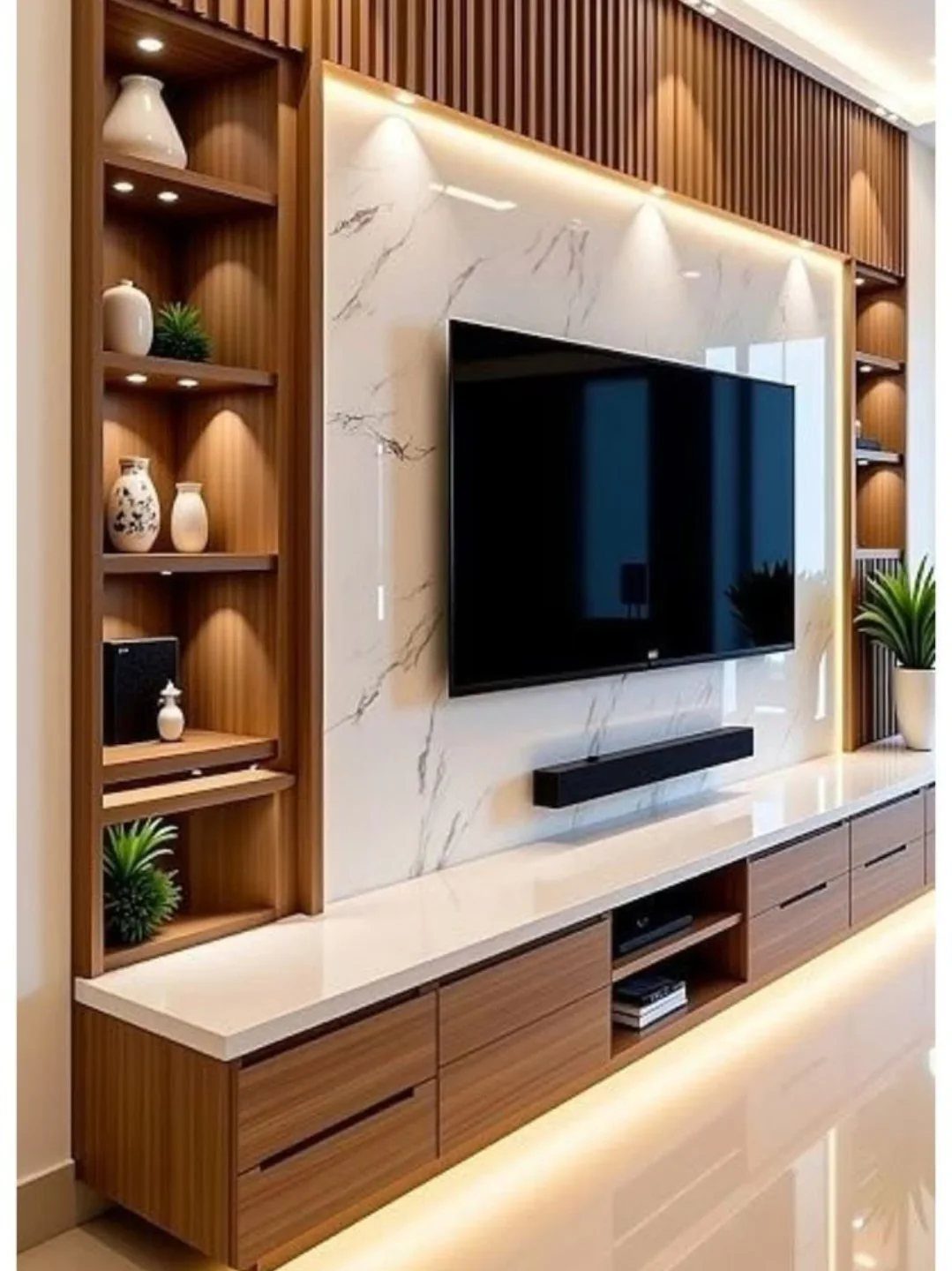
A cabinet built around the TV hides the clutter a bare wall exposes: the soundbar sits tidy, and the shelving gives you a place for the things people usually pile on the floor.
Warm integrated lighting softens the screen’s glare in the evening. Against a pale marble backdrop, the wood needs to stay a single tone so the wall doesn’t turn busy.
Custom work costs more than freestanding furniture, so I’d spend there only if the room is one you plan to keep.

Features: Large Strengthened Tempered Glass Shelf (Each glass measures 15 inch x 11 inch x 4mm thick),supporting a maximum weight up to 8kg (17.6lbs) per shelf.

98" Farmhouse Wall Unit for TVs Up to 75" This farmhouse entertainment center combines a TV stand, bookshelves, storage cabinets, and fireplace into one complete wall unit. The 98-inch wide design creates a balanced focal point for your living room while fitting TVs up to 75 inches.

Elegant Retro Charm with Two-Color Choice – Available in classic White or Black, this TV cabinet features petite retro handles, gracefully painted door panels, and an exquisitely curved top, adding a touch of refined craftsmanship to any living room.
3. Wooden TV Unit Design

A long wooden console with a live edge is the piece I’d choose when you want warmth without building anything into the wall. Floating it keeps the room light, and a few shelves above give books and vases a home.
Keep the styling loose: a plant, a couple of vases, a short stack of books. Too many objects and the wood grain gets lost, which is the reason you bought it.

ide Compatibility: With strong metal construction, Perlegear soundbar mount can support up to 15 lbs for reliable stability. This sound bar mount fits most of sound bars and compatible with TV wall mount, TV cart, floor TV stand and tabletop TV Stand. ( Note: For tabletop TV stands, make sure your have enough clearance underneath the TV. ) For TVs under 83 inches, you can choose to mount the soundbar above or below the TV. For TVs larger than 83 inches, the soundbar will need to be mounted above the TV due to the lack of bracket length. The screws of the sound bar are only compatible with M4*16mm, M5*16mm, M6*16mm, and Key hole bolts.
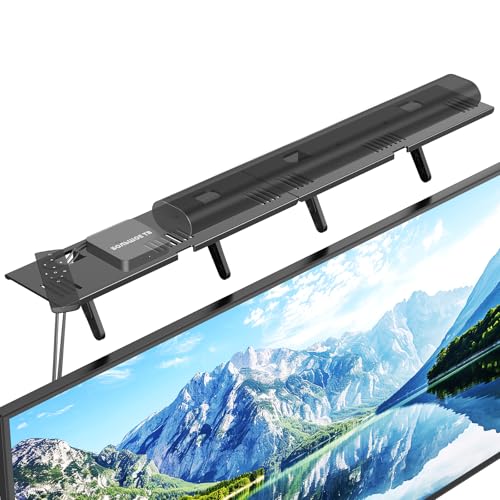
No Drilling & No TV Disassembly: Unlike wall soundbar mounts that damage walls or under TV soundbar mounts that require TV detachment, this CUISIBOT soundbar mount simply sits on top of your TV. No tools, screws, drilling, or TV removal. Just unpack, place on TV, adjust feet, set your soundbar on the shelf, and enjoy in under 30 seconds. A clean, damage-free solution for renters or anyone wanting a quick setup

HEAR YOUR TV BETTER: Designed with simplicity in mind, the Bose TV Speaker is an all-in-one soundbar that clarifies speech and is a simple fix for better TV sound
4. TV Mounted Above a Mantel
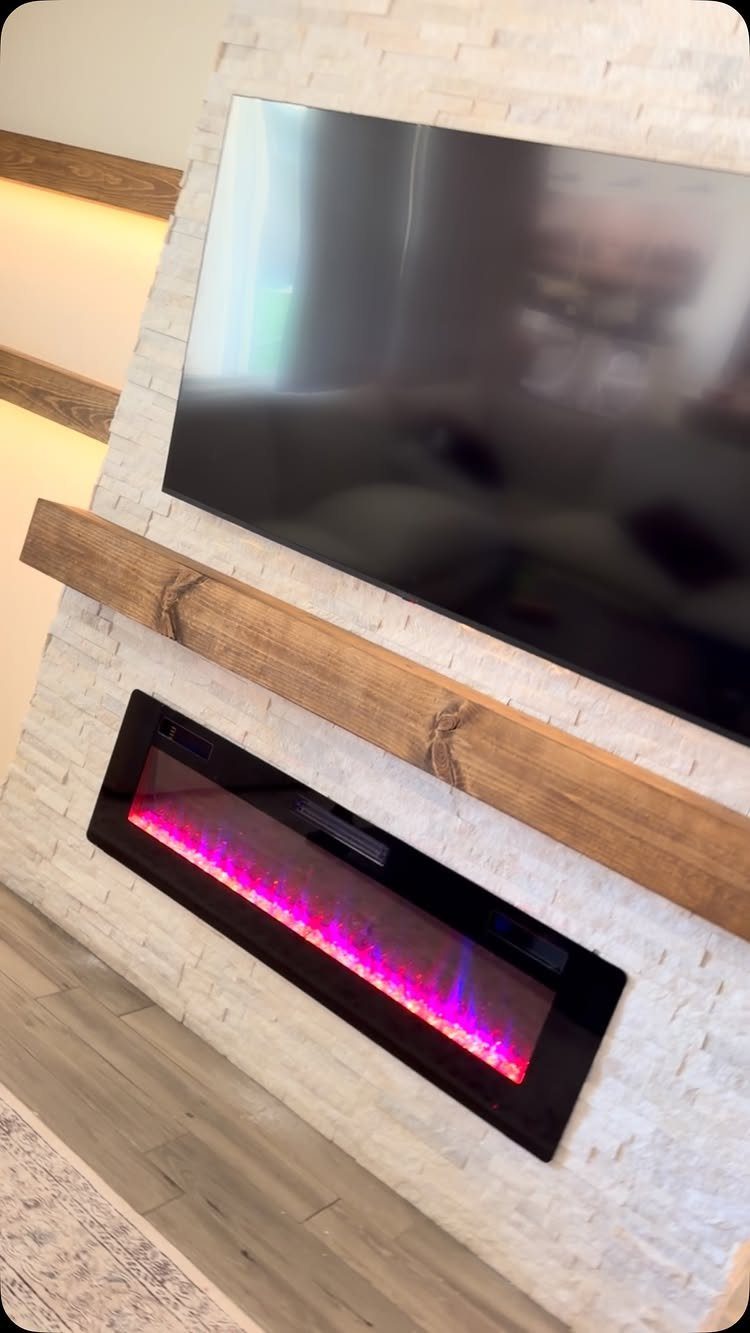
Hanging the TV above a mantel is the easiest way to give a screen a natural spot in the room, since the fireplace already acts as the focal point.
An electric fireplace makes it possible without any chimney work, and a rustic wooden mantel warms up a white stone wall.
Keep the decor on the mantel simple so it doesn’t compete with the screen.
One caution: a TV mounted high means looking up, so consider how far above the mantel you hang it.

Watch the videos in the Image Gallery to See the MM340 In Action. Enhance your home entertainment experience with a TV mount that offers full-range motion plus vertical travel.

TV Mantel Mount: Height adjustable pull down TV mount designed specifically for mounting over a fireplace mantel use. 29 inch total height adjustment allows TV to be pulled down to a more comfortable viewing height. With all hardware and installation instructions included, our over the fireplace TV mount mounts securely above your chimney mantel.

MOTORIZED FIREPLACE TV MOUNT: The MOUNT-IT! Motorized Fireplace TV Mount isn’t just any fireplace TV mount pull down; it's a sleek, modern solution to elevate your viewing experience. With its whisper-quiet motor, it effortlessly lowers and raises your TV to the perfect viewing height, blending seamlessly with your living space aesthetics. Ideal for those seeking a harmonious balance of style and functionality, especially above the fireplace.
5. Wallpapered TV Wall
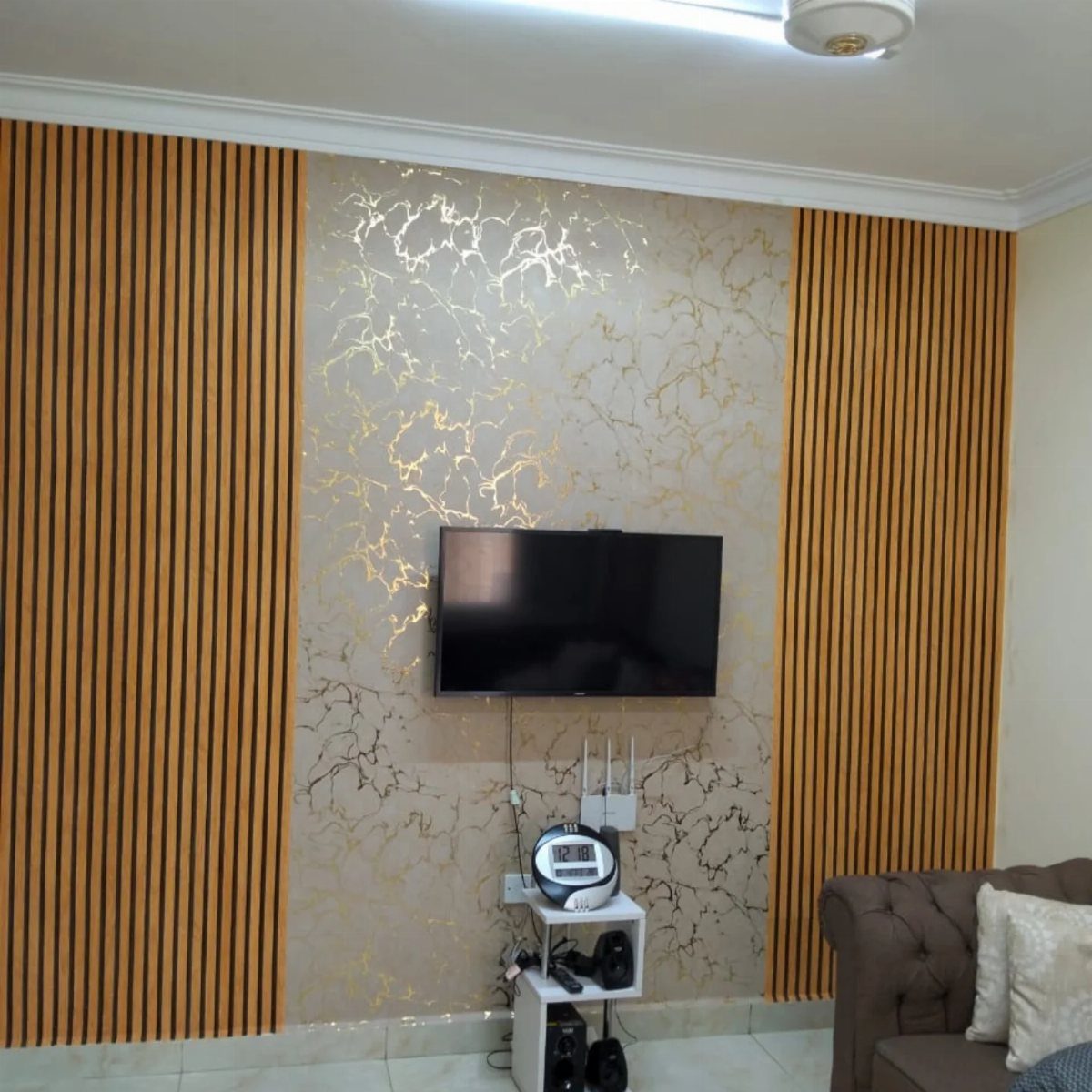
Gold-veined marble wallpaper gives you the look of stone for a fraction of the price and a weekend of work. Behind a mounted TV, the pattern brightens the wall and keeps the black screen from looking like a hole.
Vertical light-wood slats on each side frame it neatly and stop the pattern from running wild. A small white shelf below holds the electronics, so cables stay out of view.
Choose a pattern with fine veining; bold swirls fight the screen.

23.6 x 118 in roll covers about 19.3 sq ft peel and stick white holographic bold gold marble wallpaper foam wall panels for DIY renter friendly accent wall TV wall bedroom bathroom coffee shop decor

23.6 x 118 in roll covers about 19.3 sq ft peel and stick black gold marble wallpaper foam wall panels for DIY renter friendly accent wall TV wall bedroom coffee shop decor

Abstract Gold Marble Wallpaper – This peel-and-stick wallpaper features flowing marble-inspired waves with gold-toned accents over a soft neutral background. The fluid pattern creates movement and a modern artistic look. Perfect for living rooms, bedrooms, dining areas, offices, or statement accent walls.
6. Backlit TV Wall
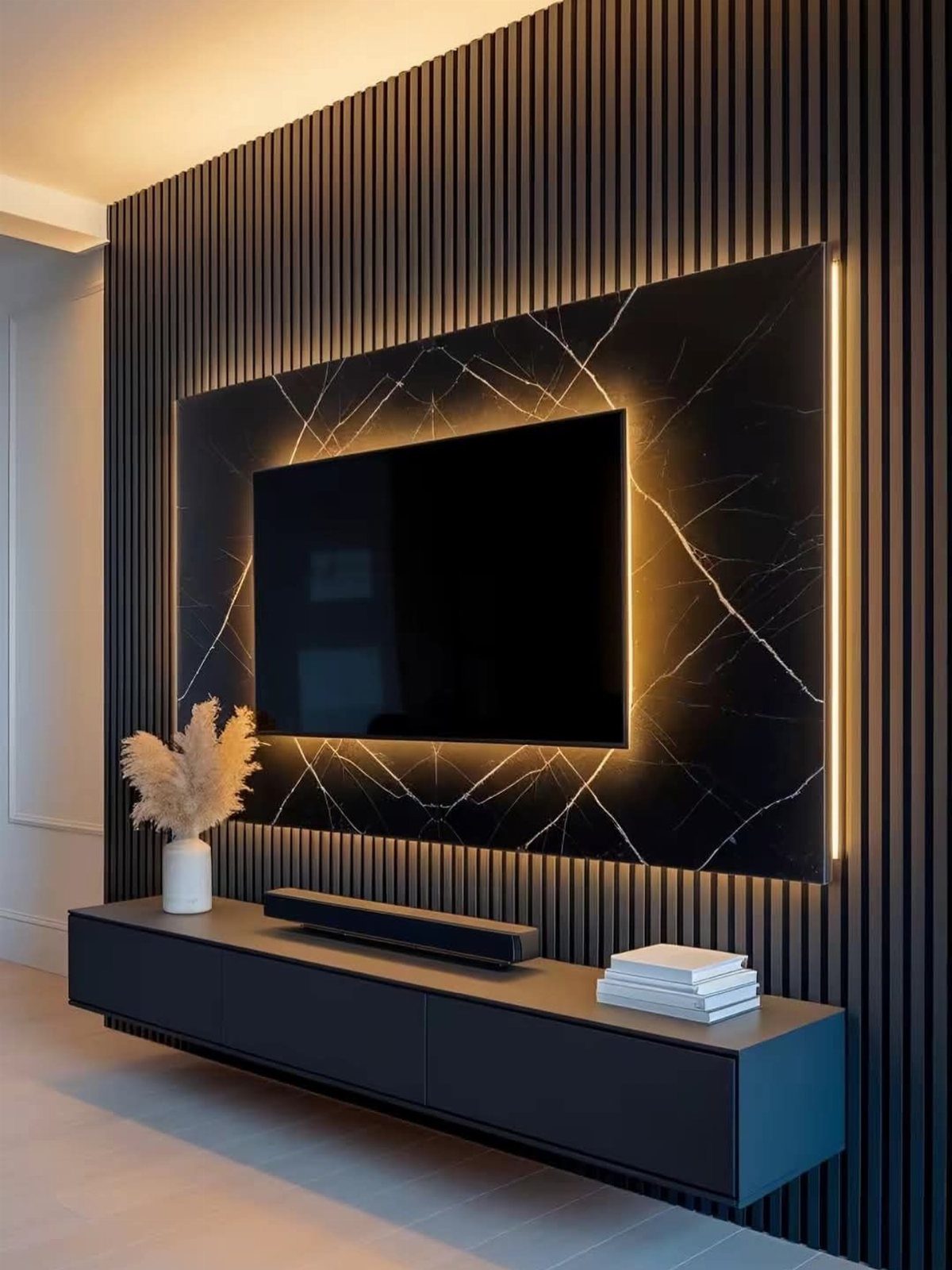
Backlighting around the edge of the TV panel creates a glow that softens the contrast between a bright screen and a dark wall, which is easier on the eyes at night.
Dark finishes on a backlit TV wall, like black marble or porcelain beside charcoal slatted wood, make the room feel like a small theater, and the LED glow keeps it from reading as heavy.
I’d choose warm light over cool; it flatters the wood.
Dark walls swallow daylight, so this suits rooms where evening viewing is the main event.
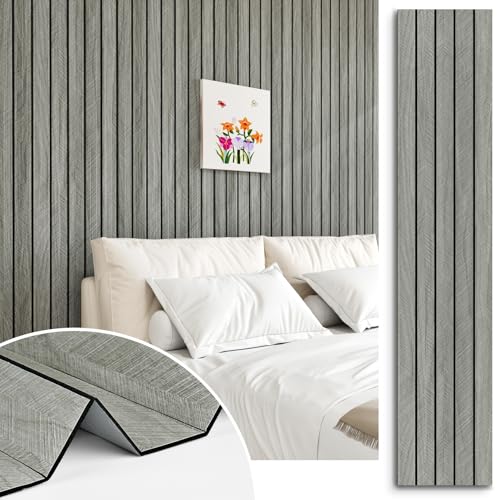
𝗠𝗼𝗱𝗲𝗿𝗻 𝟯𝗗 𝗧𝗲𝘅𝘁𝘂𝗿𝗲𝗱: 3D wood slat design creates depth and visual interest while enhancing sound absorption. Great for Bedroom, office to reduce echo and noise, both practical and stylish
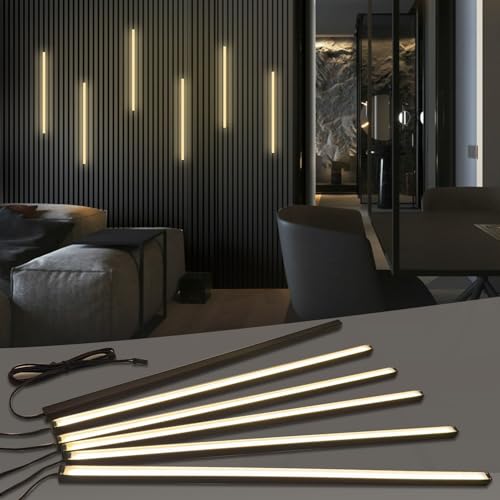
𝐅𝐮𝐬𝐞𝐝 𝐁𝐥𝐚𝐜𝐤 𝐂𝐨𝐥𝐥𝐞𝐜𝐭𝐢𝐨𝐧: This wall panel lights set Includes 6-piece of 16-inch 12V black LED strip lights. These slat wall lights feature black aluminum profiles, matte black diffuser covers and 3.1m black extension cables for flexible wiring. The 𝟎.𝟒-𝐢𝐧𝐜𝐡 𝐰𝐢𝐝𝐞 all-black wall panel LED lights seamlessly blends into slat panel gaps, easy to conceal and ideal for decorative black, matte black, gray oak, teak and black walnut wood slat wall panels etc. (𝐍𝐨𝐭𝐞: 𝐈𝐏𝟑𝟎 𝐍𝐨𝐭 𝐖𝐚𝐭𝐞𝐫𝐩𝐫𝐨𝐨𝐟 𝐖𝐢𝐫𝐞𝐝 𝐋𝐢𝐠𝐡𝐭 𝐒𝐭𝐫𝐢𝐩 𝐡𝐞𝐢𝐠𝐡𝐭: 𝟎.𝟒". 𝐏𝐚𝐧𝐞𝐥 𝐭𝐡𝐢𝐜𝐤𝐧𝐞𝐬𝐬 ≥𝟎.𝟒𝟑" 𝐢𝐬 𝐫𝐞𝐪𝐮𝐢𝐫𝐞𝐝 𝐟𝐨𝐫 𝐟𝐥𝐮𝐬𝐡 𝐢𝐧𝐬𝐭𝐚𝐥𝐥𝐚𝐭𝐢𝐨𝐧.)

【Superior Sound Absorption】: Designed with a 0.35" MDF board and a 0.35" high-density polyester fiber backing, these wood slat acoustic panels offer enhanced sound control through a balanced dual-layer structure. The thicker MDF layer helps improve sound blocking and structural stability, while the dense 0.35" felt backing effectively absorbs echoes and reduces noise reflection. Made from non-toxic, eco-friendly materials, ideal for creating a quieter, more comfortable space.
7. Marble Accent TV Wall
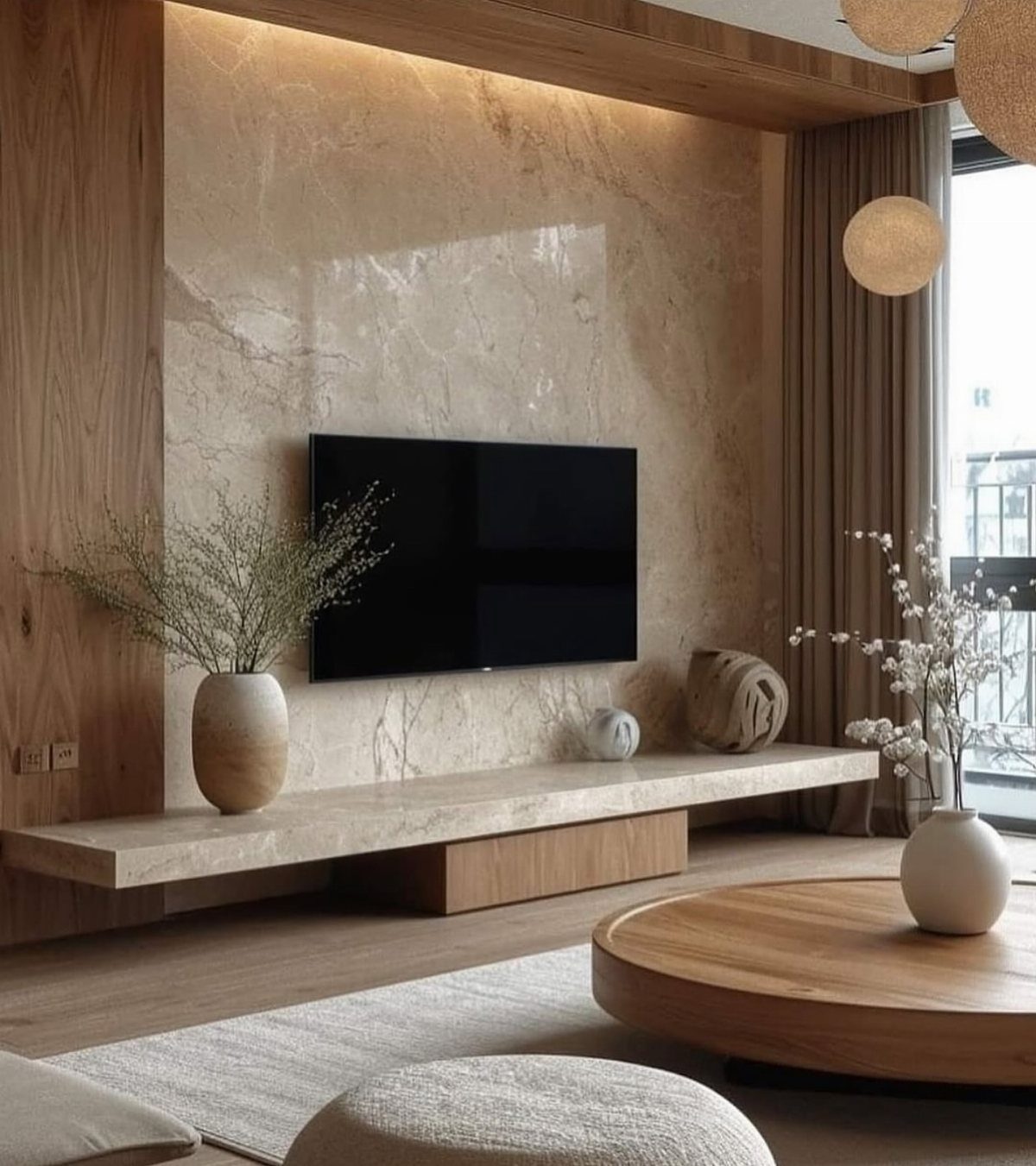
Marble carries a whole wall on its own, and a beige stone with soft veining gives a mounted TV a calm, expensive-looking backdrop.
A floating shelf cut from the same stone, or a close match, ties the screen to the wall so the whole setup reads as one piece.
Real slab costs a lot, so on a budget I’d go with marble-look panels or wallpaper in a similar tone.
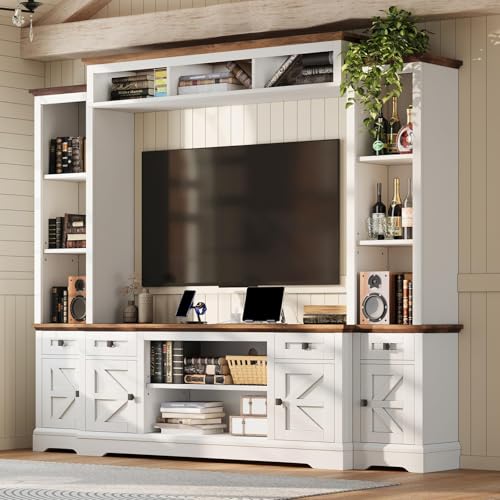
[Multi-Functional Entertainment Center] 98 inch wall unit TV stand combines a TV console, bookshelf, wine cabinet, and display shelves, making it a perfect all-in-one storage solution for your living room or entertainment space.
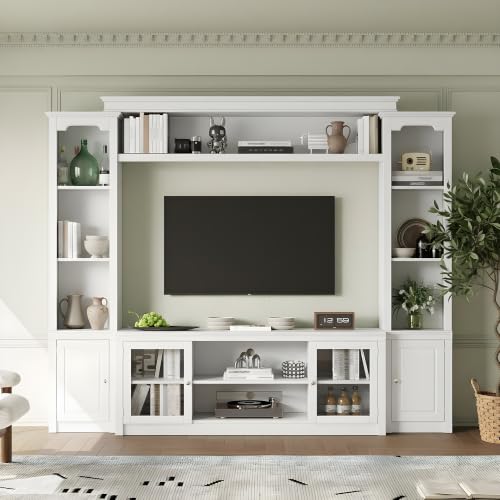
Cinematic Media Wall Transformation - Designed for the ultimate home theater, this expansive wall unit TV stand creates a high-end "built-in" look, perfectly framing televisions up to 65" for a professional, immersive viewing experience.

Sturdy Glass Floating Shelves: Large Strengthened Tempered Glass Shelf (Each glass measures 15 inch x 11 inch x 4mm thick), supporting a maximum weight up to 8kg (17.6lbs) per shelf, ensuring the safety and stability of your equipment.
8. TV Mounted on an Easel
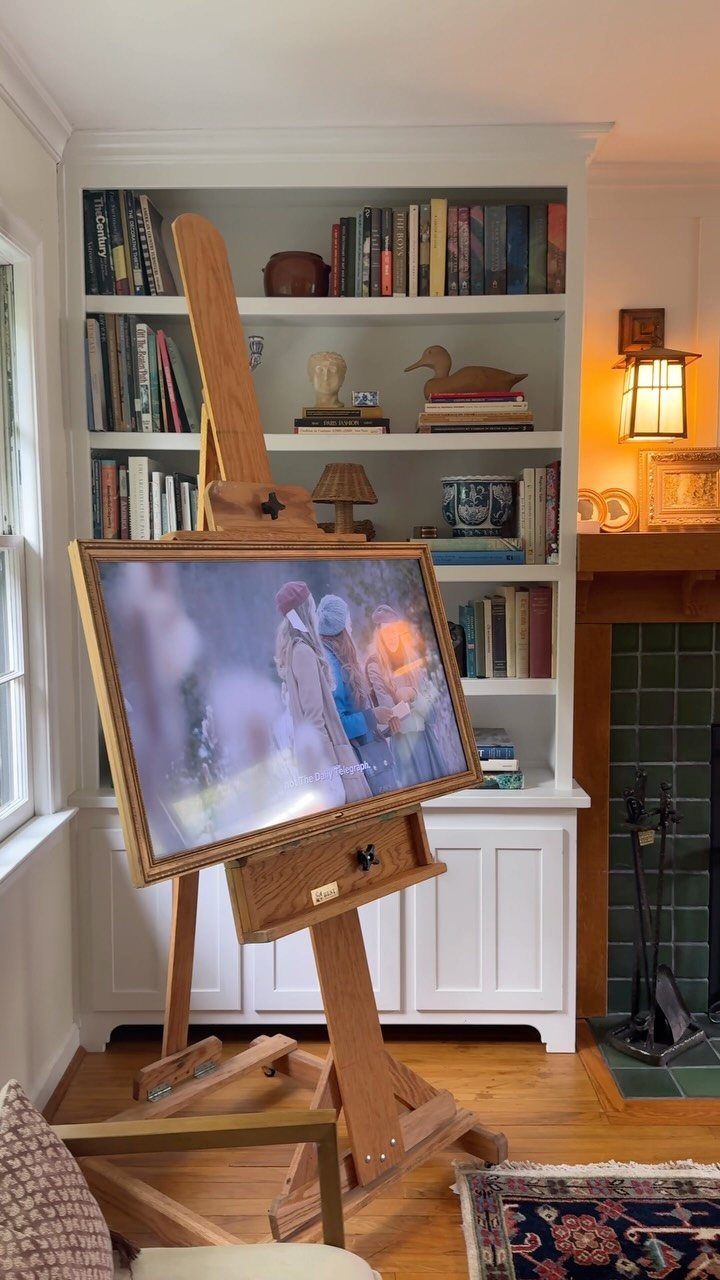
An artist’s easel turns the TV into something closer to a painting on display, and it needs no drilling, which suits renters. Wood warms the screen, and beside built-in shelves it looks like furniture rather than equipment.
Pick an easel with a wide, stable base, since a TV is far heavier than a canvas. Hide the cables behind a leg, and keep the screen’s frame in a wood tone close to the easel’s.

ONLY FITS UNDER 3.5" WIDTH – Upgrade your audio setup with this versatile soundbar wall mounts, designed for ultra-slim soundbars with or without mounting holes. Compatible with most major brands including Samsung, Sony, LG, Vizio, Bose, Onn, TCL, JBL, Polk Audio, Roku Streambar, Roku Streambar Pro, Harman Kardon, Denon, RCA, Nakamichi, Klipsch, Insignia, Panasonic, and Hisense soundbars up to 3.5" wide. (Notice: NOT FOR Large Soundbars, Deep Soundbars, Wide Soundbars)

Sound Bar Compatibility: The soundbar TV mount supports most soundbars up to 15 lbs from Samsung, Polk, Sony, Vizio, Bose, JBL and more. Soundbar mount is compatible with TV wall mount, TV cart, TV stand, ceiling TV mount.

Straight from the theater to your home: easy set-up, built-in tweeter, 2-ch speaker with simple Bluetooth connection
9. Modern Gypsum TV Unit Designs

Gypsum can be shaped into niches, ledges and clean white frames that wood or stone can’t match, so one unit holds the TV, shelving and lighting together.
I like blue LED paired with warm white: the blue gives a cool glow, the warm strip keeps the room from feeling clinical. Plan the wiring before the unit is finished, because lights and cables are hard to add afterward.
Slim, inconspicuous, and easily mountable, the flatscreen made designers everywhere rejoice for its chic aesthetic. Today, TV rooms are outfitted to entertain guests and lounge in style with the TV acting more as a piece of decor.

TV Mantel Mount: Height adjustable pull down TV mount designed specifically for mounting large TVs over a fireplace mantel use. 29 inch total height adjustment allows TV to be pulled down to a more comfortable viewing height. With all hardware and installation instructions included, our over the fireplace TV mount mounts securely above your chimney mantel.

MOTORIZED FIREPLACE TV MOUNT: The MOUNT-IT! Motorized Fireplace TV Mount isn’t just any fireplace TV mount pull down; it's a sleek, modern solution to elevate your viewing experience. With its whisper-quiet motor, it effortlessly lowers and raises your TV to the perfect viewing height, blending seamlessly with your living space aesthetics. Ideal for those seeking a harmonious balance of style and functionality, especially above the fireplace.

Powerful Height-Adjusting Motor: This Monoprice Motorized Above Fireplace Mantel TV Wall Mount boasts a stable, strong, and durable electric motor allowing for fast positioning and motion.
10. Luxury TV Unit Design
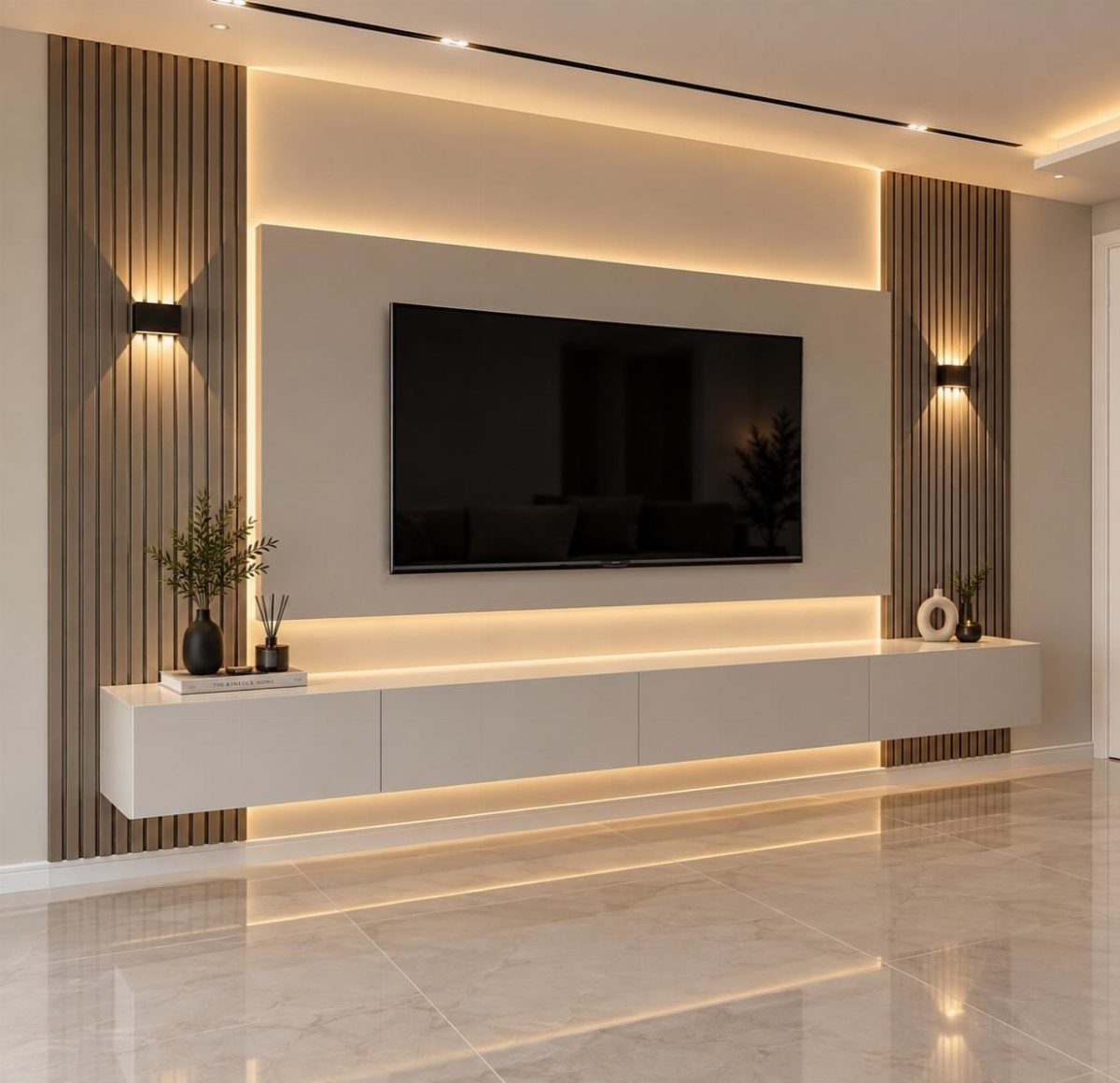
The floor stays visible beneath the cabinet, which makes the room feel larger.
Polished marble flooring adds shine, but the effect works fine without it. Slats and warm LEDs do most of the work, and they are the parts I’d spend on first.

◀ Marble Contact Paper ▶ Wallpaper Details: Marble contact paper waterproof, matte finish, shimmering golden liquid marble pattern outlined on a beige grey background, modern and upscale. Each roll is 12 inches wide by 80 inches long, covers 6.66 square feet

Size & Core Features: Measures 17.7×118 inches, crafted from premium self-adhesive vinyl. It comes with a pre-applied backing (no extra glue required) and can be removed residue-free without damaging walls. It’s also water-resistant and stain-repellent, tailored for dry interior spaces to balance decorative appeal and daily practicality.

Elegant White and Gold Marble Design: This wallpaper features a timeless marble design with a classic white base and luxurious golden veins. The sophisticated and refined design adds elegance and warmth to any space, perfect for modern or upscale decor.
11. Media Wall
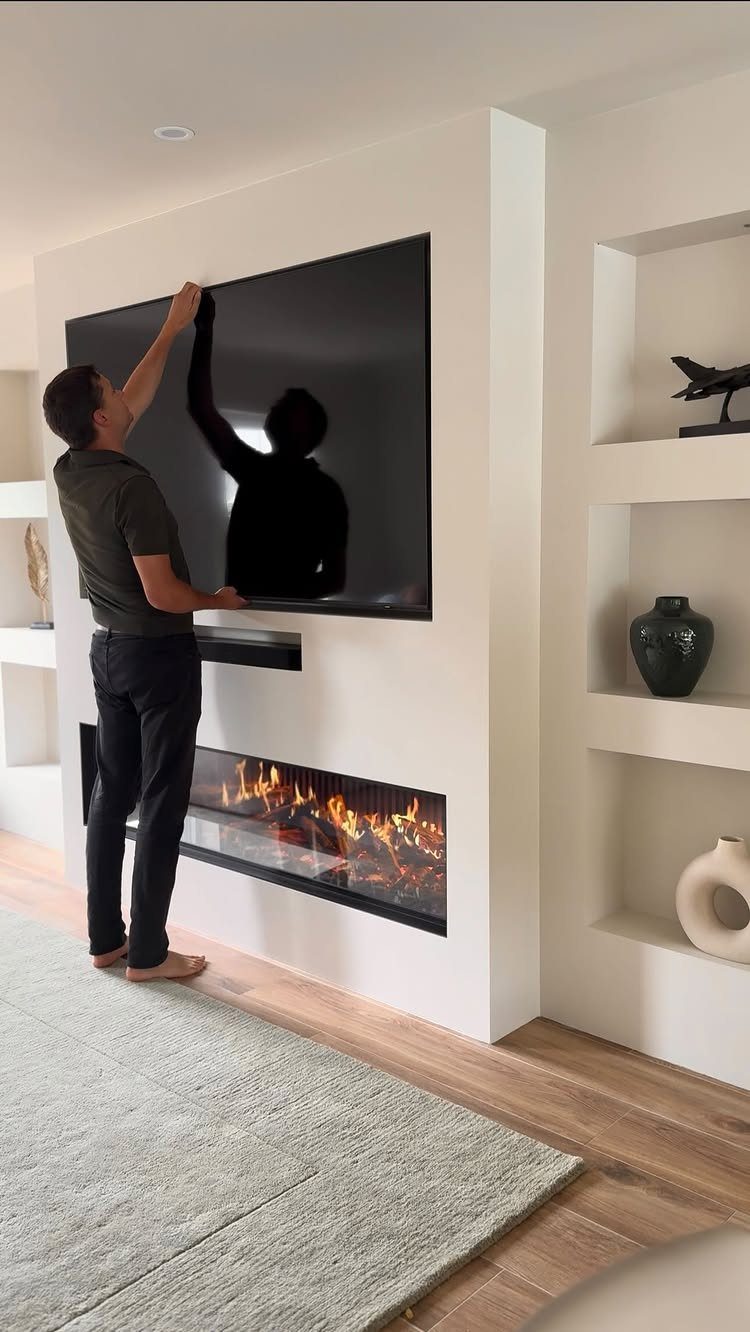
A media wall puts the TV, a linear fireplace and shelving on one white surface, so the whole room has a single focal point.
Centering the TV above the fireplace keeps the layout balanced, with shelves on one side for storage.
Painting the wall and shelves the same white keeps it clean. Because this is built to hold devices, plan power and cable routing inside the wall before you finish it.
12. Surround with Art
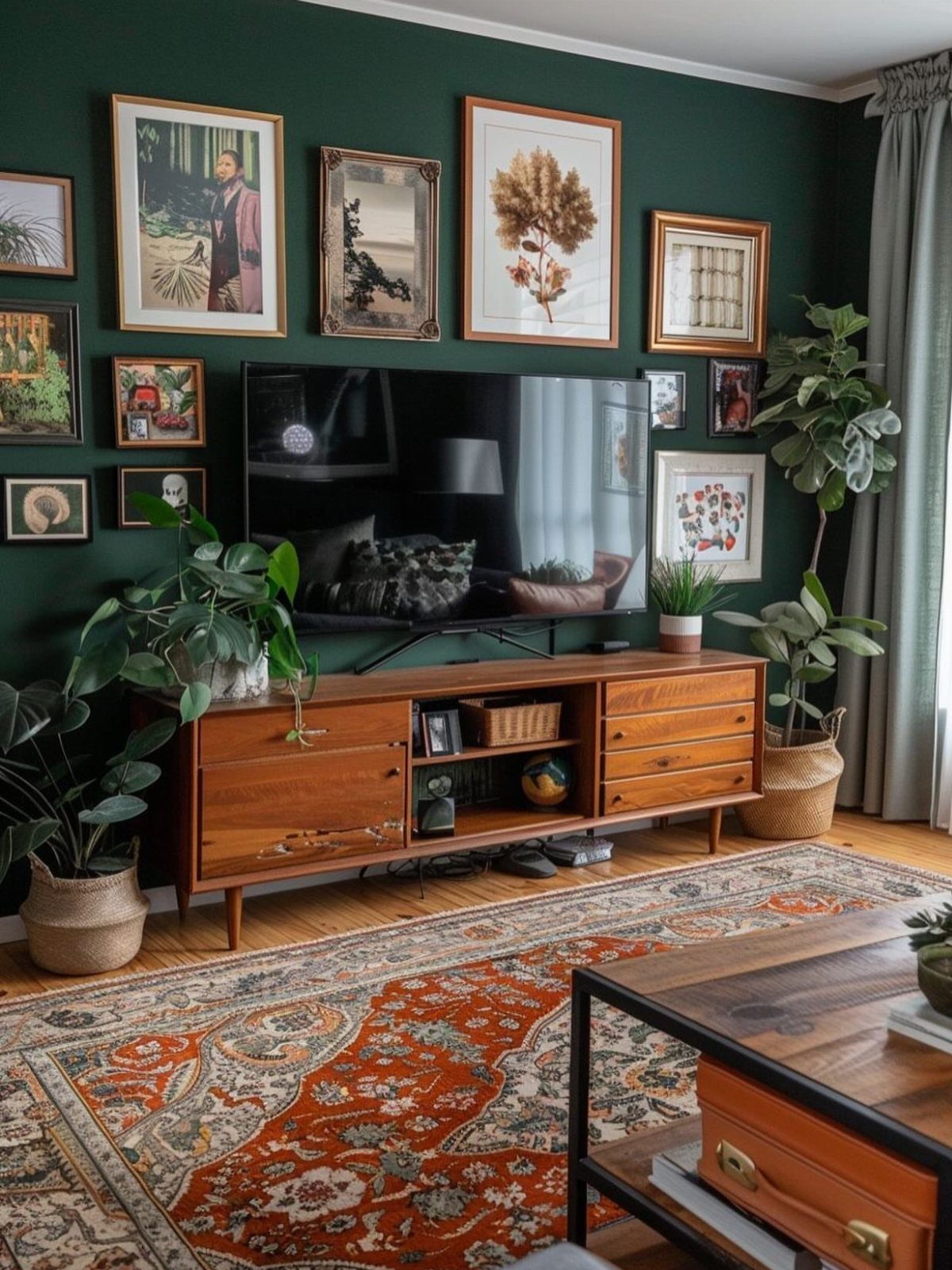
Framed art around a TV breaks up the black rectangle, so the screen becomes one piece in a gallery wall instead of the only thing you see.
A deep green wall makes a strong backdrop for this, and plants nearby soften the edges.
Lay the frames out on the floor first and arrange them around the screen’s edges before putting any nails in the wall. Mix frame sizes but keep the frame colors to a short list so the cluster stays calm.
13. Floating Console Below Mounted TV
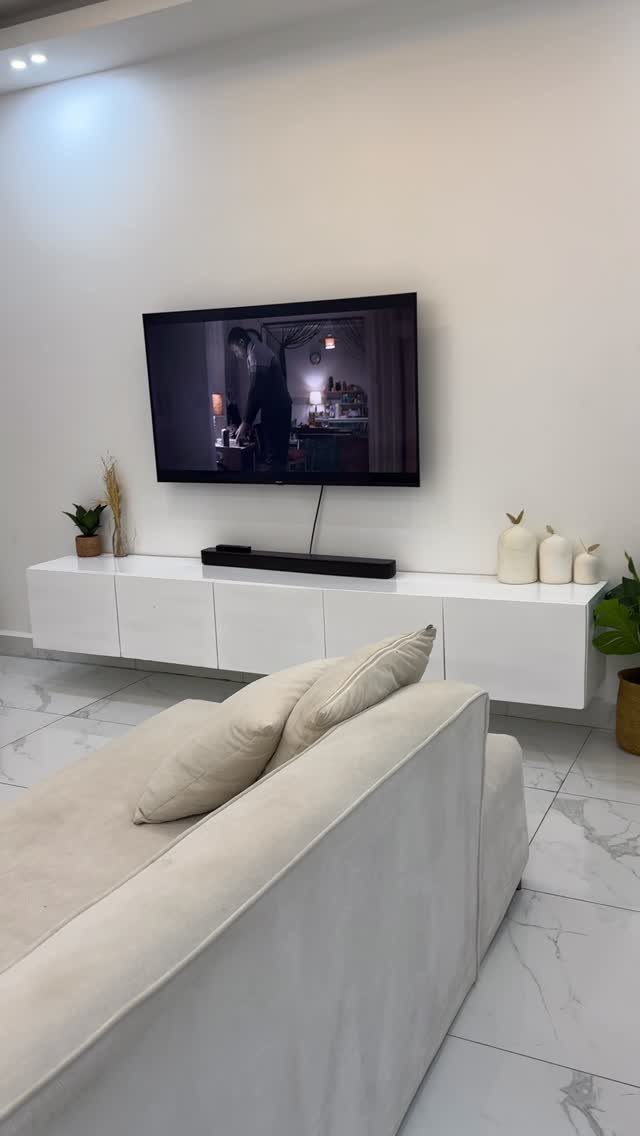
A floating console under a mounted TV leaves a strip of floor showing, and that gap makes a living room read as larger. White on a plain wall keeps the setup quiet, so the screen stays the only dark shape.
Mount the console first, then center the TV above it so the two line up. Keep the top nearly bare: one low object is plenty, because clutter breaks the clean line you chose it for.
Floating units hang from the wall, so they hold less than a floor-standing cabinet.
14. TV Wall with Linear Fireplace
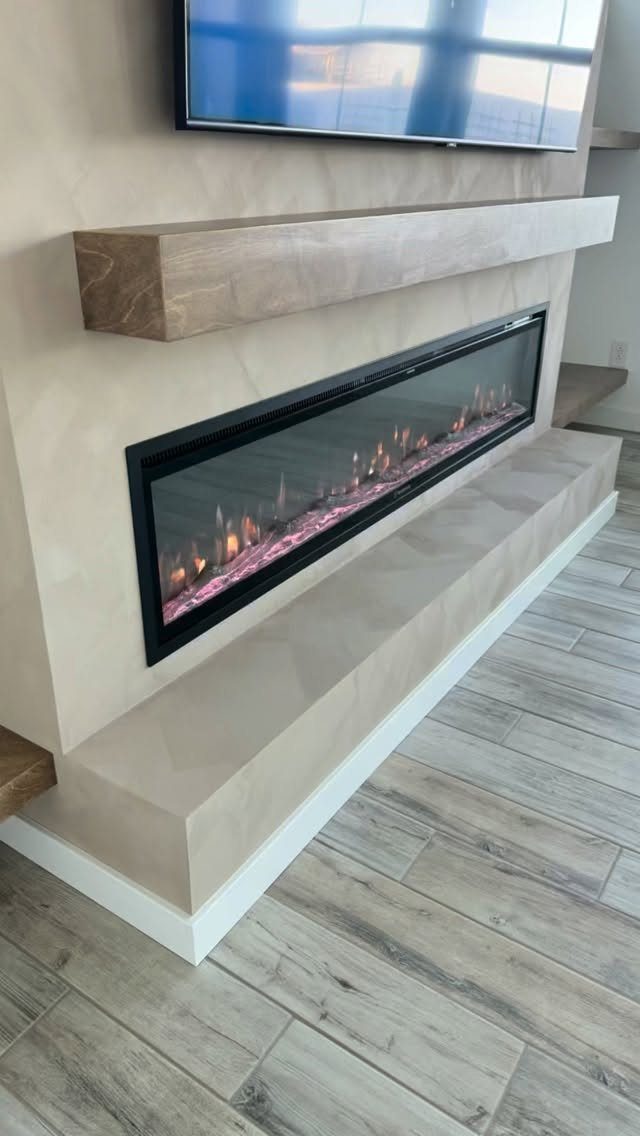
Stacking a TV over a long, linear electric fireplace gives the wall a built-in look with no chimney work. A wooden mantel between them sets off a stone-textured wall, and light wood-look flooring keeps the warm tones going.
Hanging a screen this way means looking up at it, so I’d keep the mantel low and the fireplace slim. Skip heavy decor on the mantel; the fire and the screen already compete for attention.
Choose a fireplace that fits your wall width, so the TV doesn’t overhang it.
15. TV Setup with Corner Shelving
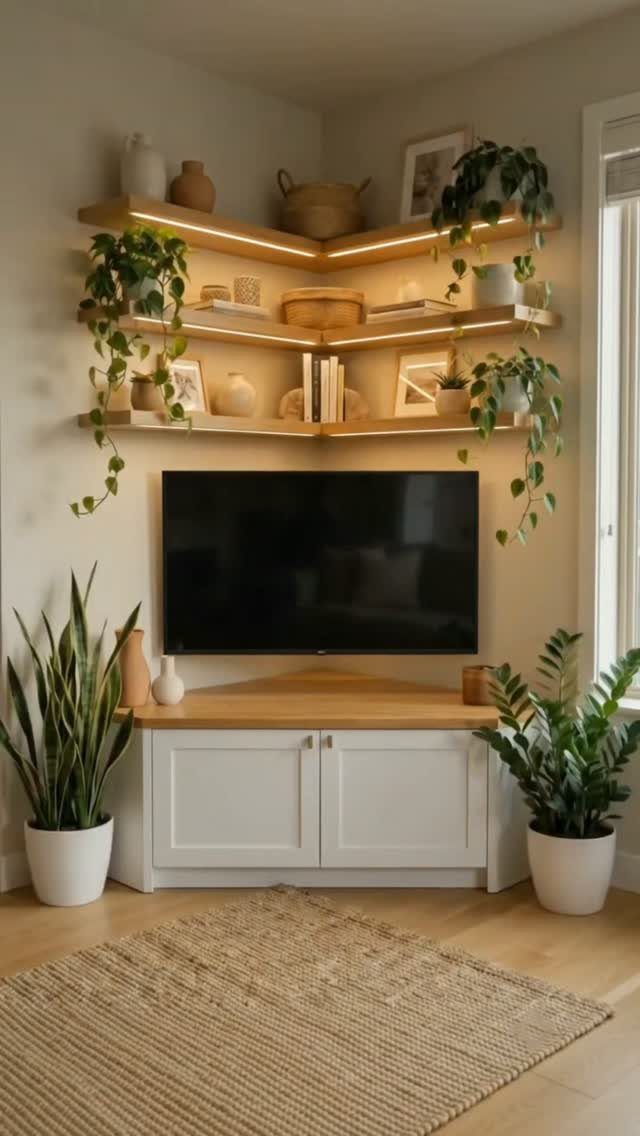
Corner shelving makes use of the spot most rooms leave empty. A TV on a low white cabinet, with L-shaped floating shelves stacked above, turns a dead corner into a storage and display wall.
Under-shelf lighting is the detail I’d add first: it warms the corner and softens the screen’s glare after dark. Fill the shelves with plants and a few objects, and leave gaps so each tier doesn’t look stuffed.
Wooden shelves against a white cabinet give contrast without extra color.
16. TV on an Artistic Mural Wall
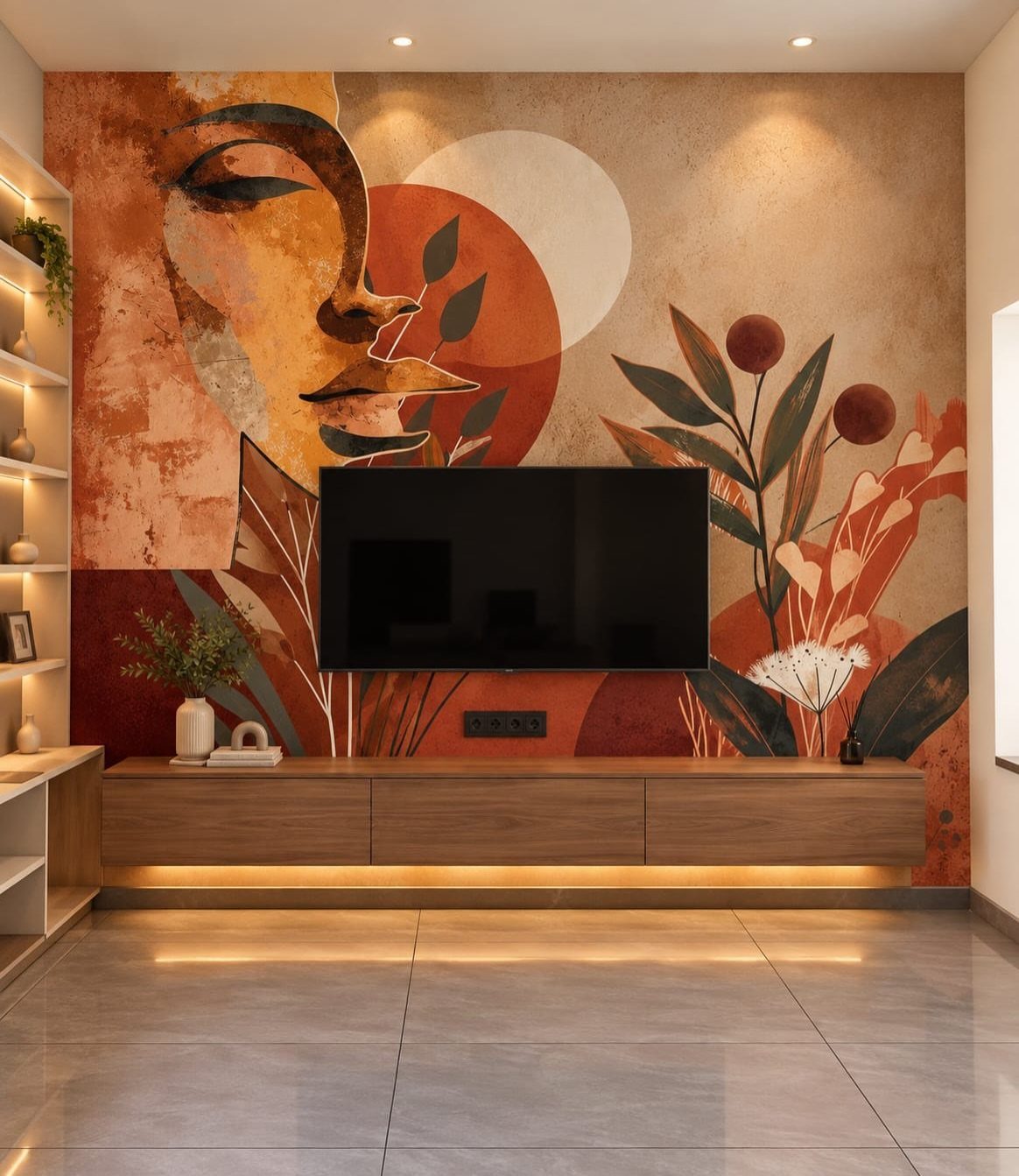
A hand-painted mural behind the TV makes the screen part of the artwork, so the black rectangle stops dominating the wall. An abstract face with plants gives you a focal point even when the TV is off.
Paint the mural first, then mount the screen. Keep the console below wooden and simple, since the wall already carries all the pattern.
A mural takes either a skilled painter or a good deal of your own weekend time. If that feels risky, a large wall decal in a similar style is a lower-commitment version.
Benefits of TV Unit Design
A good TV unit earns its spot by doing several jobs at once.
It gives media devices, books and household odds and ends a set place, so the gaming console, the sound system and the remotes stop wandering around the room.
Cord control is the benefit people expect most and the one units deliver least reliably. Plenty of units have built-in wire management, but check that it fits your actual cables before you buy.
Height and viewing angle matter too. Furniture that puts the screen at the right level makes a movie night more comfortable, and that is a gain no décor choice can match.
Units come in many styles and sizes, so a plain room and an ornate one can both get a fit. Measure first, since the unit should never crowd the space.
Considerations for TV Wall Design
Start with the layout. Check how much wall you have on either side of the screen, and keep the TV out of high-traffic paths so it doesn’t get bumped and nobody walks through the view.
Next, look at the light. Daytime sun can wash out a screen’s color, brightness and sharpness, so note where the windows fall before you pick a wall.
Plan the cables early. Since most current TVs stream over Wi-Fi, the power cord is often the only wire left, and a recessed outlet box behind the screen hides it completely.
If you have HDMI and other cables, a channel (trunking) inside the wall is the better route.
Then match storage to what you own.
Count the remotes, discs and consoles that need a home, and choose a unit with space for them. I’d settle on one style, whether modern, rustic or minimalist, and one main material that echoes what’s already in the room.
Installation Tips
Treat a media wall as a job for a professional, or at least get professional advice before you start.
Stud walls and electrics are where mistakes get expensive or unsafe, and a TV is heavy enough that a poor mount is a real hazard.
Budget for it. Installed media walls were quoted at £2,000–£4,000 by one UK source, so expect to price it in your own market before you commit.
Recessing the TV in built-in cabinetry is the more popular route. It lets the set blend into the room, and it works well in small living rooms, where it uses alcoves and floor-to-ceiling wall space.
If bespoke work is out of reach, mounting a TV on the wall or setting it on a stand against a papered or painted backdrop is the cost-effective option.
Locate studs before drilling, and run power and cables before the finish goes on.