

Yeah, foxes can absolutely climb fences. That six-foot barrier you’re banking on probably won’t stop a determined one. These animals have sharp claws and exceptional agility, so they’ll scale wooden planks with ease, balance along the top edge, and slip right over. Height alone is ineffective.
You’ll need a combination of small mesh openings, buried barriers underground, and some kind of top protection, such as rollers or electric wires, to actually keep them out. A multi-layered approach is essential for fox-proof fencing.
Yes, Foxes Can Climb Fences: Here’s How
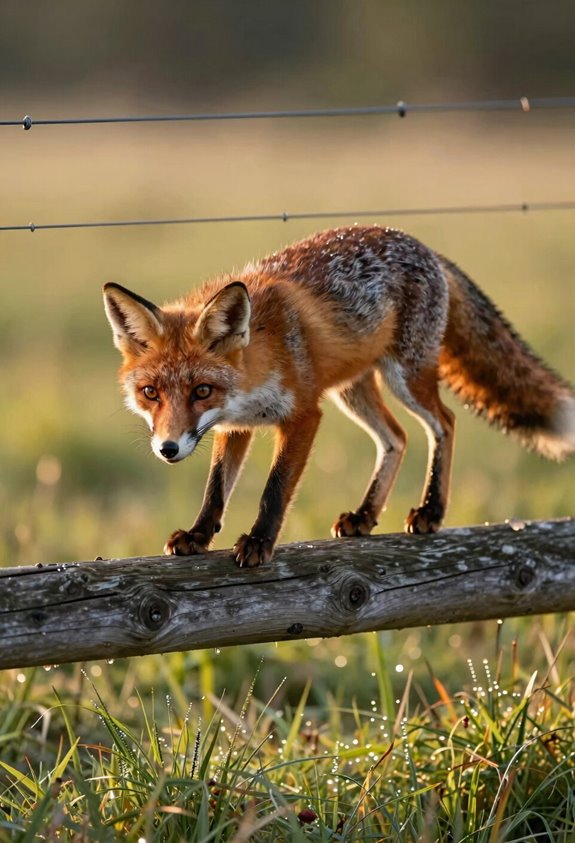
Foxes are nimble climbers capable of scaling fences. They grip wooden planks with their sharp claws, pulling themselves up with remarkable agility. They don’t stop at your fence line; they’ll keep going until they reach the top, balancing along edges with impressive precision.
Foxes will explore trees, sheds, roofs, and basically any vertical surface that might lead somewhere interesting, like your backyard. Their natural athleticism means standard fences won’t stop them. Standard barriers are ineffective against creatures built for climbing.
Why Height Alone Won’t Stop a Determined Fox?

So you’re thinking a tall fence will solve your fox problem. Height alone won’t work. Foxes are determined climbers that exploit gaps, footholds, and top surfaces to breach containment. A six-foot fence won’t stop them, and neither will a taller one.
You need ground and top barriers working together, not just one impressive wall standing alone. A tall fence provides initial protection, but without overhangs or electric strands protecting the top and without buried barriers underground, your henhouse remains vulnerable. Both underground and overhead defenses are essential to effective fox containment.
Mesh Size: The Hidden Barrier Most People Miss

Why do so many people spend hundreds of dollars on tall fencing, only to find foxes slip right through anyway. The mesh size is the critical factor most overlook. You can build a fence taller than your house, but if those openings are too big, a fox squeezes through with ease. You need sturdy mesh with small, tight openings that actually stop them. Loose wire will not work. You need something that closes off their escape routes completely. Combine small-opening mesh with fence height and digging prevention, bury it deep or add an apron, and you’ve got something foxes cannot exploit. This combination is what actually prevents fox entry.
Bury Your Fence: Stop Underground Climbing Attempts
Burying your fence deep underground, a solid foot or more, is one of the best moves you can make because foxes are natural diggers and will excavate under a fence if given the opportunity. The real advantage comes from adding a ground apron, which is an extra barrier of netting or sturdy material that extends along the base. This barrier disrupts their digging strategy and prevents them from getting the foot-grip they need to tunnel underneath. The combination of proper burial depth and correctly installed ground protection creates an effective deterrent against fox intrusion attempts.
Depth Requirements For Protection
Foxes don’t just vault over fences like acrobats; they’re also sneaky diggers who’ll tunnel under your barrier if you let them. This is a serious threat requiring proper countermeasures.
You’ve got to bury that fence deep enough to stop them. A solid foot of depth is your baseline protection, the minimum I’d recommend. Going deeper provides additional security, because foxes are relentless diggers.
A ground apron, basically fencing that extends outward along the soil surface, works effectively. Anchor it down with stakes or weights, especially if your yard is soft or near water. Combined, these layers create a barrier foxes cannot breach.
Ground Apron Installation Methods
Stopping foxes from tunneling under your fence requires treating it as a serious structural project. An L-shaped ground apron is essential for preventing underground breaches. This buried edge extends outward from your fence line, making digging significantly harder for determined foxes.
To maintain your setup:
- Weight or peg that apron down tight so it doesn’t shift when foxes probe for weak spots
- Inspect regularly because even small breaches let clever animals slip through your defenses
- Combine the outward overhang with your buried fence section for real protection
This creates multiple layers of defense. The continuous buried barrier combined with the apron provides effective protection against persistent diggers.
Ground Aprons and L-Shaped Footers Explained
When you’re trying to stop a fox from digging under your fence, ground aprons and L-shaped footers are effective solutions. A ground apron extends outward from your fence base, creating a horizontal barrier that prevents foxes from squeezing underneath. An L-shaped footer works differently by burying your fence legs both vertically and horizontally, creating an underground barrier for fox exclusion. Combining these two methods significantly improves effectiveness. You’ll want to weight or peg them down, especially in soft soil or near water, so foxes can’t push them aside. When you layer ground aprons with buried fencing, you create multiple physical obstacles that foxes cannot bypass. This layered approach provides reliable protection against fox intrusion.
Roll Tops and Angled Overhangs: Climbing Deterrents
Why do foxes keep trying to vault over your fence when you’ve already made it tall? They’re persistent little climbers, and it’s frustrating. Roll tops and angled overhangs are effective deterrents against these determined intruders.
Roll tops with a coyote roller make gripping the fence edge nearly impossible for foxes. The angled overhang, a tilted section at the top, creates extra challenge and forces them to work harder. Combining these fox deterrents works best:
- Watch your fox give up when it can’t find purchase on a smooth roller
- Know that outward-tilted edges disrupt their climbing strategy
- Use paired electric wires providing backup protection
Pairing roll tops with angled overhangs and secure construction outperforms flat-topped fences.
Material Selection: Why Smooth Surfaces Defeat Climbing
If you’ve ever watched a fox scramble up a wooden fence like it’s climbing a ladder, you’ll understand why material choice is absolutely essential. The right barrier either provides secure grip points or denies them entirely.
Smooth surfaces are your most effective defense. Vinyl and metal mesh provide zero traction, making it nearly impossible for foxes to gain purchase. Rough, textured materials work against you because they offer grip points that foxes exploit without hesitation.
| Material | Climbability |
|---|---|
| Wood planks | High |
| Smooth vinyl | Low |
| Metal mesh | Low |
| Textured wood | High |
| Tight mesh | Low |
Small mesh openings under three inches restrict squeezing and reduce footholds. This is the core of your deterrence strategy. Choose smooth, tight surfaces and foxes cannot climb them.
Electric Fence Toppers: When They Become Essential
If your standard fence isn’t cutting it because a six-foot height won’t reliably stop a determined fox, electric toppers might be your answer. They work by delivering a harmless but memorable shock that deters foxes from climbing. This guide covers when you actually need them, how effective they really are, and the essential safety and legal requirements you must handle before installing one, since improper installation could injure your neighbor’s dog or violate local regulations.
When Standard Height Fails
Standard fences work great until they don’t. This usually happens when you’re dealing with a particularly determined fox. I learned this the hard way. When regular fence height stops working, electric toppers become your strategic deterrent tool that actually delivers results.
Several situations push farm owners to upgrade:
- Spotting paw prints on top of your fence (yes, they really do that)
- Waking up to find your chickens gone because standard height failed
- Realizing you’re not alone, other farm owners face this constantly
Electric toppers deliver non-lethal shocks that discourage climbing attempts without requiring a complete fence rebuild. They’re the practical solution when fence height alone isn’t sufficient, transforming your setup into something that protects your livestock.
Electric Deterrent Effectiveness Proven
How much shock does it actually take to stop a fox? Not much, just enough to make them reconsider. Electric fence toppers deliver a brief, non-lethal jolt that proves effective at fox deterrence. When you combine them with tight mesh, ground protection, and outward overhangs, you’re creating a “no-win scenario” for foxes trying to breach your setup.
The real effectiveness comes from an integrated fencing approach. Studies show these electrified wires reduce climbing attempts significantly, especially on taller enclosures. Proper installation is critical. Underpowered or poorly grounded systems fail completely, leaving you frustrated and vulnerable.
When standard height fails you, electric toppers become your secret weapon.
Installation Safety And Legal Requirements
Before installing an electric topper on your fence, significant preparation is required. Local safety regulations are mandatory considerations.
Here’s what you need to address:
- Voltage compliance – Your setup must not pose electrical hazards to neighbors’ animals or children
- Professional installation requirements – Improper installation creates serious liability issues
- Grounding specifications – Improper grounding creates serious electrical hazards
Electric fence toppers require proper installation by certified professionals who understand local electrical codes. Regular maintenance checks are necessary safety measures. Skipping these requirements puts your property and others at risk.
Posts and Corners: Eliminating Climbing Holds
When you’re really trying to fox-proof your fence, the posts and corners are basically like built-in climbing holds. They’re the exact grip points a fox needs to haul itself up and over, which is why we’ve got to make them as unhelpful as possible. Reinforced netting around these vulnerable spots changes the effectiveness of your fence. You’ll want to wrap corners tight and add extra layers where posts meet the fence line, eliminating those convenient footholds foxes exploit. Think of it like removing all the handholds from a climbing wall. Smooth surfaces matter too; vinyl or metal work great. Don’t forget to bury materials at the base. That 12-inch trench stops them from digging underneath while climbing. The difference between adequate and inadequate fox-proofing comes down to whether these climbing points remain accessible or are completely blocked.
Layering Defenses: Which Combinations Work Best
Now that you’ve got those climbing holds locked down at your posts and corners, no single defense will stop a determined fox. Layering defenses is your most effective approach, and it’s what separates folks who keep foxes out from those who simply hope they do.
Here’s what actually works when you combine strategies:
- Pairing a solid fence height with anti-climb design creates a one-two punch. Foxes struggle significantly with this combination.
- Adding top protections like rollers to your existing setup multiplies your success rate dramatically.
- Burying bases plus installing anti-climb netting at corners builds a multi-layer defense that foxes cannot breach.
This layered approach is how you protect what matters most.
Inspection and Repair Schedules: Detecting Breaches Before Intrusion
Setting up a regular monitoring system is the best way to catch fox trouble before it becomes a real problem. Think of it like having a security guard who never sleeps, whether you’re using motion-activated cameras or just doing visual checks at dusk and dawn when foxes are most active. You’ll want to keep a simple log, even a notebook, where you jot down any signs of intrusion like footprints, torn mesh, or loosened posts along with the date and weather. Patterns emerge when you track this information over time. Once you spot something suspicious, respond fast. Repair any loose netting within a day or two so those determined foxes don’t get the chance to figure out your fence is vulnerable.
Regular Monitoring System Setup
Because foxes are sneaky escape artists who exploit even the tiniest weakness in your fence, you need to stay ahead of them with a solid monitoring system. This is where most people fail to implement adequate controls.
Focus on fence monitoring that actually works.
- Daily visual checks and weekly detailed surveys catch damage before foxes discover vulnerabilities
- A documented inspection log with timestamps and responsible personnel ensures accountability and prevents gaps in oversight
- Sensors or tripwires at vulnerable spots like gates and corners provide real-time alerts
Breach detection requires consistent effort. When you spot damage, proactive repairs within 24 to 72 hours stop foxes from exploiting the opening. Regular monitoring and swift response form the foundation of an effective perimeter defense system.
Breach Detection and Response
How often do you walk your fence line and really look at it? I’m talking dawn checks and dusk patrols. That’s when foxes get sneaky, and when you’ll spot their handiwork. I’ve installed motion-activated cameras and infrared sensors at vulnerable spots: corners, gates, and those low-lying mesh seams where trouble brews. When breaches happen, and they will, document everything: date, location, and how they got through. Patterns emerge from this documentation. Preventive maintenance requires regularly checking for loose links, torn fabric, and corrosion. Resecure buried sections promptly and reinforce weak points with thicker wire and sturdy posts. Your fence integrity depends on this routine vigilance, not on hoping for the best.
Building to Your Budget: Budget, Standard, and Premium Fence Designs
When you’re trying to keep foxes out without emptying your wallet, you’ve got three main paths to choose from based on how much risk you’re willing to accept.
Budget fences are basic and affordable, but provide minimal fox deterrence. Standard designs offer better fence height, tighter mesh size, and ground aprons for actual breach prevention. Premium setups include tall barriers, reinforced netting, and monitoring systems.
Here’s what matters:
- Budget options save money upfront but require you to manage frequent breaches and repairs
- Standard designs balance cost and protection, reducing incidents significantly
- Premium fences provide comprehensive protection with minimal breach risk, though at higher cost
Pick based on your comfort level, your terrain, and your actual capacity to handle fox intrusions.
Common Mistakes That Invite Foxes In
So the issue is: most people don’t realize they’re basically rolling out a welcome mat for foxes without even knowing it. I’ve seen it happen again and again, and it’s preventable.
| Mistake | Why It Fails |
|---|---|
| Fences under 6 feet | Foxes jump right over |
| Smooth surfaces (vinyl/metal) | Too easy to climb |
| No buried fencing | Digging underneath happens |
| Missing top protections | Nothing stops climbing attempts |
| No monitoring plan | Breaches go undetected |
You’re making fence breaches inevitable when you skip ground barriers or ignore top protections. The worst part is that you don’t know it’s happening until it’s too late. Without ground barriers and top protections, foxes will find their way through. Install buried fencing at least 12 inches deep, use 6-foot minimum height fencing, add angled extensions at the top, and perform monthly perimeter checks to catch vulnerabilities before foxes do.