Whether the wall can be changed sorts these ideas fast, from the Adhesive Broom Holder at one end to the Built-In Cleaning Cabinet at the other.
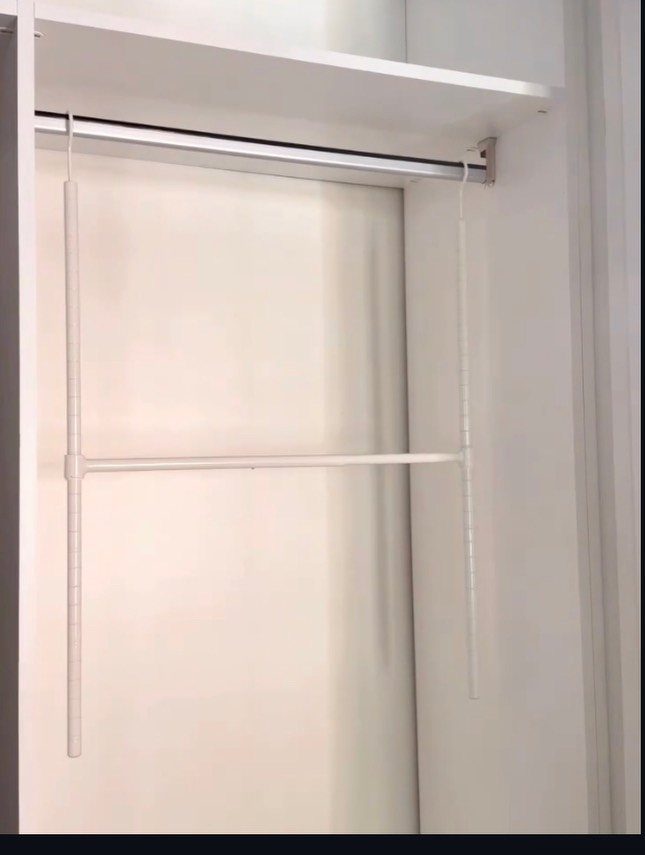
Adhesive clips on the side of a shelving unit and a clear pocket organizer on the door hang without drilling, so they work in a rental.
The Built-In Cleaning Cabinet means opening the wall, which calls for the owner’s permission and a look inside for pipes and wiring first.
The list runs from the Adhesive Broom Holder, the cheapest fix here, up to the Built-In Cleaning Cabinet, with Build and Finish Safely covering the last steps.
1. Disguised Closet Door
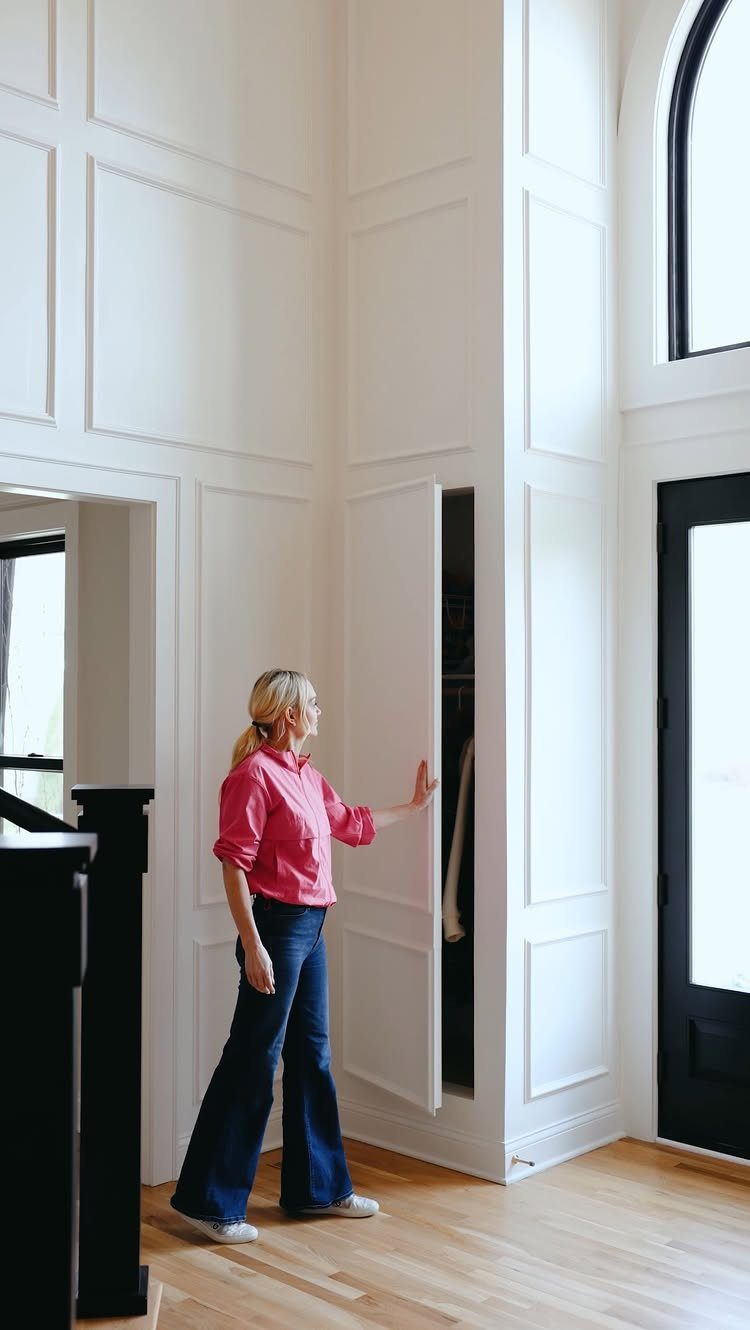
A door that matches the paneling around it turns a broom closet into plain wall, which suits an entryway where a mop and vacuum would otherwise greet guests.
Paint the door and the paneling the same white, and choose flush or concealed hinges so no hardware breaks the pattern.
A small recessed pull or a push latch keeps the surface clean.
I like this best on a wall that already has paneling, since the door’s seams can follow the panel lines. On a flat wall it shows more.
2. Laundry-room Broom Closet
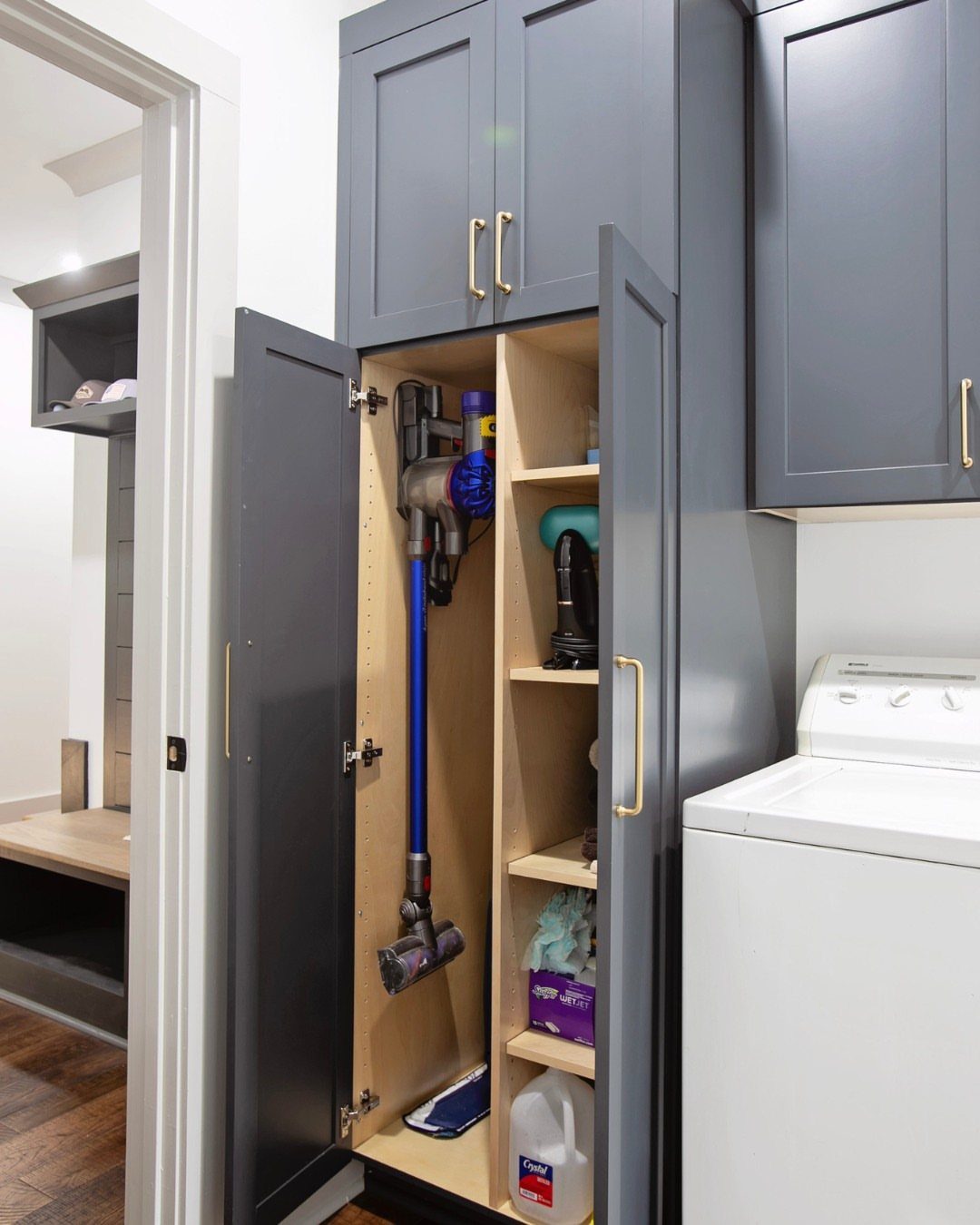
Cleaning gear lives best where the mess happens, and a laundry room is usually the one place that already has a corner to spare.
A built-in cabinet beside the washer gives the vacuum, handheld vacuum and spray bottles a single home instead of three.
Painting it a color a shade deeper than the walls makes it look planned rather than added on. Doors that close fully hide the clutter, which matters in a room people see from the kitchen.
3. Adhesive Broom Holder
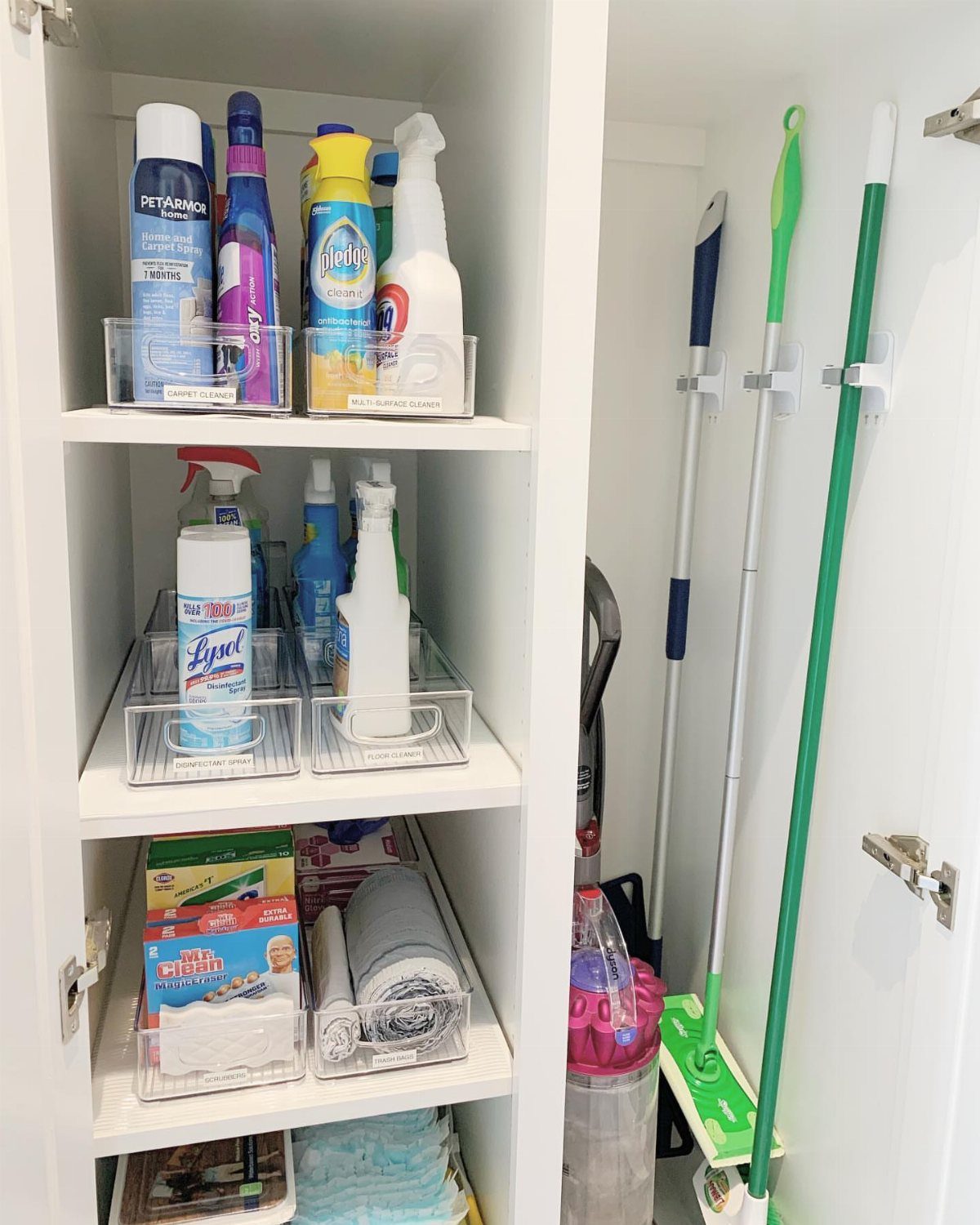
Adhesive clips on the side of a shelving unit use wall you were not using anyway. Mops and brooms hang by the handle, so the floor stays clear and the shelves keep their full depth for bottles and refills.
Space the clips so the heads of neighboring tools do not collide, and mount them at a height where the heads clear the floor.
This is the cheapest idea on the list, and it works in a rental because nothing gets drilled. Keep the heaviest tool on the sturdiest surface.
4. Labelled Storage
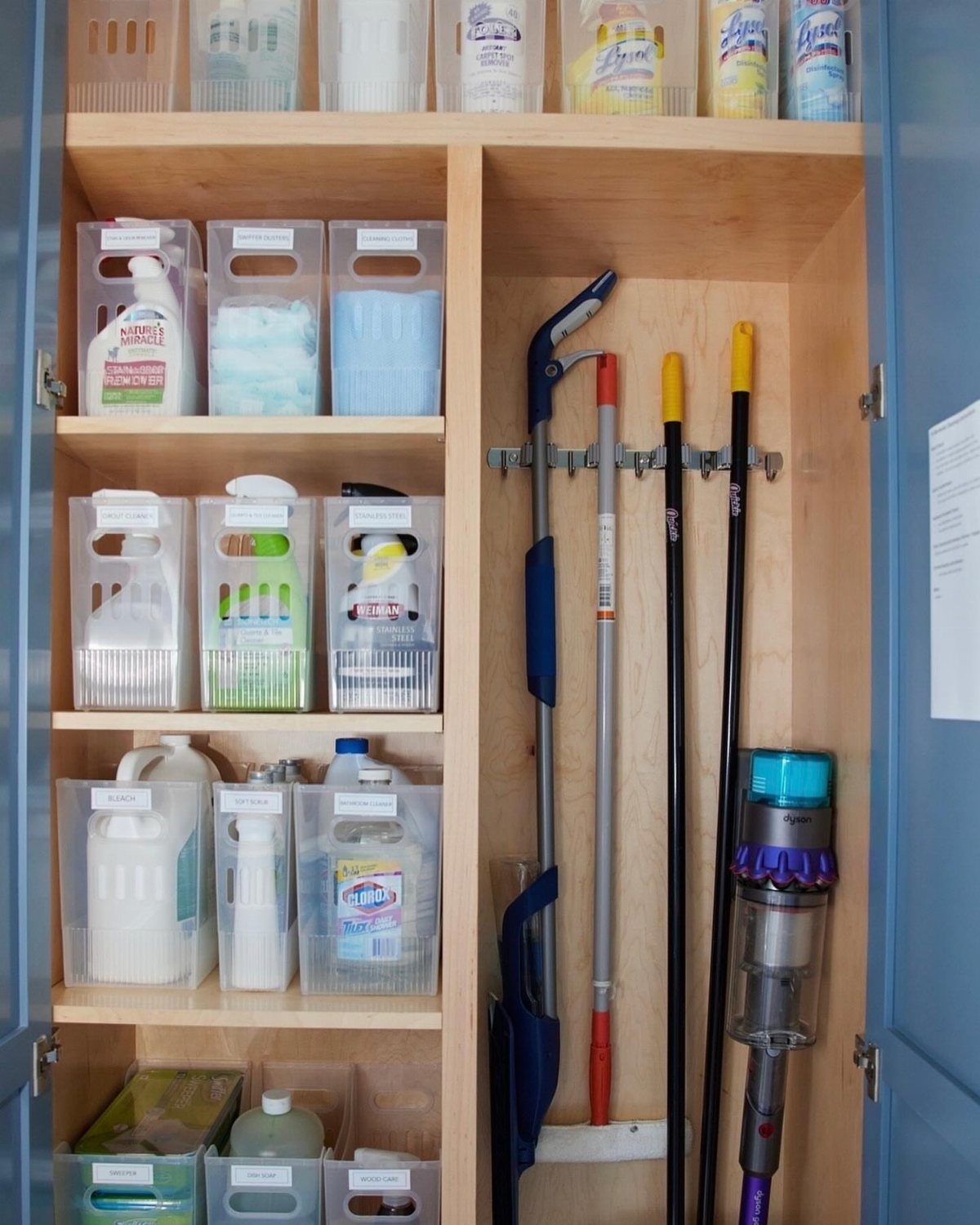
Clear bins with big block-letter labels let anyone in the house find the bleach or the wood care in seconds.
Group by job: floors, surfaces, laundry. Then give each group its own bin.
Clear plastic lets you see when you are running low, which I value more than a matching set.
Print labels or use a label maker, and put them on the front where your eye lands on the shelf. Bleach and anything else harsh deserves its own closed spot if kids are around.
5. Clear Pocket Organizer
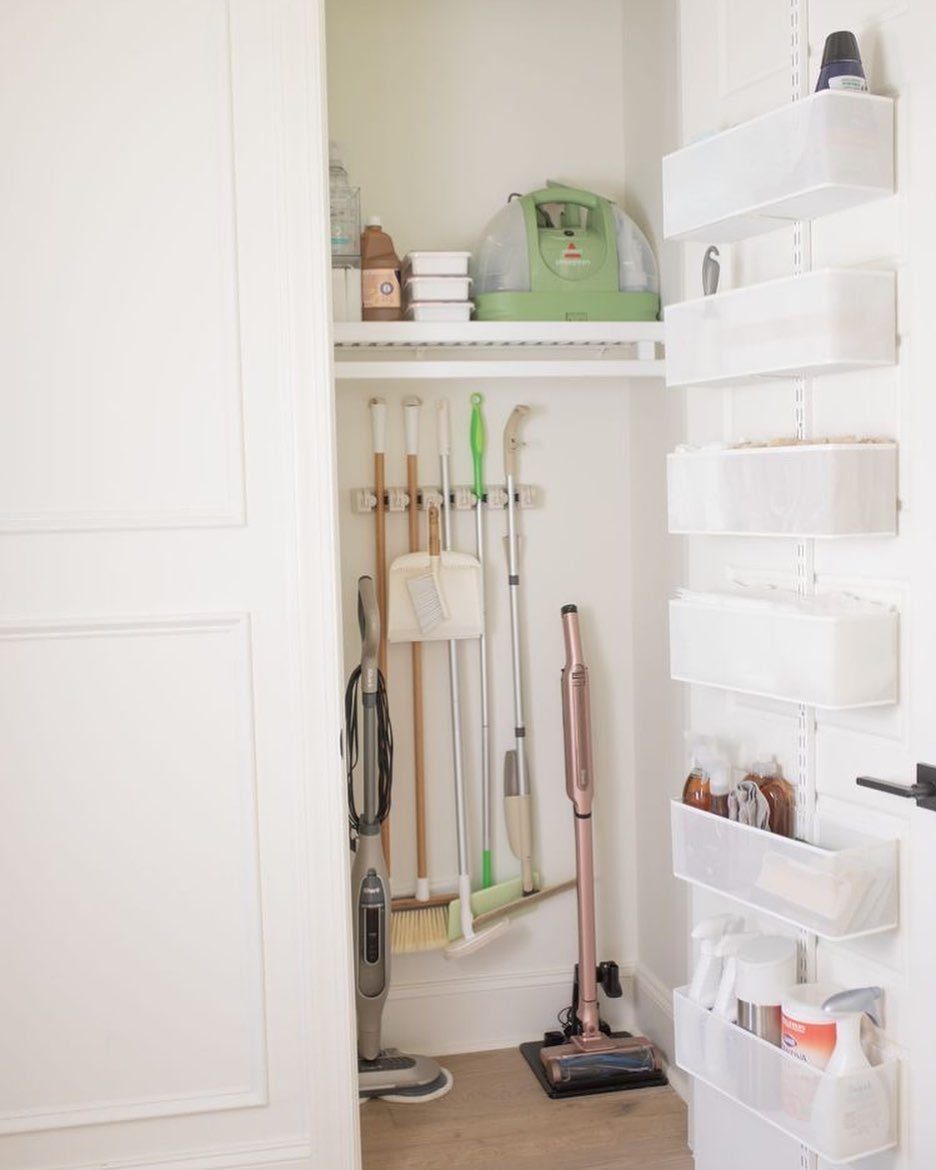
A clear pocket organizer on the back of the door gives you a whole shelf’s worth of storage in zero floor space. Spray bottles, sponges and cloths slide into the pockets, and you can see every one without moving anything.
Check that the pockets are deep enough for your bottles before buying.
Hang it on the door hooks it came with, or mount it with screws for a firmer hold. Fill the lower pockets with the lightest items so the door still swings easily.
Stackable bins or baskets are great for keeping everything organized and easily reachable. Also, remember to allocate space for your broom and mop—installing hooks can help maintain a clutter-free appearance while conserving floor space.
6. Split Closet Layout
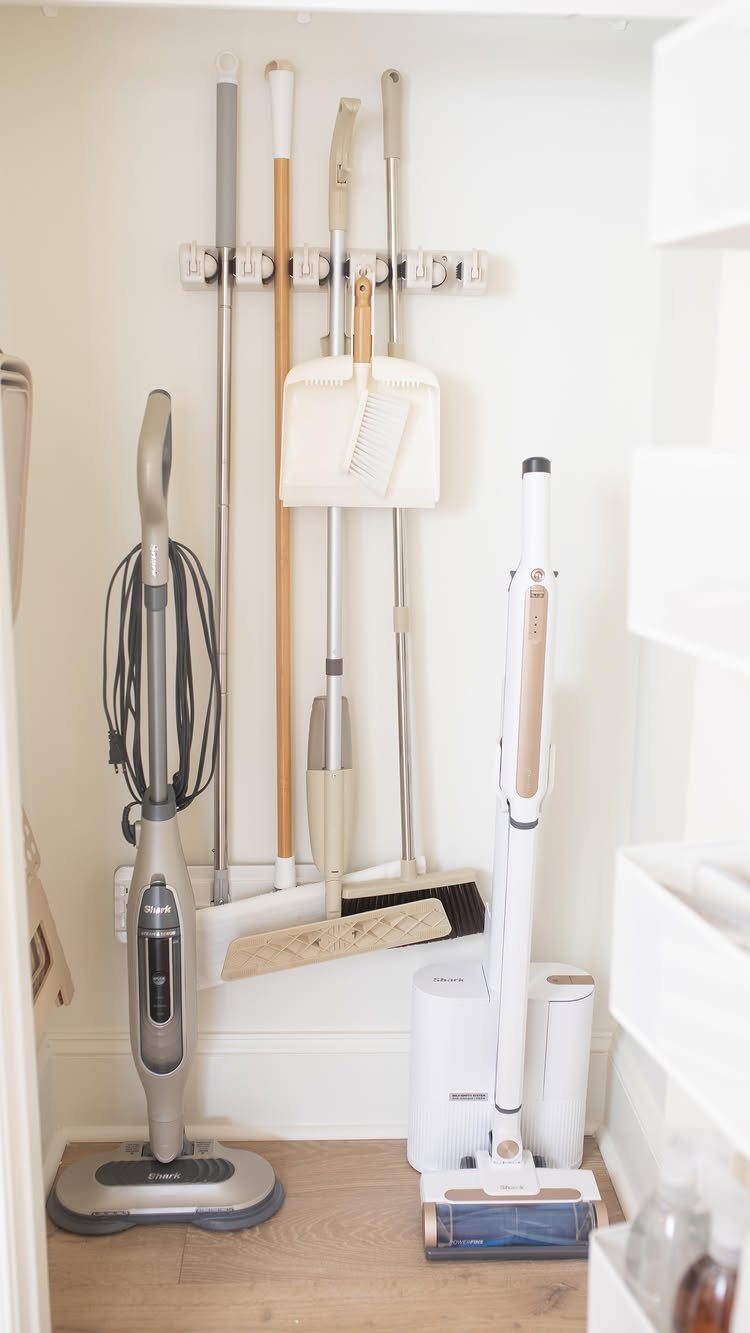
Dividing the closet into 2 zones fixes the usual problem: tall tools and small supplies fight for the same space.
Brooms, a vacuum and dustpans go on one side, hung from wall mounts, while the other side gets shelves for everything else.
I would choose adjustable shelves so the layout can change when you swap a bulky vacuum for a slimmer one.
Hang the tall tools first, measure the longest one, and then place the shelves beside it. Leaving the shelf side open to the full height keeps it flexible.
7. Pull-Out Broom Cabinet
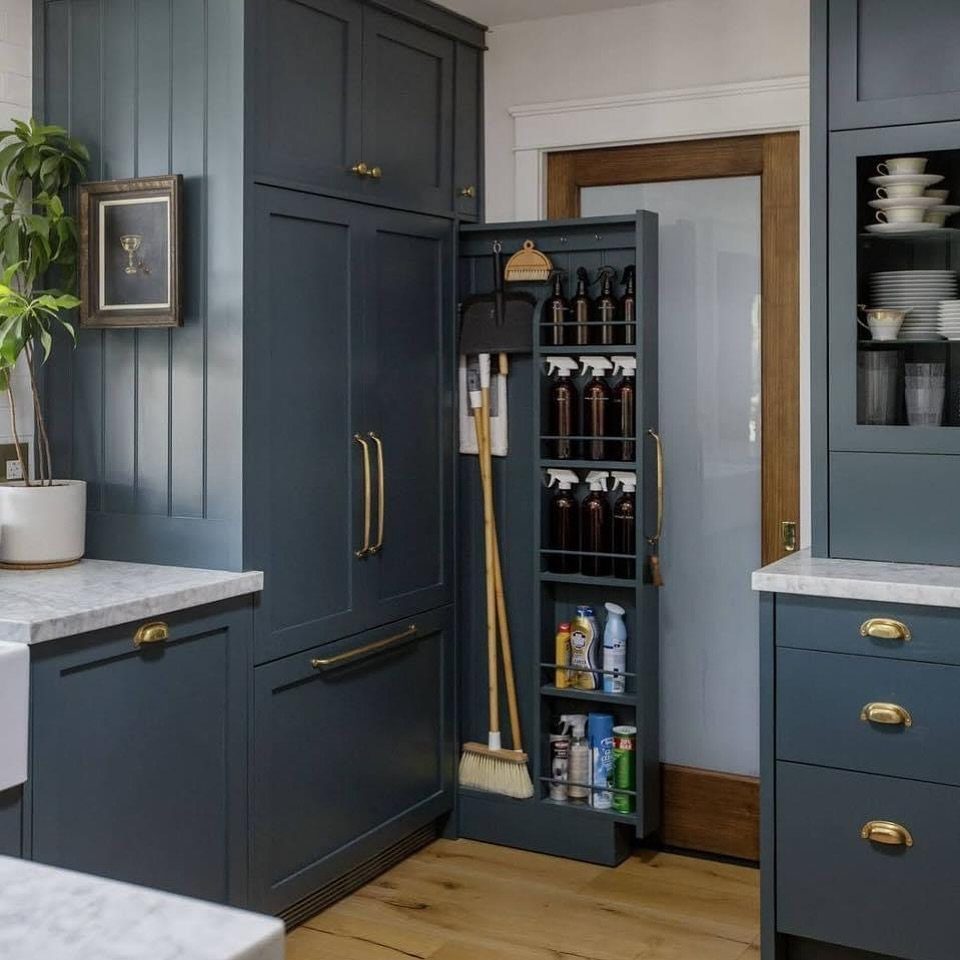
A cabinet only a few inches wide can hold a full broom closet if it slides out on a rail.
Fitted between 2 larger cabinets, it uses a gap that would otherwise go to filler panel, and the broom, dustpan and bottles all sit within reach of the sink.
I like it painted a shade darker than the cabinets around it, so it reads as a deliberate accent.
Add small shelves on the inner face for bottles. Measure the broom first, then size the cabinet around it.
8. Built-In Cleaning Cabinet
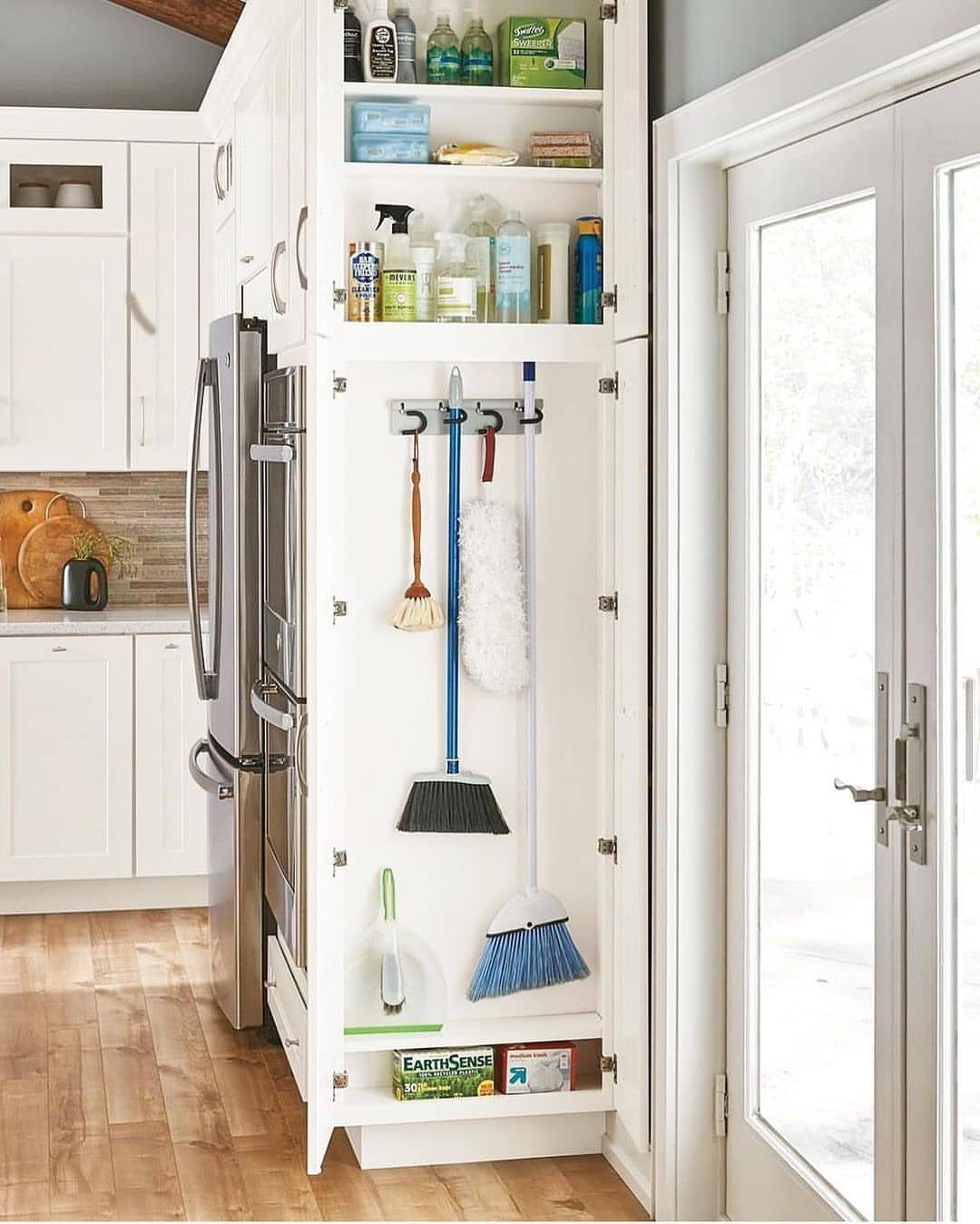
Shelves for bottles and boxes, a wall rack for the broom, mop and duster: one tall white cabinet can sort tools by how you grab them.
Everything you reach for daily hangs at hand height, and the backups sit up top.
I would line the rack up with the cabinet’s full height so long handles clear the shelves. Matching the cabinet to the kitchen’s white keeps it from looking like an add-on, and shut doors hide the lot.
9. Broom Closet with Door Storage
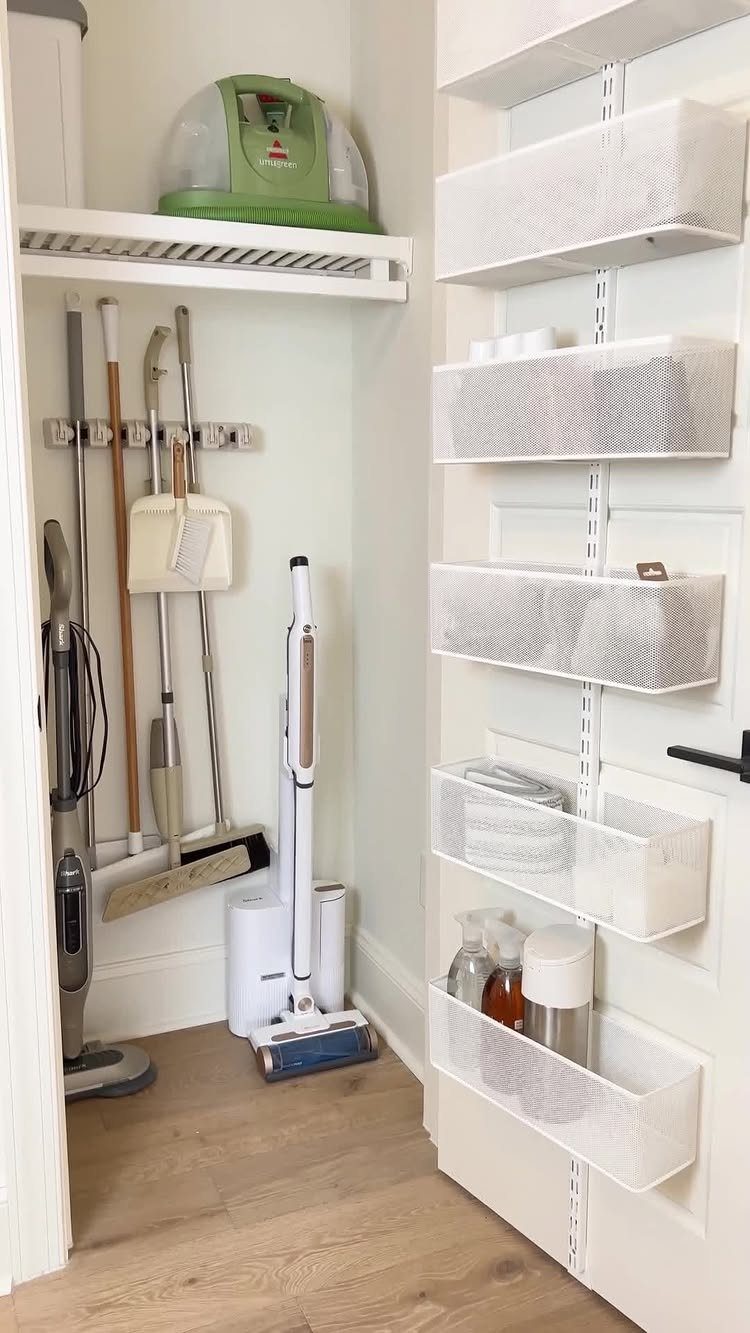
A shelf over the top and mesh bins on the door turn a plain closet into 3 storage zones.
The vacuum stands on the floor, brooms and mops hang from wall mounts, and small supplies ride on the door in white mesh, where air can move around damp sponges and cloths.
Hang the heavy tools first, then check that the door still shuts with the bins loaded. The highest shelf is best saved for things you reach for only a few times a year, like holiday supplies or spare bulbs.
10. Under-stairs Broom Storage
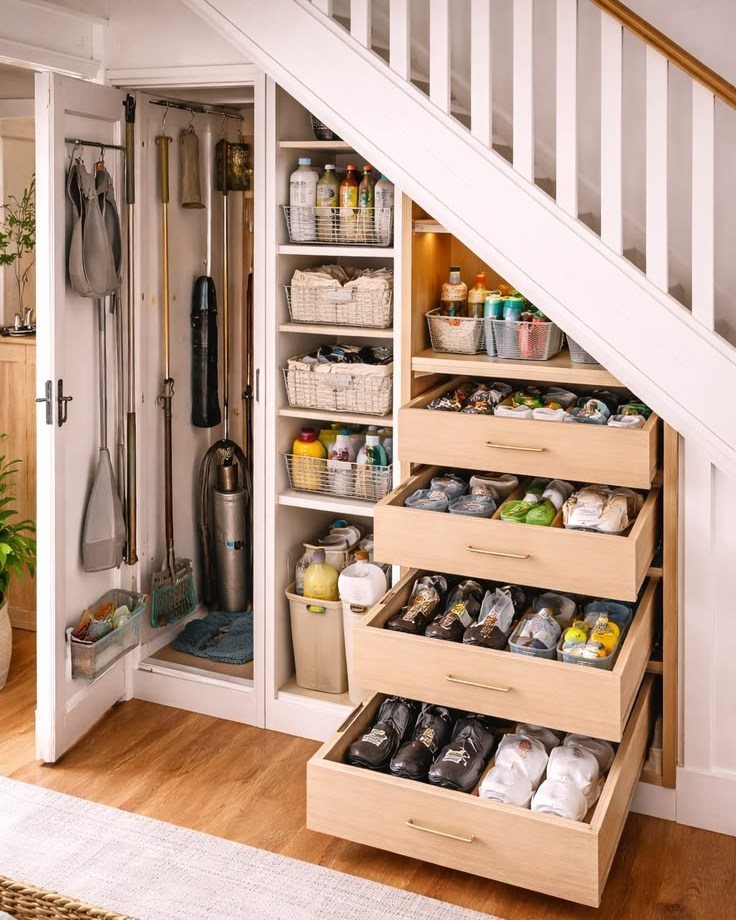
Wasted space under a staircase makes a good home for a broom closet when drawers take the rest.
A tall door section holds the broom and cleaning gear, while pull-out drawers beside it swallow shoes and other household odds and ends.
Painting the built-in unit to match the white stairs keeps the sloped ceiling from looking cluttered. Put the closet where the ceiling is highest, so a full-length broom stands upright, and use the lower, shorter spots for the drawers.
Build and Finish Safely
Look inside the wall before you cut it. Before the saw comes out, cut a small inspection hole and look inside with a flashlight and an angled hand mirror, since a stud finder can miss pipes and wiring.
If any cable could be nearby, I would shut off that circuit at the breaker first.
A between-the-studs niche suits a tight hallway because it takes no floor space.
Because the opening sits between 2 studs, the niche stays narrow, so plan the shelves around that width. A niche that shallow suits spray bottles on slim shelves and one narrow slot for the duster.
For framed construction, work in this order:
- Secure the framing around the opening.
- Hang the drywall and finish the seams.
- Prime and paint.
- Fit the shelves and hooks last.
Hardware goes on last so no paint lands on it and nothing has to be removed while you sand or roll.
Frequently Asked Questions
What is a good size for a broom closet?
A closet about 72 inches tall and 16 inches wide and deep fits brooms comfortably, since a typical broom stands around 65 inches. If the spot allows more, I would go larger.
How do you organize brooms in a closet?
Wall-mounted holders or adhesive clips lift the handles off the floor, which leaves the shelves at full depth. Leave a hand’s width between holders so the bristles don’t tangle, and set them high enough that nothing drags on the floor.
Putting tall tools on one side and shelves for small supplies on the other keeps the two from fighting for the same room.
What is a broom closet, and what else is it called?
A broom closet is a storage space for brooms, mops, cleaning supplies, vacuum cleaners and other household items. A utility closet is the usual alternate name, and some homes label the same space a janitor’s closet or cleaning closet.
What is the best closet organizer for brooms and mops?
No single organizer wins, because it depends on your closet.
I lean toward wall mounts for tall tools, and adhesive clips for a rental since nothing gets drilled. Dividers or a freestanding cabinet with dedicated vertical slots also work, and the heaviest tool should always go on the sturdiest surface.
What if I don’t have a dedicated broom closet?
Borrow space from a coat closet or laundry room, or use a tall kitchen cabinet.
A cabinet beside the washer also gives the vacuum and spray bottles one home, and a narrow slide-out cabinet can fill a gap between two larger ones that would otherwise get a filler panel.