
Round-table runners range from a length of draped fabric with no hemming at all to a formal white runner laid over a cloth, and from plain jute to gold embroidery.
Your table’s diameter decides which runner fits, and the Choosing Runner Length and Choosing Runner Width entries further down turn that measurement into numbers you can check before you buy.
A tape measure stretched edge to edge narrows the choice before style does.
1. Runner Over Tablecloth

A runner laid over a tablecloth gives a round table a finished, formal look, and a white cloth with a white runner keeps it calm.
Gold embroidery on the runner adds interest without extra color, so napkins in the same white and gold complete the set.
Lay the runner straight across the table’s center, with the cloth smooth underneath. Wrinkles show more on a plain white cloth, so press it before you set the table.
2. Jute Runner

Jute brings texture to a smooth surface, and it suits a casual table better than most fabrics do. Against a white marble top, the rough fiber gives the eye something to settle on.
Sequin or metallic trim keeps jute from looking too rustic. Placemats in a matching tone tie the set together, and a few candles along the runner give the center some height.
If you want a dressier version, choose a runner with trim; if you want it relaxed, plain jute does the job.
3. Draped Fabric Runner

A length of fabric draped down an oval table works as a runner with no hemming at all, which makes it the cheapest version to try. Beige or another neutral reads soft and formal, especially with cream chairs nearby.
Let the fabric fall loosely rather than pulling it flat, so the folds add shape.
Leave enough length to hang past the table’s ends if you like a relaxed drape. Candles and flowers can sit right on top of the folds.
4. Coordinating Napkins with Runner
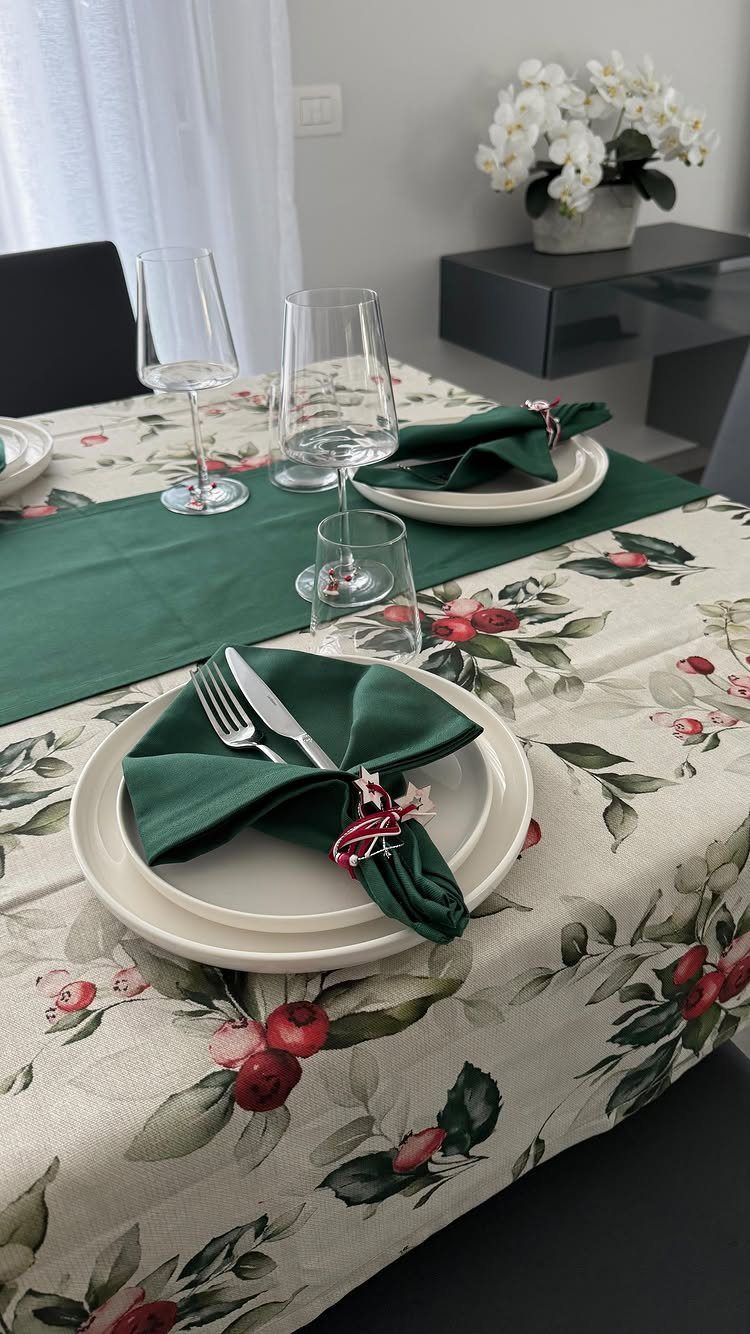
Napkins in the same color as the runner make a table look planned. Green works well over a floral tablecloth because it picks one color out of a busy pattern and calms the rest.
Cloth napkins with rings give each plate a clear spot, and the white plates keep the layers from competing.
If the cloth is already patterned, keep the runner and napkins solid. 2 patterns at once can read as clutter.
5. White Runner with Roses

White against dark wood is the strongest contrast you can put on a round table, and a single runner crossing the center is all it takes.
Red and white roses in a vase add color, and gold-rimmed plates repeat the warmth of the candles.
I like this for dinners where you want a dressy table without a tablecloth.
Keep the runner crisp, because creases show clearly on white. Keep the vase low enough that guests can see across the table.
If you have a large enough family where you are sitting all the way around the table for obvious reasons, someone will be sitting at the table runner on each end, so do keep that in mind.
6. Striped Fabric Runner

Stripes give a plain round table direction, and a runner with them draws the eye straight across the middle. On a light wood top, a striped fabric looks relaxed and tidy at the same time.
This setup suits a small table with just 2 place settings, where a full cloth would feel like too much.
Pick stripes in one or two colors so the plates and napkins can stay simple. Fabric is easy to wash, which matters for everyday meals.
7. White Crocheted Runner

Scalloped edges are what make a crocheted runner look handmade, and white stands out cleanly against a grey tabletop. Round green placemats add a second color without competing with the lace.
A small center piece, like the little vase of dried grass here, leaves the crochet pattern visible instead of burying it. Round placemats also repeat the curve of the table better than rectangular ones.
8. Runner on a Round Wood Table
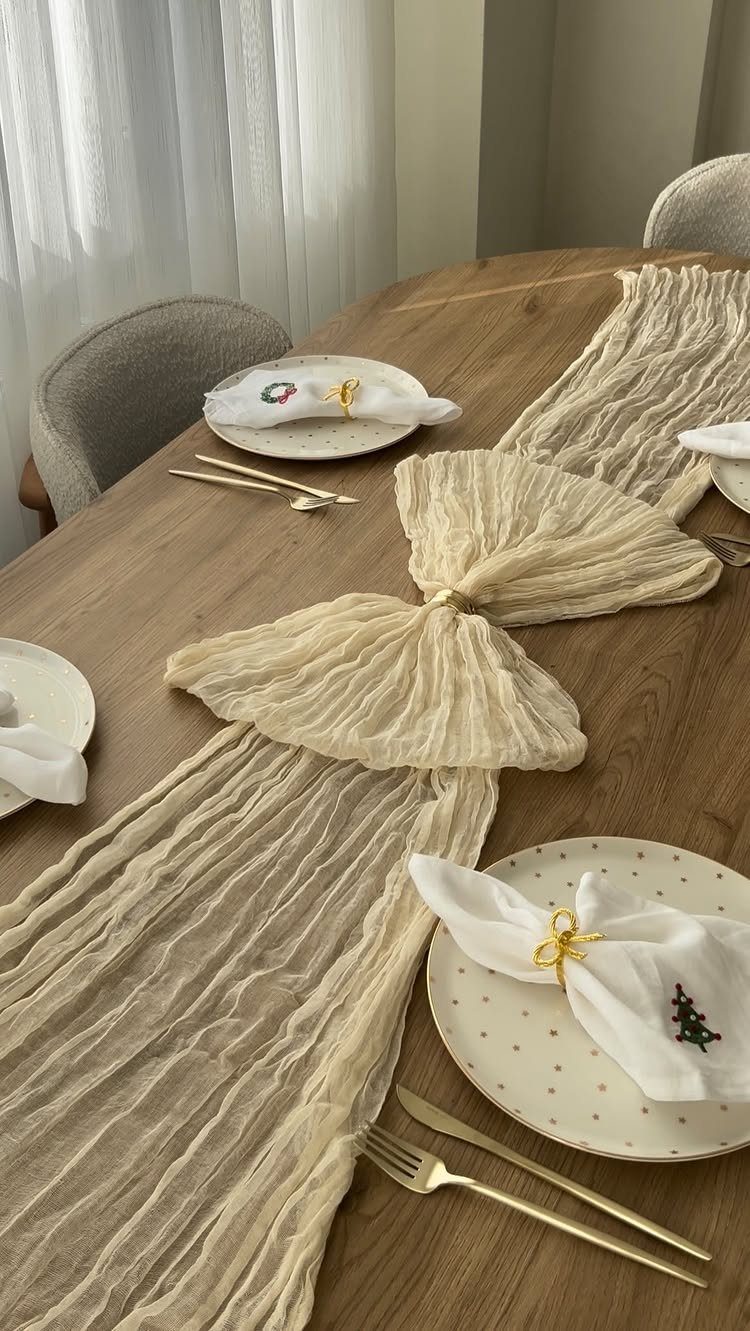
Beige texture on a wood tabletop keeps everything in one warm family, so the gold can do the accent work alone.
I like that it shows up 3 times, on the plate pattern, the napkin rings and the cutlery, so no single piece draws the eye.
Choose a runner a shade or two lighter than the wood. If the two match, the runner disappears into the table.
9. Greenery and Candle Runner

A greenery runner turns a plain white table into a seasonal one, and white is the best backdrop for it because every leaf reads clearly.
Candles tucked into the greenery put the light at the center, where everyone sits around it.
Keep the whole arrangement low enough to see across the table. A round table is made for conversation, and a tall centerpiece cuts it in half.
Choosing Runner Length
Start with the table’s diameter, then add 12–24 inches to get the runner length. That gives a 6–12 inch drop at each end, and a 48-inch table pairs well with a 72-inch runner.
The shorter drop is the safer pick when chairs sit close, because it keeps fabric out of guests’ laps. Go toward 12 inches for a more dramatic hang, but stop well short of the floor.
A runner that stops flush with the table’s edge, or one that stays fully on the tabletop, gives the cleanest, most tailored finish. Stretch a tape measure across the table first, from edge to edge, and write the number down.
Choosing Runner Width
Most runners are 14–18 inches wide, which suits a typical dining table. An 18-inch runner suits tables 54 inches across or larger, so on anything smaller I lean toward the narrower end of that range.
A runner that is too wide eats the space where plates and glasses sit. A narrower one leaves room for place settings beside it instead of on top of it.
Runner Use and Care
Size your linens to the table at its full size. If the table has leaves, measure with them inserted, since a runner bought for the closed table will look short once it grows.
For a runner you’ll use every week, check the care label before buying. Machine-washable saves time, while dry-clean-only fabric is fine for special dinners and a chore for everyday meals.
A short runner gives a centerpiece something to sit on, so the vase or bowl doesn’t float on bare wood. It suits a table where one arrangement should get all the attention.
Rolling a runner instead of folding it saves drawer space and keeps creases from setting in.
Frequently Asked Questions
Can you put a table runner on a round table?
Yes.
Lay a standard long, narrow runner straight across the center and it gives a round table direction and a finished look. It looks best when the length suits the table’s diameter and whatever sits on top stays low.
Are there table runners made for round tables?
A round table takes the same long, narrow rectangular runner as any other table, so skip the hunt for a special round shape.
Widths usually run 14–18 inches, and the narrow end of that range looks better on a small table. Pick the length by adding 12–24 inches to the table’s diameter.
How long should a table runner be for a round table?
Take the table’s diameter and add 12–24 inches to land on the runner length.
Each end then hangs 6–12 inches past the edge, which is why a 72-inch runner suits a 48-inch table. Stay near the shorter drop when chairs sit close, so no fabric lands in anyone’s lap.
Can I use a table runner with a tablecloth?
Yes.
A runner over a cloth reads more formal than a bare table, and white on white stays calm. Keep the runner no longer than the cloth, and press a plain white cloth first, since wrinkles show on it.
Do I have to use a runner with a tablecloth?
No.
A runner works fine on its own. A crisp white runner across dark wood gives a dressy table without any cloth, though creases show clearly on white, so press it first.
What is a table runner?
A table runner is a long, narrow strip of fabric that lies along the center of a table, while a tablecloth covers the whole top. On a round table it crosses the middle and gives the centerpiece a base.
Should a table runner hang over the table?
There’s no firm rule.
A drop of 6–12 inches works well, but keep it shorter when chairs are close and never let it near the floor. Ending the runner at the tabletop edge, or keeping it entirely on the surface, looks the most tailored.
Can you use a short table runner on a table?
Yes.
On bare wood a vase or bowl can look adrift, and a short runner gives it a base to anchor to. A short runner is my pick when one arrangement should own the table.
What do I put on top of a table runner?
Flowers, candles, trays, wooden boards, dough bowls and other decor all work.
Set candles along the runner’s length and the glow lands right in the middle of the table. Keep everything low enough to see across, because a tall centerpiece splits a round table’s conversation in half.