
Whether you can put screws in the wall decides most of this list: wall shelves, wall cabinets and a floating vanity all need them, while a slim rolling cart and freestanding cabinets don’t.
A renter can get a lot done with a slim rolling cart, drawer organizers or wire pull-out baskets under the sink. An owner can mount a floating vanity into studs or plan recessed shelving before the wall is closed up.
Custom cabinetry is the biggest spend here, and I’d only pay for it after a measuring pass shows that a tall narrow cabinet or a freestanding cabinet won’t fit the space.
1. Drawer Organizers
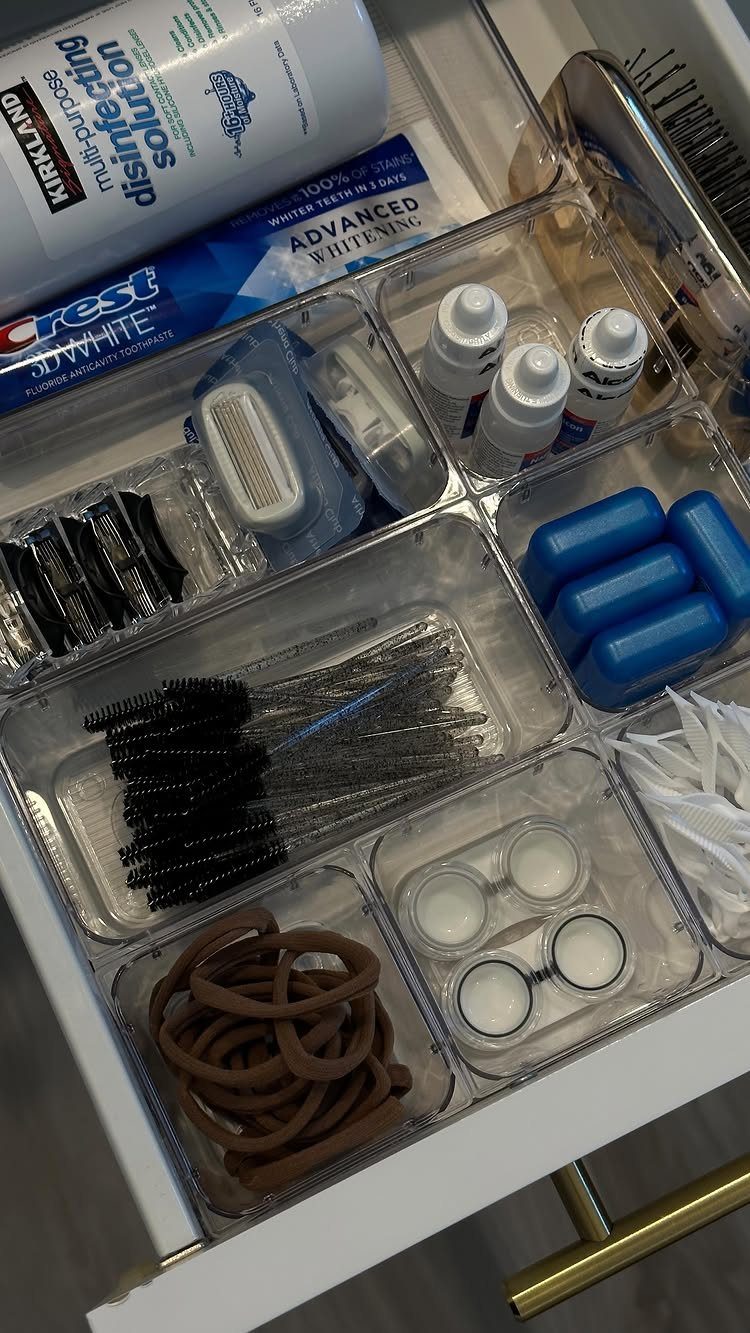
A shallow drawer stays tidy only when every product has a named spot. Clear trays and dividers do that, and you can see each compartment without pulling anything out.
I’d sort by routine: dental items in one tray, hair ties and rubber bands in another. Whatever you use every morning goes in the front compartment, and the backups go at the back.
Buy the organizers after you measure the drawer, not before.
2. Over-toilet Storage

The wall space above the toilet is the most overlooked storage in a small bathroom, and an arched cabinet with glass doors makes it look intentional.
Keep toilet paper and a tissue box on the open shelf, and use the closed section for anything you’d rather not display.
The person who made this setup said it made their rental look like a $10k remodel.
For a renter, I’d choose a unit that stands on the floor over one that mounts to the wall. Measure the height above the tank first.
3. Under-sink Pull-outs
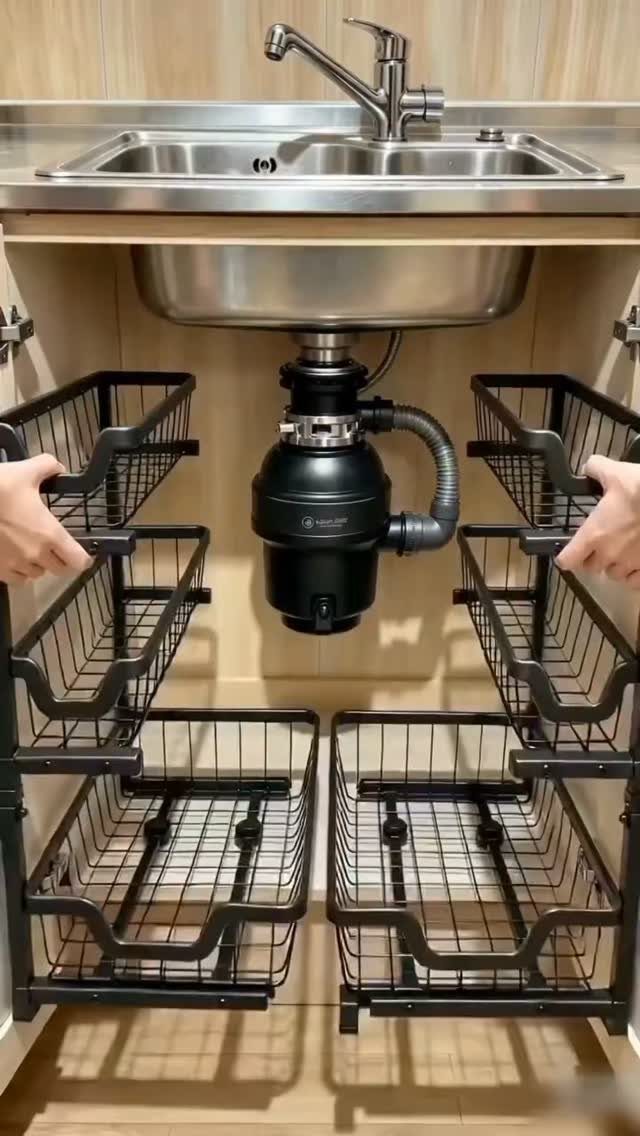
Under a sink with a garbage disposal, the plumbing eats half the cabinet. Wire pull-out baskets let you reach the items stuck behind the pipes by sliding them forward.
Measure the opening and the space around the disposal ahead of ordering.
The baskets have to clear the drain, so a two-basket setup that fits around it beats one big drawer that doesn’t. Put cleaning supplies you use weekly in the top basket and backups below.
4. Floating Vanity
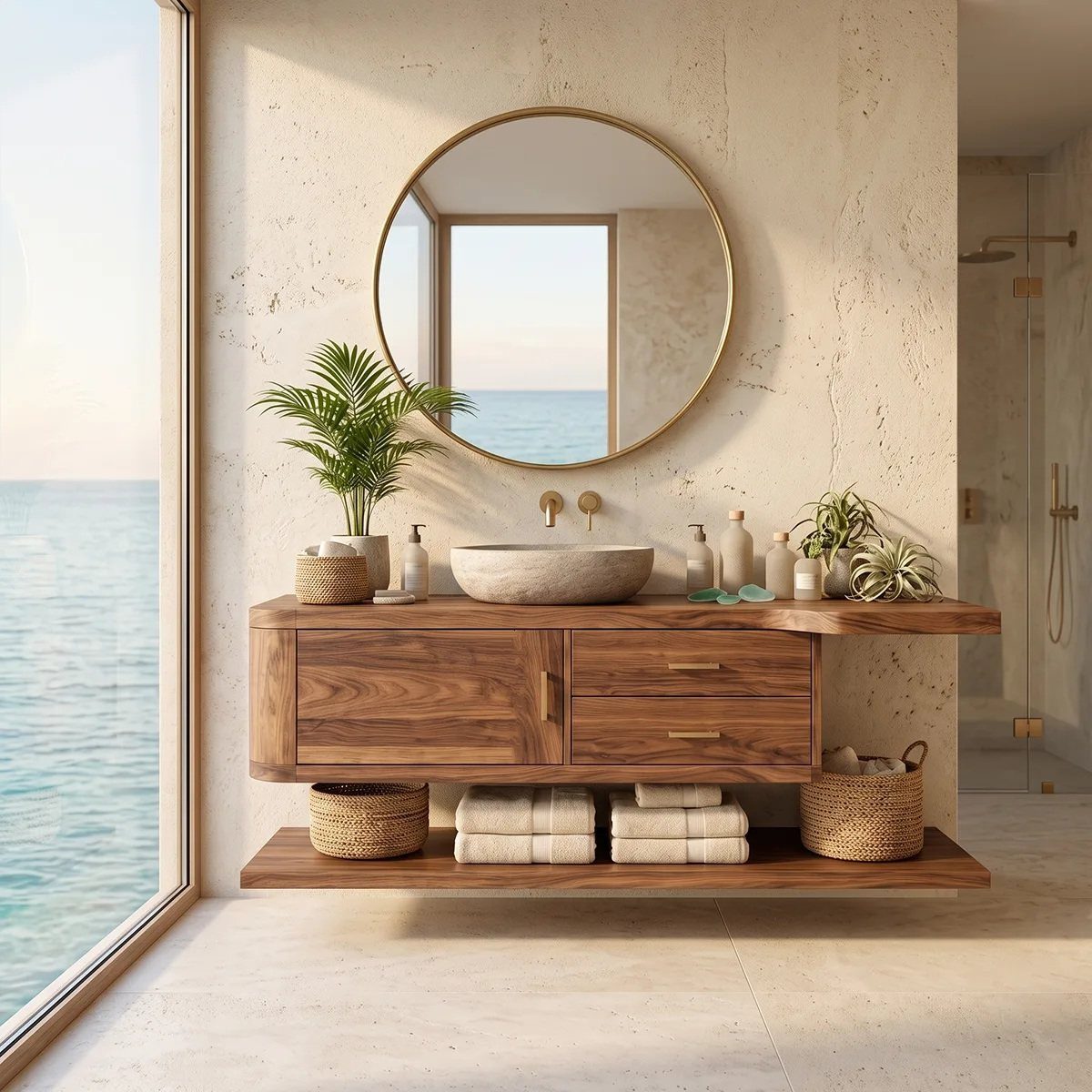
Lifting the vanity off the floor lets you see more of the room, which helps in a small bathroom. A floating wooden vanity with a lower shelf keeps towels within reach and lets you sweep or mop right underneath.
The wall has to carry the weight of the vanity, the sink, and everything inside, so plan on mounting into studs or added blocking. You also give up the enclosed cabinet space of a floor-standing base.
5. Wall Shelves
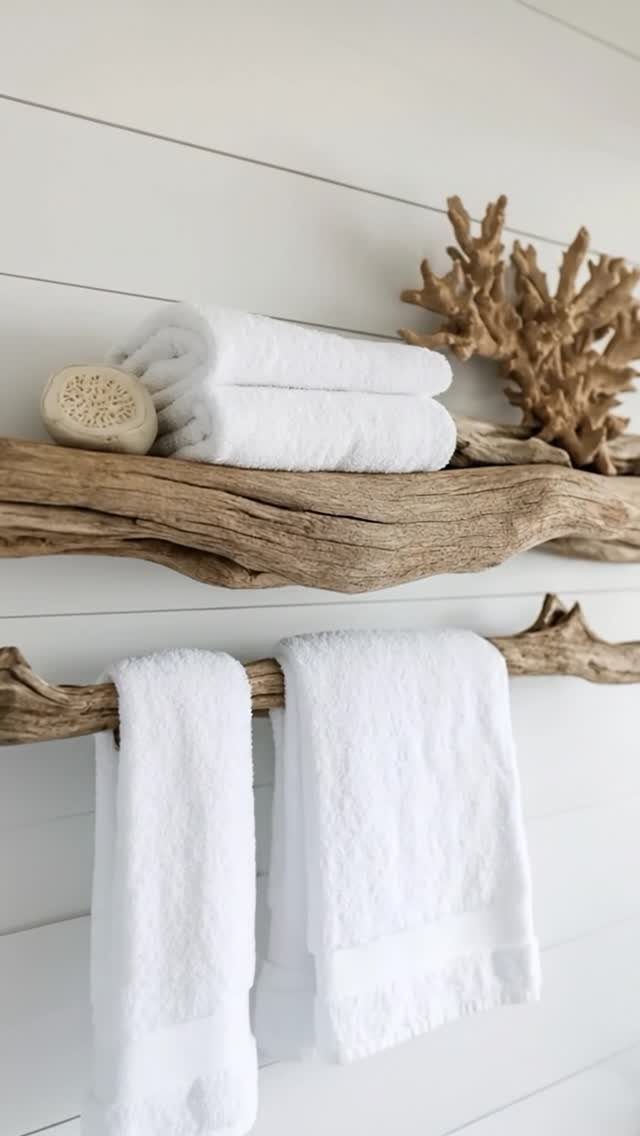
Driftwood shelves and a towel rack on a white wall look relaxed, and they put storage where the bathroom has none.
A shelf with a built-in bar works well: the bar holds hanging towels, and the shelf takes folded ones, a sponge, or a few small decorative pieces.
I’d stack only what you use within a week and store everything else in another room. Wet towels and a full shelf add up in weight, so anchor into studs or use wall anchors rated well above the load.
6. Slim Rolling Cart
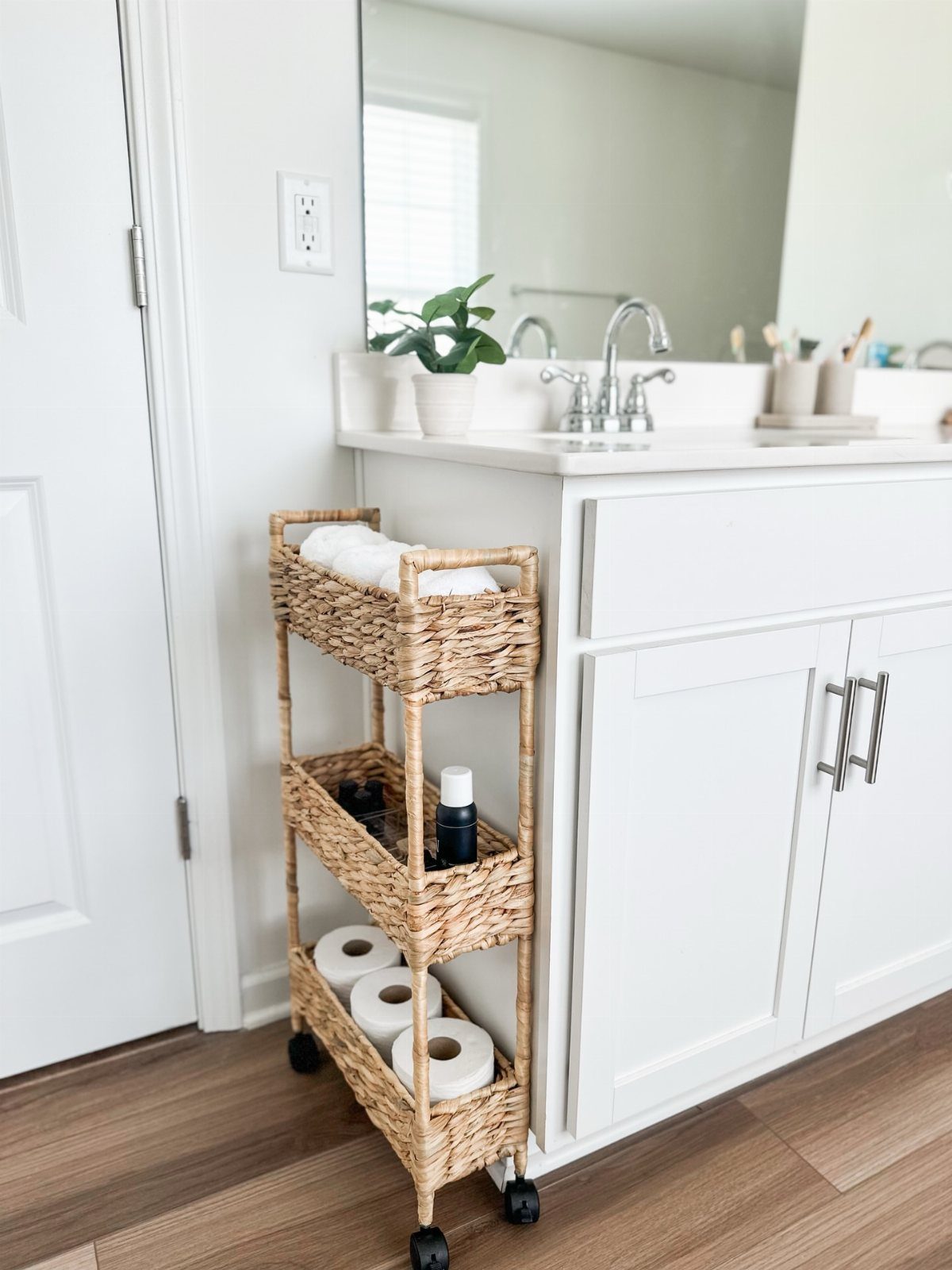
A narrow rolling cart is the easiest storage to add, because nothing gets drilled or built. Slide it into the gap beside the vanity or an empty corner, and roll it out when you need the bottom shelf.
Measure the width of the gap first, and leave room for the cart to roll without catching a door.
Heavier items like towels or extra toilet paper go on the lower tiers, with small bottles on top where you can reach them.
7. Wall Cabinets
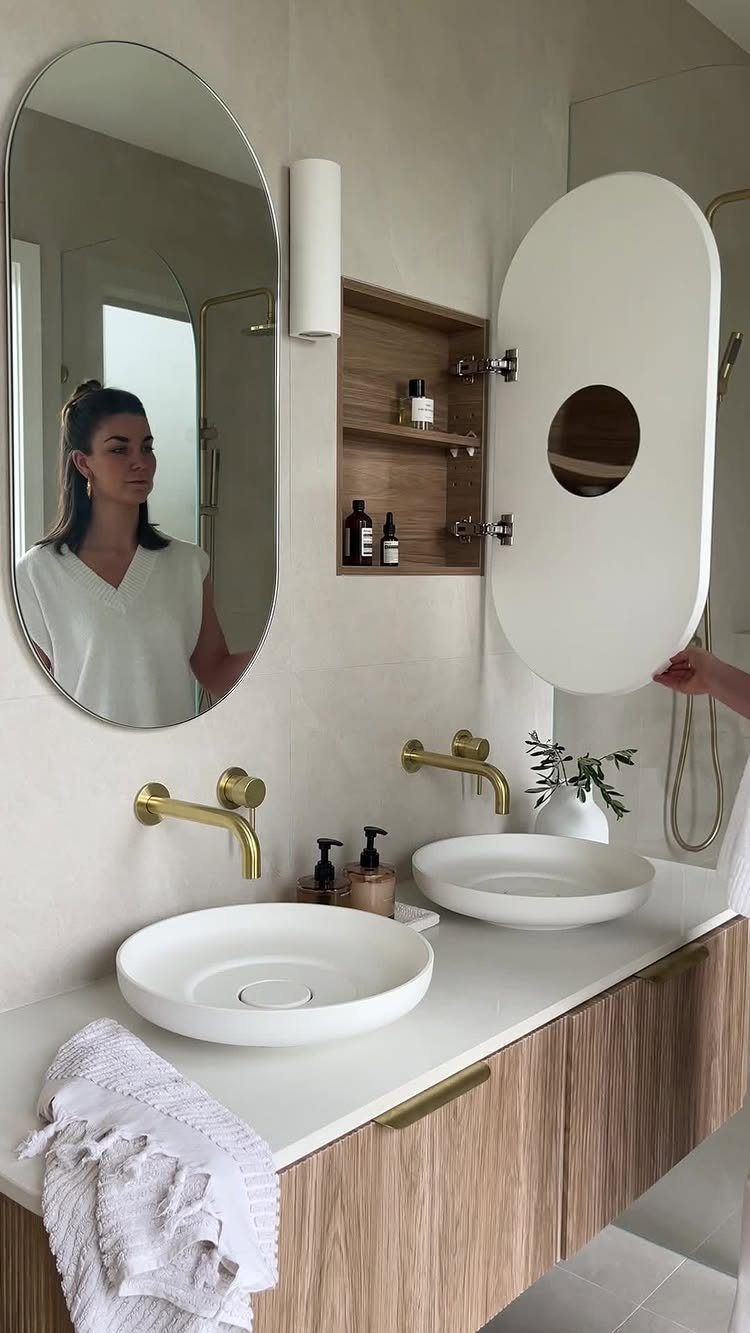
A small wall cabinet beside the mirror claims storage from blank wall and leaves the counter and floor alone.
With two sinks sharing one stretch of countertop, that matters, because every bottle you lift off the surface gives each person elbow room.
I’d pick a cabinet with a closed door over open shelves for daily products, since a door hides the mess of half-used tubes. Hang it close enough to the sink that you can reach it without stepping away.
8. Freestanding Cabinets

When the vanity and the linen closet are both full, a standalone cabinet next to the toilet adds a whole new storage zone without a single hole in the wall.
A freestanding cabinet works best split in two: open shelves up top for rolled towels and spare toilet paper, and a closed base below for whatever you’d rather keep out of sight.
Measure the width of the gap and the swing of the bathroom door first, because a cabinet that catches the door ends up going back to the store.
I’d keep the open shelves to what looks good stacked and push the clutter behind the lower door.
9. Mix Open and Closed Storage
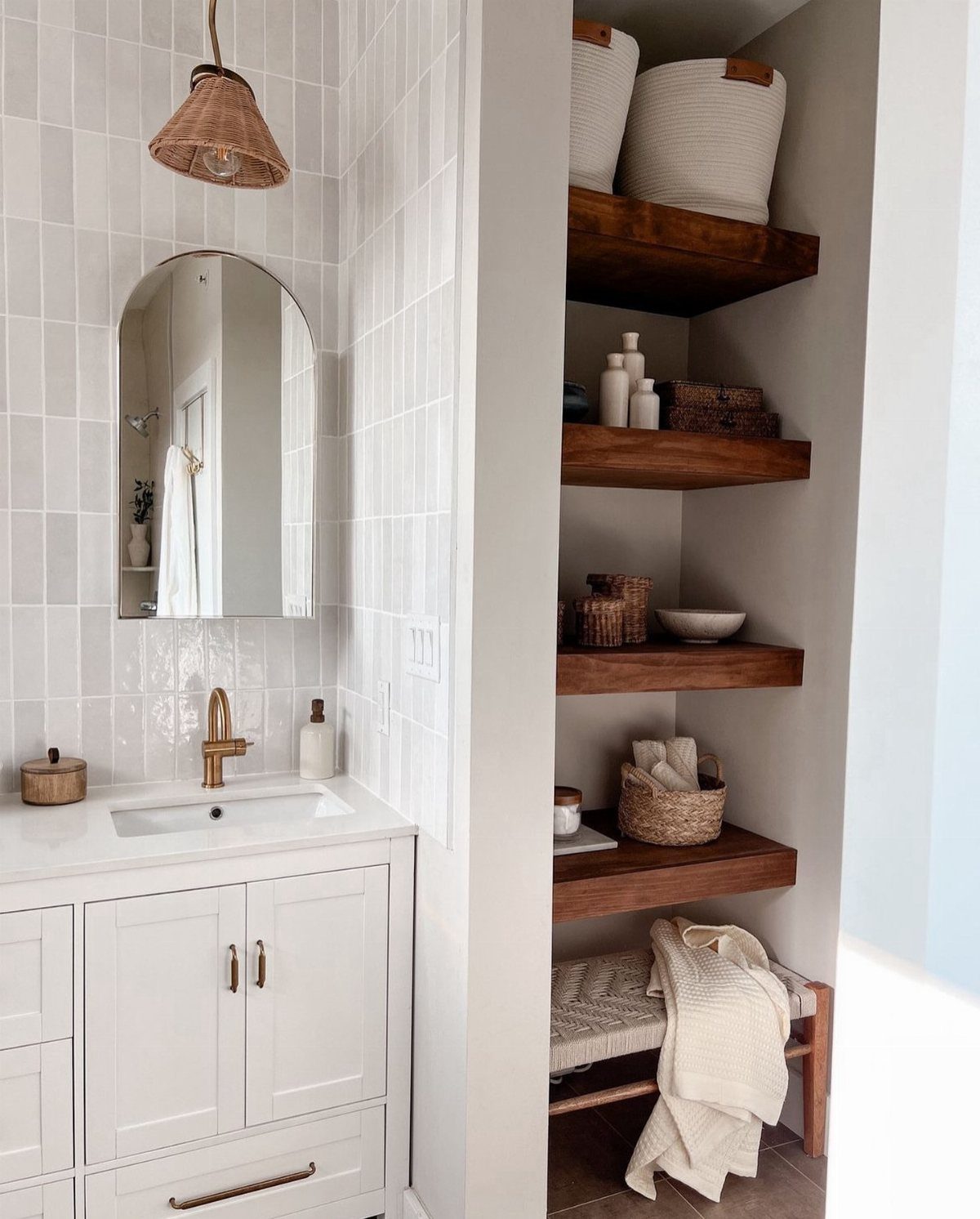
Closed cabinets under the sink and open shelves beside it split the job neatly: doors hide the daily mess, and shelves display the pieces that look good. Baskets on the open shelves keep small items from looking scattered.
I’d put towels and nice-looking containers on show and send anything in branded packaging behind the doors. Open shelves collect dust and steam, so keep them to things you use often.
10. Recessed Shelving
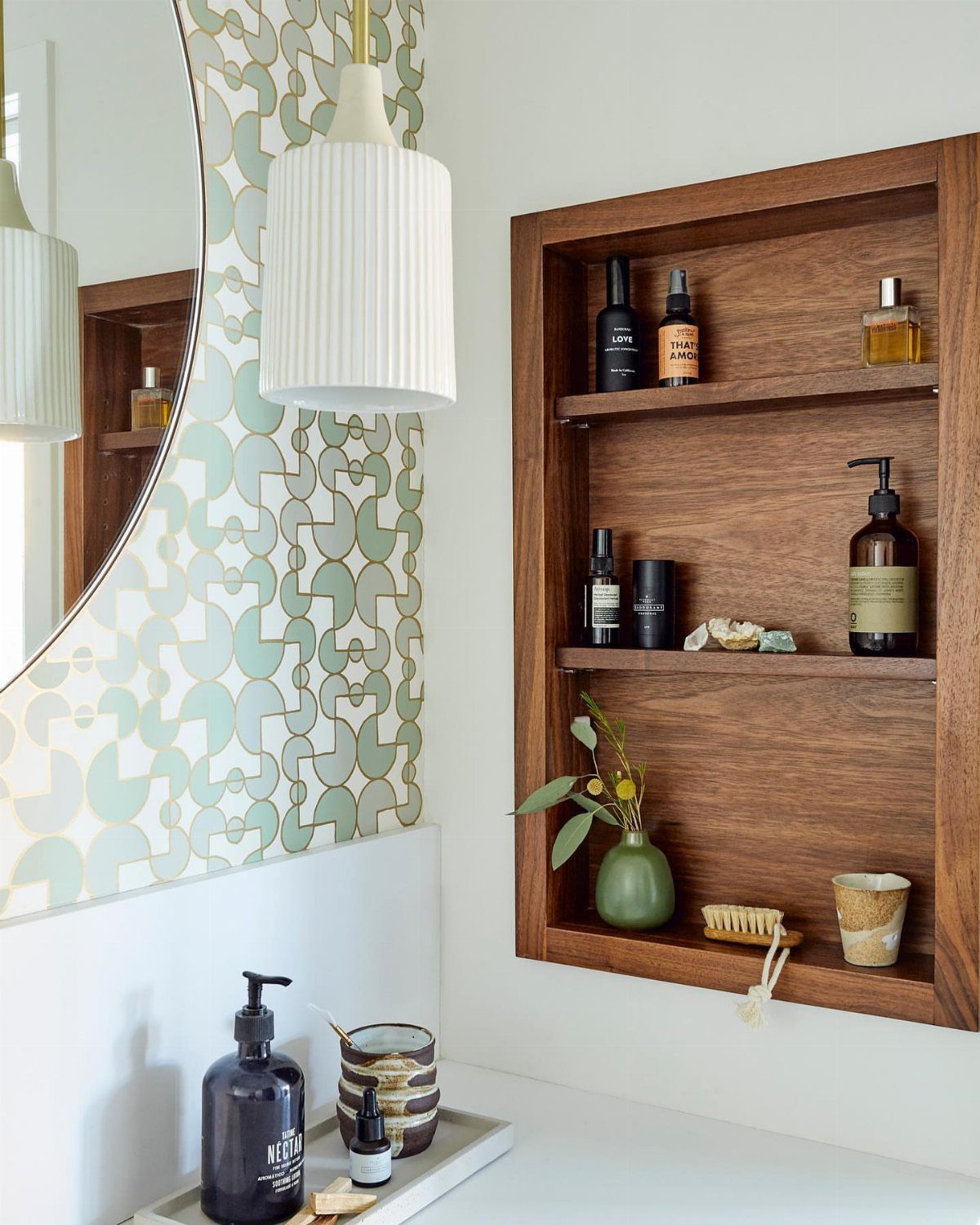
Shelves set into the wall take up no floor space and barely stick out, which suits a bathroom where every inch of walkway counts.
A recessed unit beside the mirror works as a personal shelf for skincare, a brush, and one small decorative piece.
Because the shelves sit inside the wall, they only hold a few items, so I’d limit them to your daily routine. Plan the spot before the wall is closed up, since adding one later means cutting into the wall.
11. Full-height Cabinets
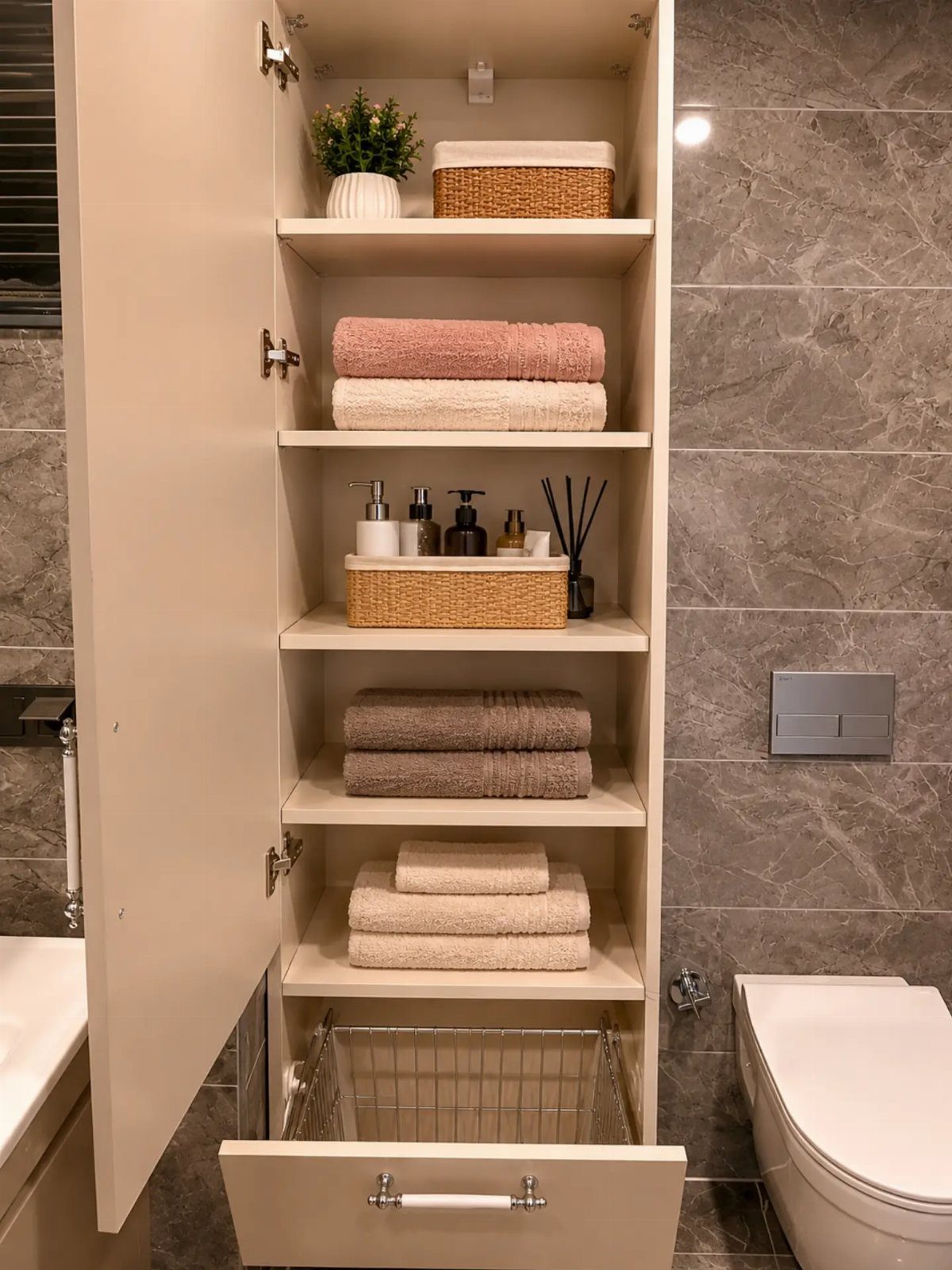
A tall, narrow cabinet beside the toilet puts wall height you’re already wasting to work, with room for stacked towels, backup soap, and cleaning supplies.
Shelves hold stacked towels, and woven baskets corral loose items like spare soap and travel bottles so the shelves don’t look busy.
I’d put the bulk supplies up high, daily towels at chest level, and heavier things low. Tall units can tip, so check whether the cabinet comes with a wall strap and use it.
12. Corner Shelving Unit
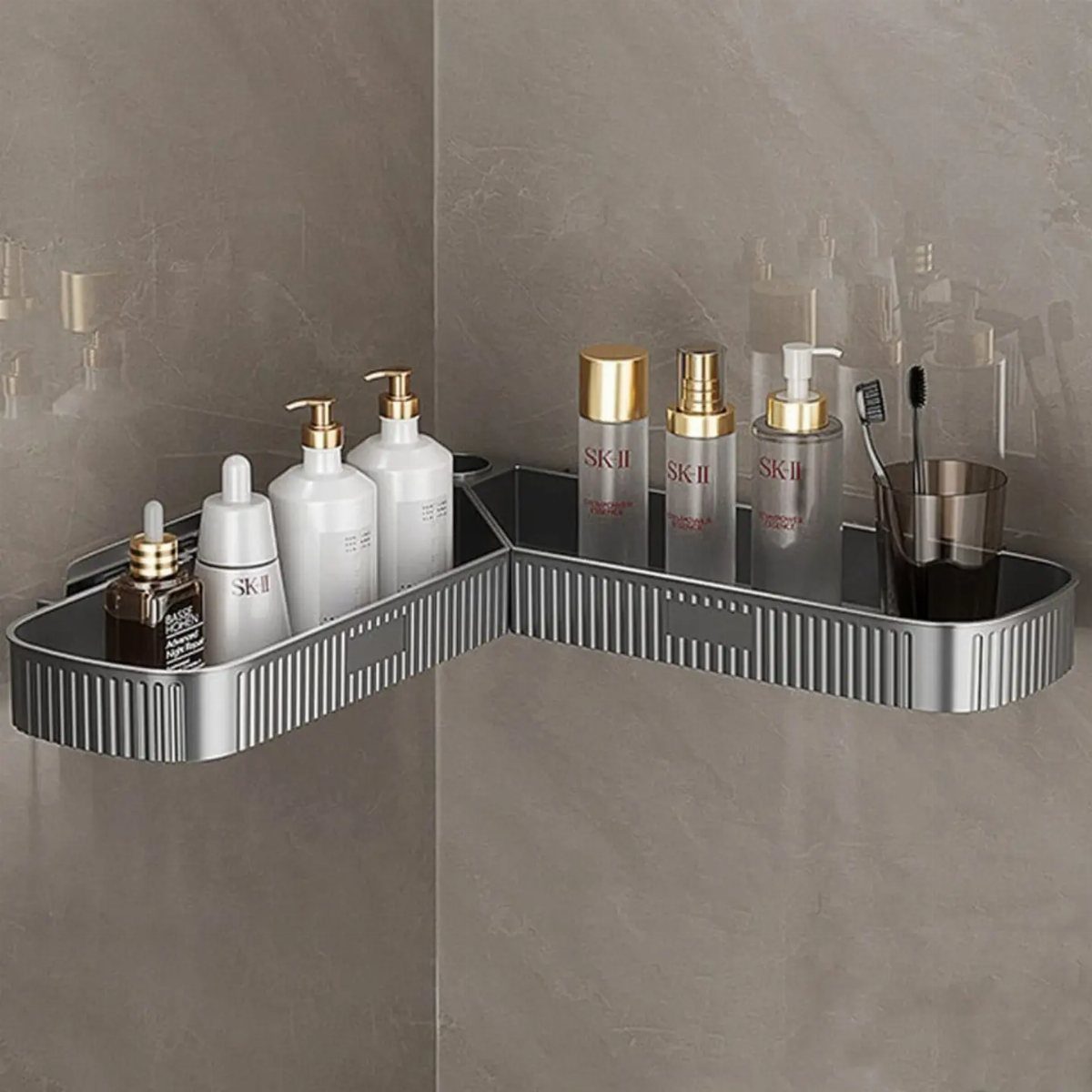
A corner is wasted space in most bathrooms, and a corner shelf puts it to work.
Metal holds up well in a damp room, and a small cup on the shelf keeps toothbrushes off the counter while skincare bottles line up in a row.
Mount it at a height you can reach without stretching, and keep the load light, since a corner shelf is small. I’d store only what you use daily, and move the backups to a closed cabinet.
13. Lazy Susan

A rotating tray turns a deep, dark corner of the cabinet into something you can read at a glance. Spin it, and the jar at the back comes to the front without anything getting knocked over.
Put skincare and the products you grab daily on the turntable, where a quick spin brings them to you, and keep the bulkier nail and hair items in labeled bins next to it.
Measure the shelf depth before buying, because the tray has to turn without brushing the cabinet door or the wall.
14. Stackable Storage Bins
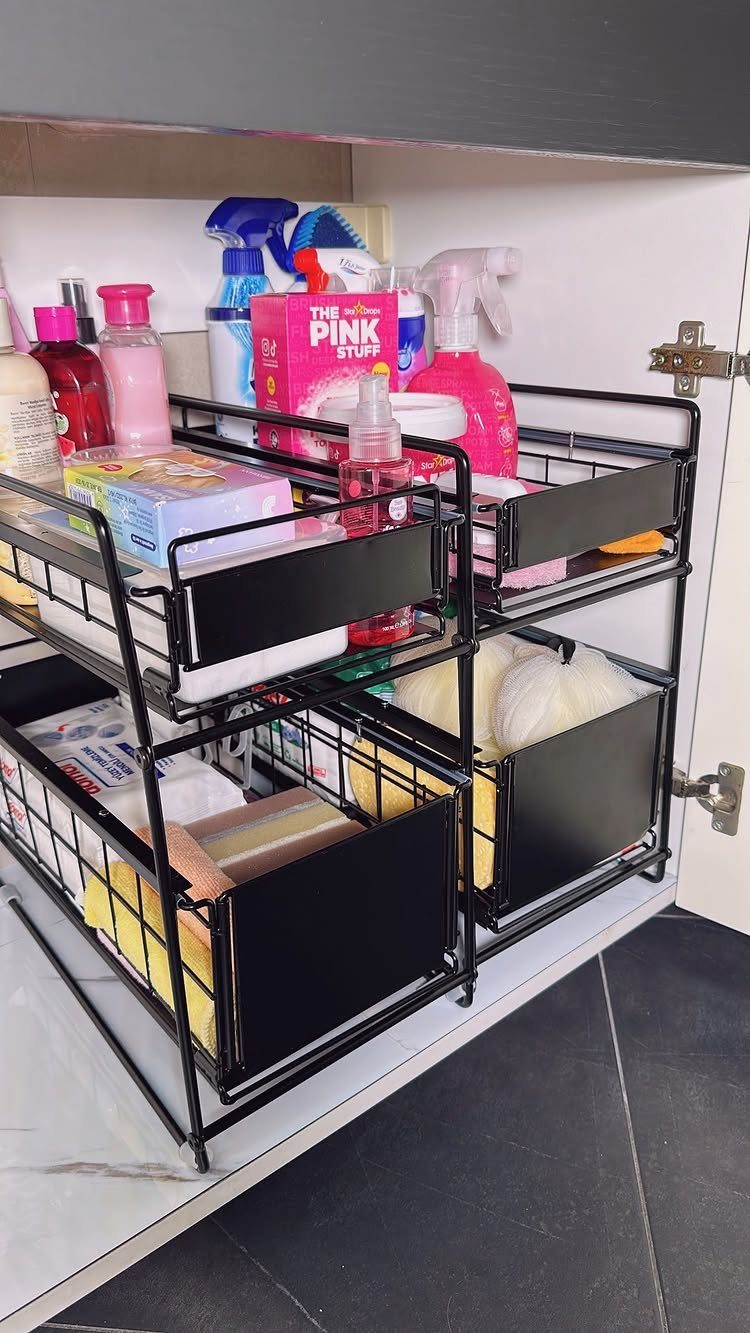
Stacking 2 bins doubles what a single shelf holds, and that suits cabinets where the height is going unused. Wire baskets let you see sponges, cotton pads, and spray bottles without lifting a lid.
I’d group by task: cleaning supplies in one bin, small refills in the other.
Measure the shelf clearance first, since the stacked pair has to slide out without scraping the door frame. Keep the heaviest bottles in the bottom bin.
15. Fabric Storage Bins

Soft-sided bins fit shelves that rigid ones never will, because the fabric gives a little at the corners and sags into the space you have.
Woven bins with liners also hide a jumble of small items better than open baskets do.
Label every bin on the front, the way towels, sheets, and toilet paper are sorted on a full set of shelves.
I’d use the largest bins for bulky linens and keep the clear plastic ones for anything that might leak or get damp.
16. Towel Hooks and Baskets
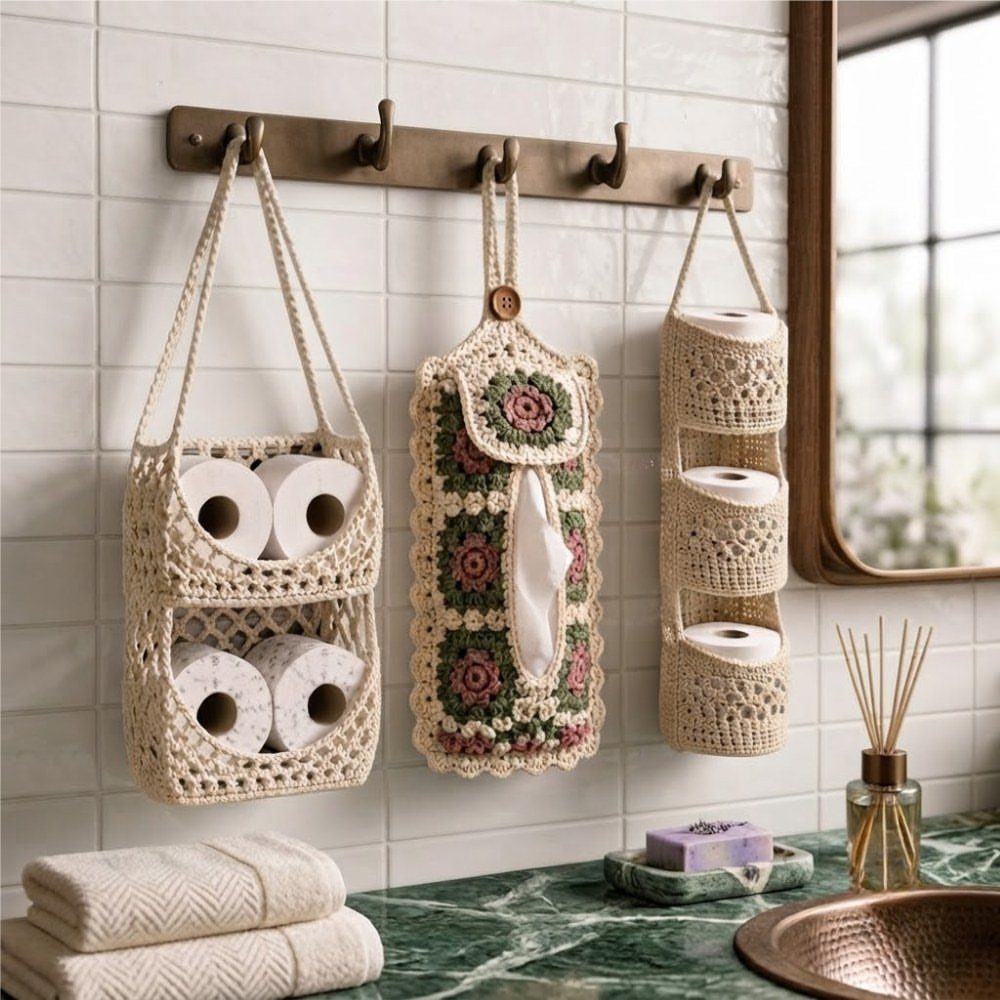
A single rail with hooks gives each item its own spot, and crochet baskets and pockets hanging from it keep toilet paper and small things off the counter. Drawers below can take whatever doesn’t hang well.
Hooks are the cheapest storage you can add, and they suit a renter who doesn’t want to build anything.
I’d hang a towel per person on its own hook, so nobody guesses whose is whose. Anchor the rail into studs if it will carry wet towels.
17. Vintage Dresser Vanity

An old dresser makes a vanity with more drawer space than most store-bought bases, and the dark wood warms up a bathroom that’s mostly tile. A stone top and gold hardware pull it together.
Sink cutouts take the top drawer’s space, so plan to lose that drawer or swap it for a false front.
Seal the wood against moisture before anything gets wet. I’d pick a piece with deep lower drawers for towels and spare supplies.
Break the habit of overstuffing your bathroom drawers. Jamie Grunfeld, founder of Better Than B4, recommends organizing regularly used products in stackable drawer organizers.
18. Storage Beneath Vanity
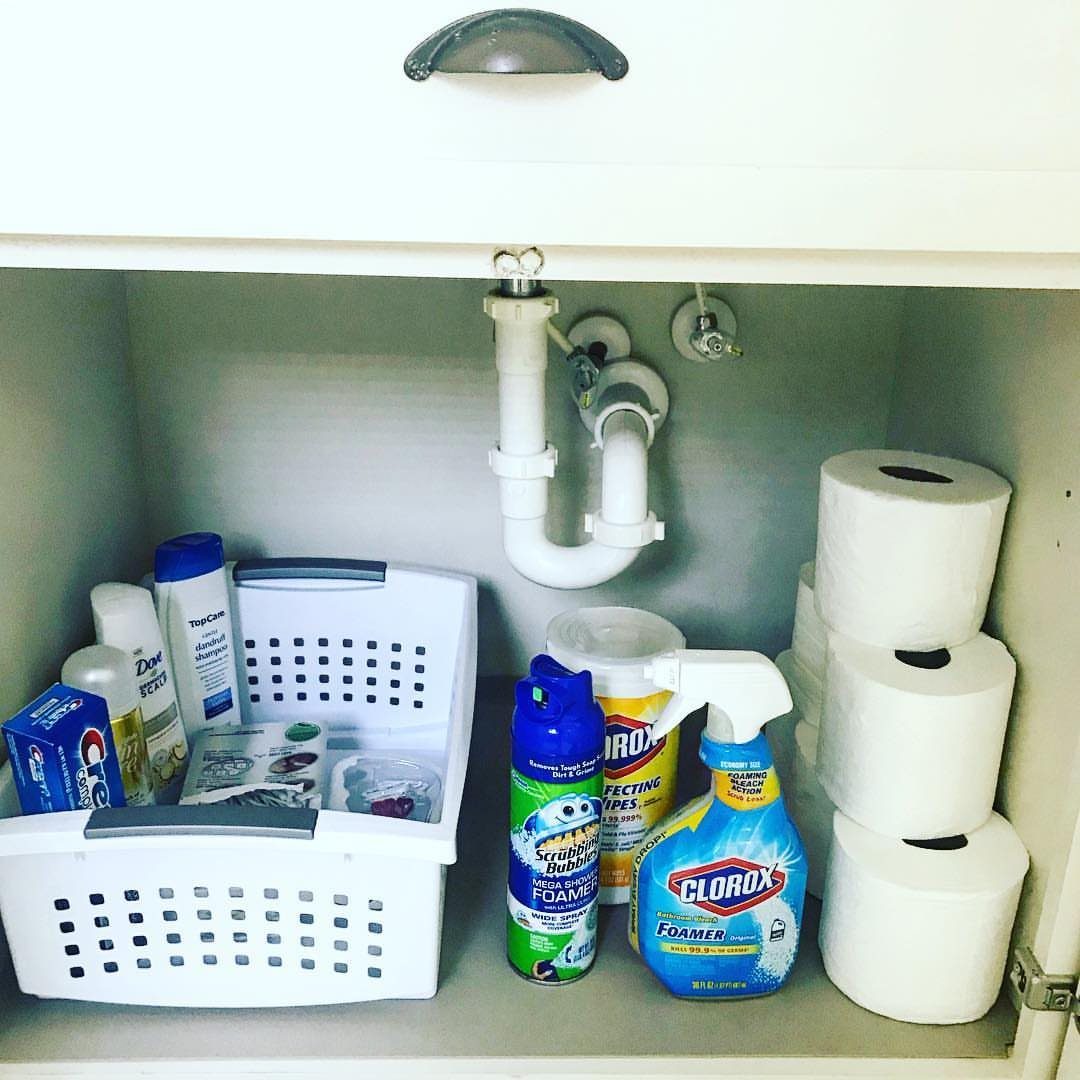
The cabinet under the sink holds more than it seems to once you work around the pipes. A white bin on each side of the plumbing keeps toiletries together, and toilet paper rolls tuck into the gaps.
Keep cleaning bottles on one side and toiletries on the other so you never reach past chemicals for a toothpaste tube.
I’d choose bins with handles, so you can pull one out without bumping the drain. Measure the opening first.
19. Custom Cabinetry
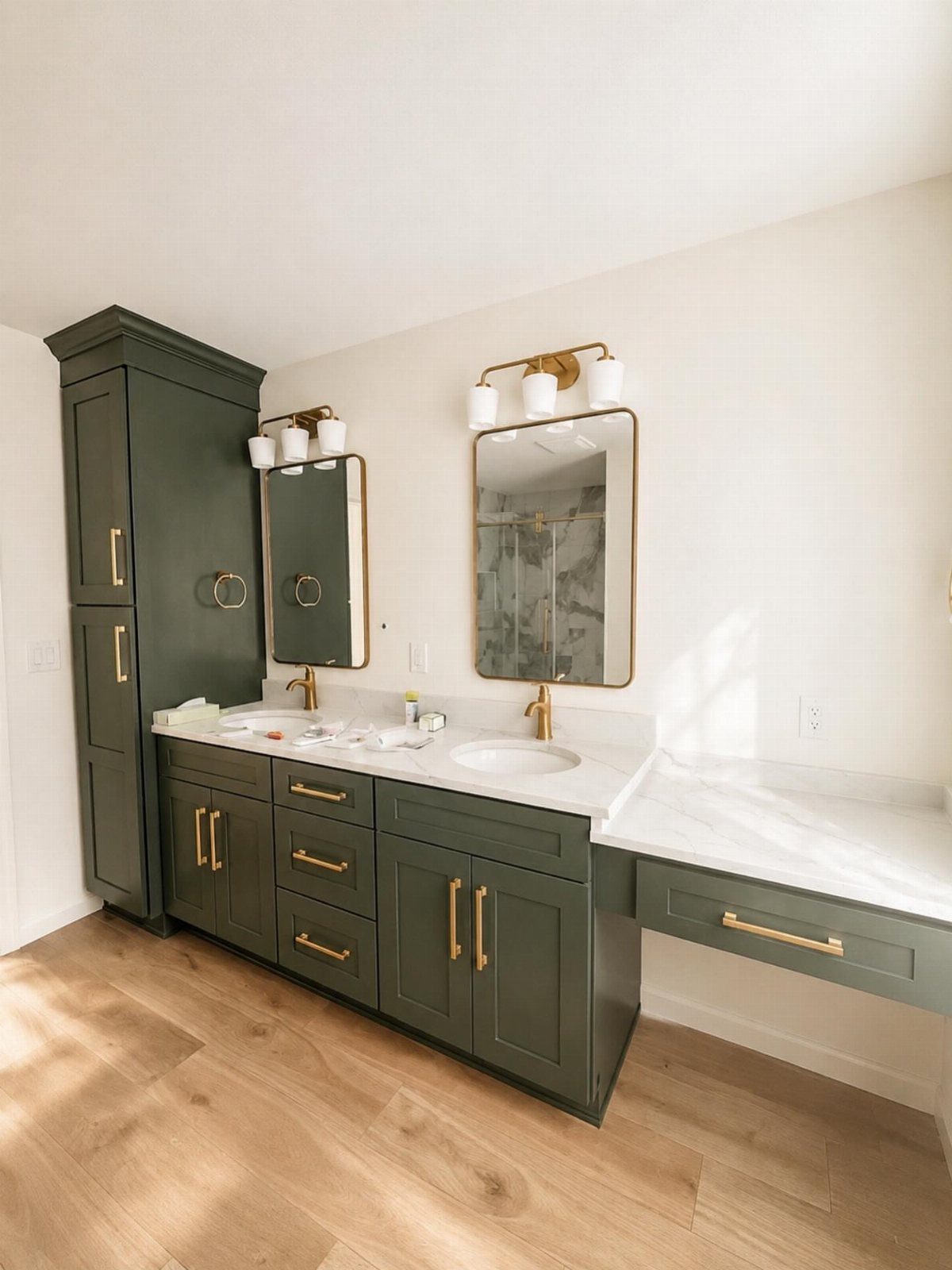
Custom cabinets earn their price only when they’re drawn around what you actually own.
A tall cabinet beside a double vanity can take the bulky backups, while drawers under each sink hold the small daily items that get lost on a shelf.
Before you meet a cabinetmaker, line up your tallest bottle, your hair tools, and your biggest stack of towels, and hand over those measurements.
Dark green with gold pulls looks rich against white counters, but custom work costs more than stock, so I’d spend the money on the interior layout before the finish.
20. Tall Narrow Bathroom Cabinet

One slim wood cabinet can hold three kinds of storage at once: a cupboard, drawers, and open shelves for towels. That mix sorts the bathroom by how often you reach for things.
Towels you grab daily stay on the open shelves, the drawers take small items that would vanish on a shelf, and the cupboard hides cleaning supplies and spare rolls.
Measure the gap beside the vanity first, and leave enough room that the cabinet doesn’t crowd the sink.
21. Arched Toilet-side Cabinet

Light wood and a curved top soften a room that is mostly hard white fixtures.
The maker of this one lists it at 30.5 inches wide, so check that number against the wall space beside the toilet before you fall for the shape.
I’d keep the display shelf to two or three items, or it starts to look like clutter again.
22. Slatted Slim Storage Cabinet
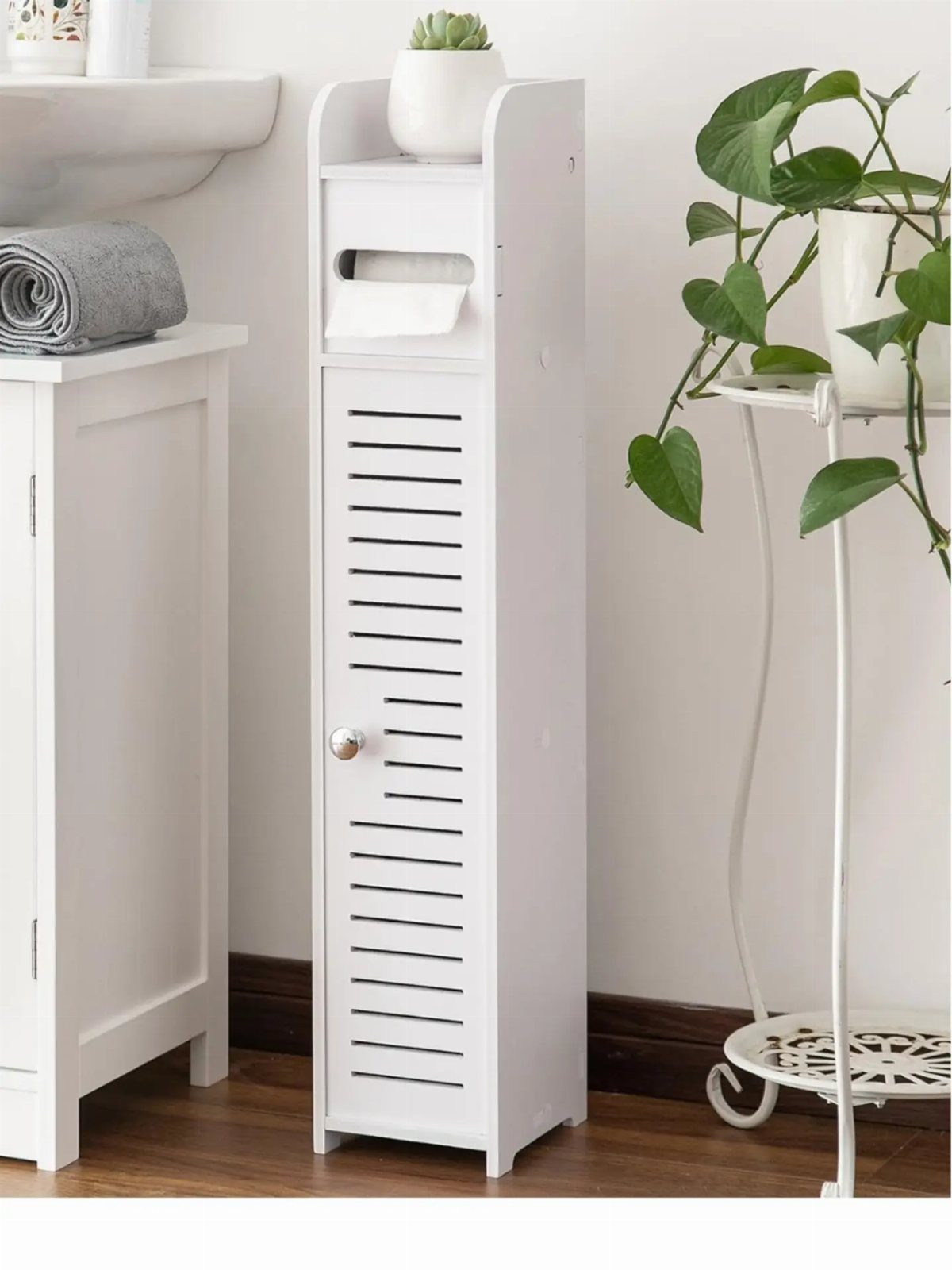
A slatted door adds texture to a simple white cabinet, and it reads lighter than a flat panel would. The open shelf on top is a good home for one potted plant, which adds green without using counter space.
Behind the door, I’d keep the things you use less often, such as spare soap and extra toilet paper. Set it where it won’t block the vanity drawers when they open.
23. Organized Cabinet Shelves

With no doors, an open cabinet looks as tidy as its baskets. Give each shelf one job: towels on one, toiletries in clear organizers on another, and woven baskets for the overflow, grouped as travel sizes, spare supplies, and linens.
Clear organizers let you see what’s left, so you stop buying a third tube of the same toothpaste. A large woven hamper on the bottom level keeps laundry off the floor and uses the cabinet’s full height.
24. Wall-mounted Hair Tool Holder

A hair dryer that lives on the counter eats space and tangles its cord. A wall holder gives it one fixed spot, so you grab it without digging through a drawer.
Mount it beside an outlet, so the cord doesn’t stretch across the sink, and keep it out of splash range. If the holder doesn’t land on a stud, use wall anchors rated for the dryer’s weight.
25. Shower Corner Caddy
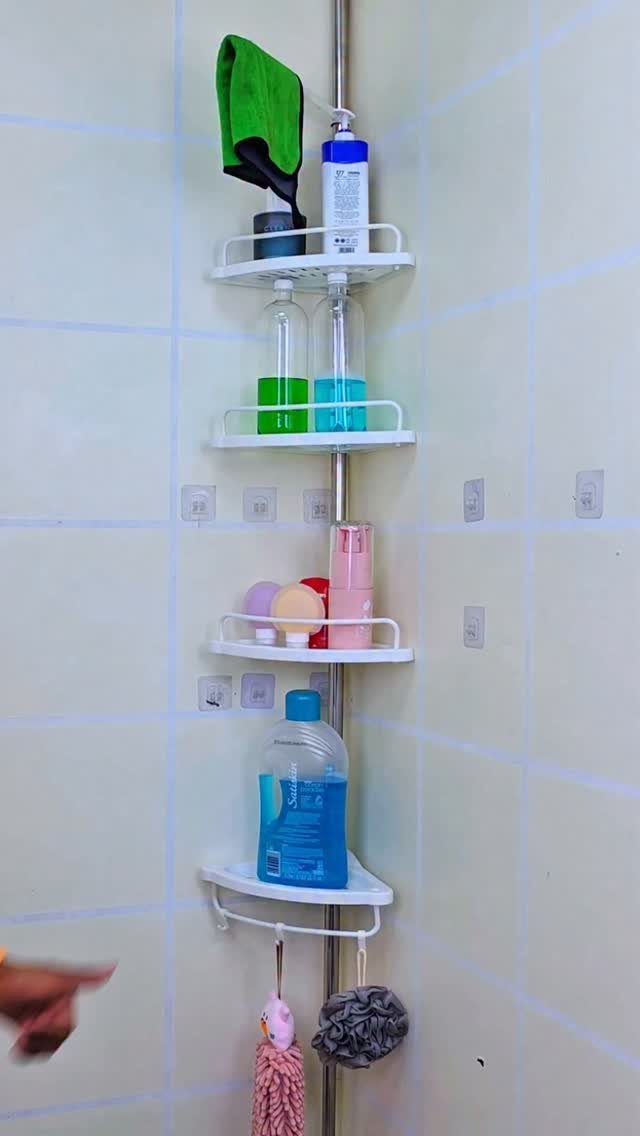
A four-tier caddy in the corner keeps shampoo, body wash, and sponges stacked in one column instead of crowding the tub edge or the floor. White blends into light tile, so the whole thing nearly disappears.
I’d put the bottles you use every day on the middle tiers, where a hand reaches without bending, and keep the sponges on the bottom tier.
Measure your shower’s ceiling height against the pole’s adjustable range, and check that the tiers clear the showerhead spray.
26. Hooked Wall Shelf
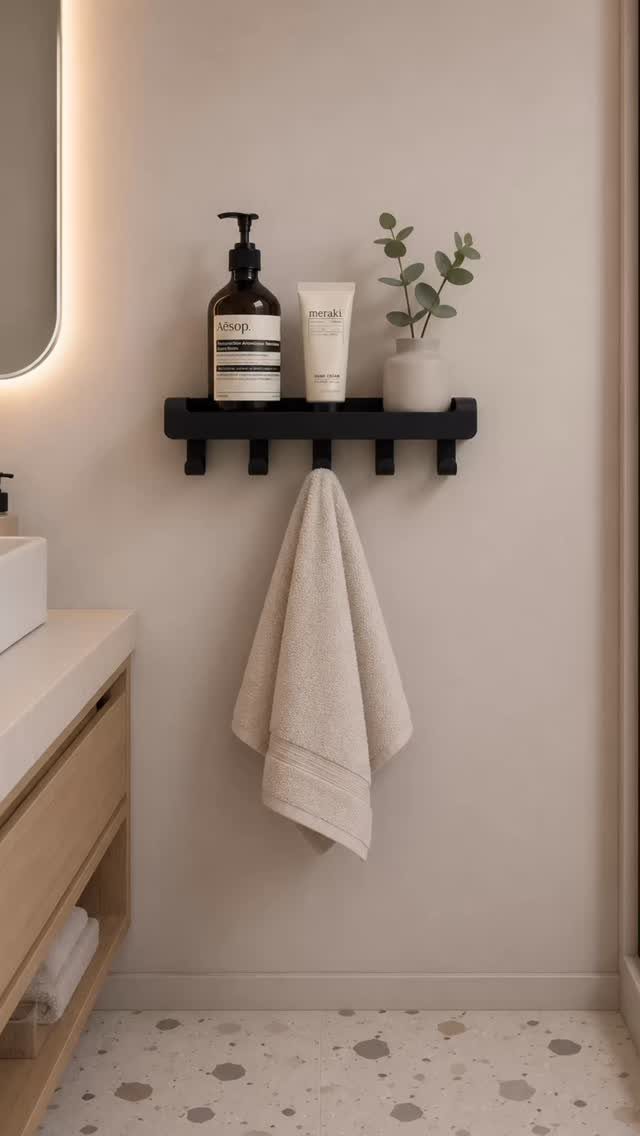
Black against a neutral wall gives a small shelf real presence, and the hooks underneath turn it into a towel spot too.
Keep the shelf to a few items so the top doesn’t read as clutter.
I’d match the towel color to the wall so the black frame stays the focus. Mount it where a damp towel won’t brush the toiletries.
27. Bathroom Vanity Styles
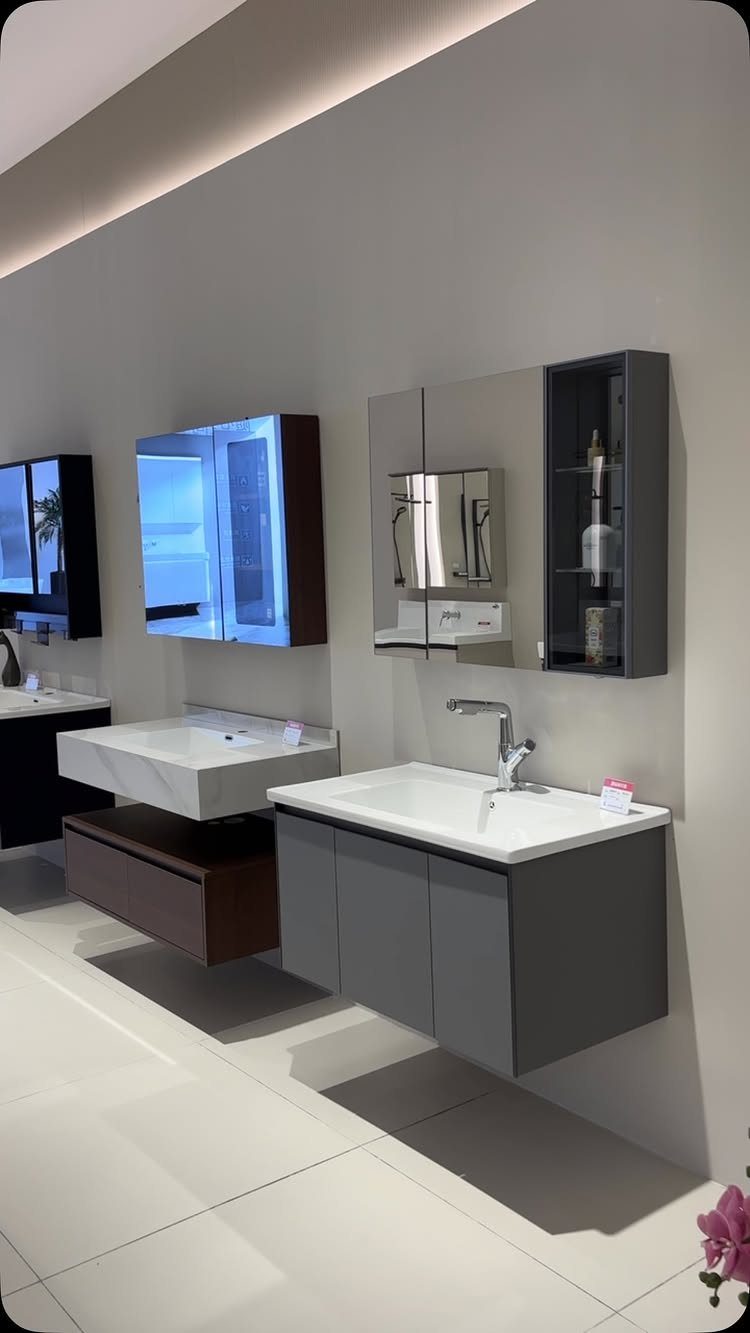
Floating vanities lift the cabinet off the floor, so the room reads bigger and the floor stays easy to mop.
Pairing one with a matching wall cabinet and a mirror gives you sink storage below and a second storage zone at eye level.
I’d choose the combination in one finish, grey or white, so the pieces look planned. A wall-hung base has to be anchored into the wall itself, so confirm what’s behind the drywall first.
28. Open Vanity Shelf
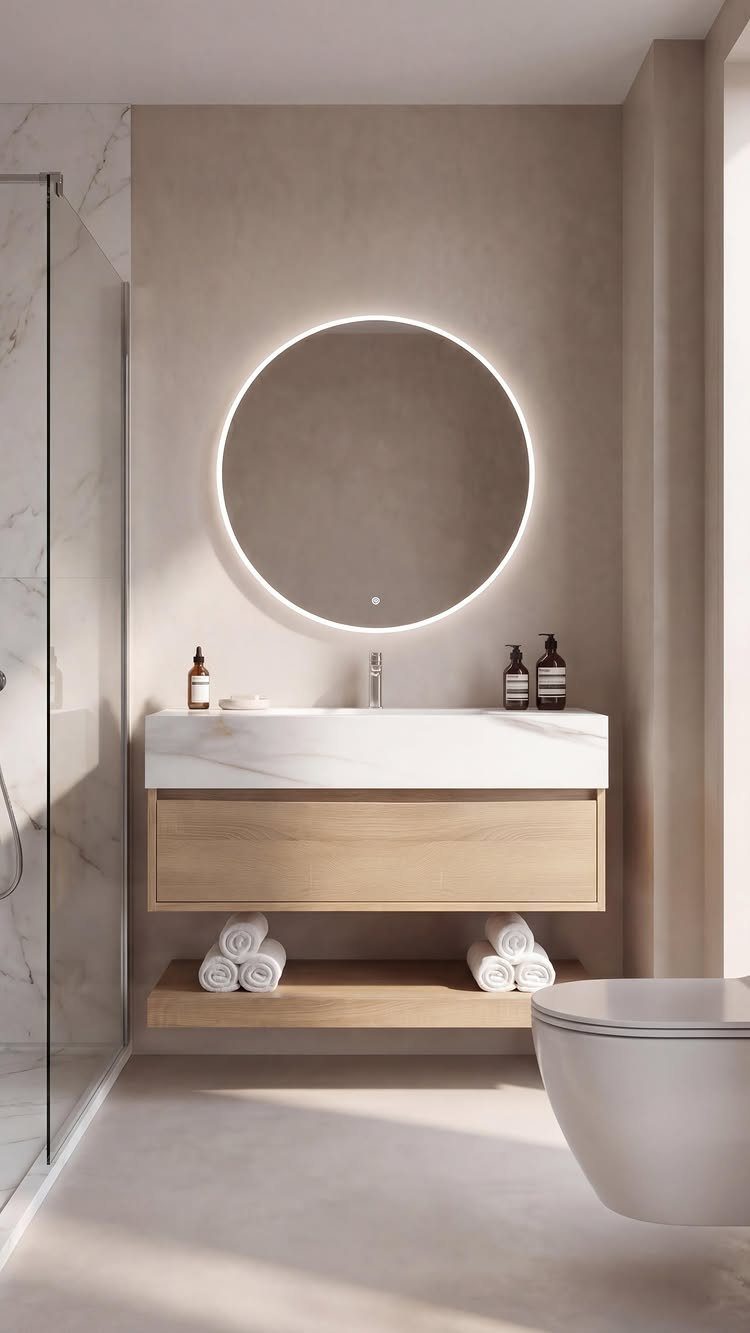
Rolled towels on an open lower shelf double as decoration and storage, and they stay easy to grab.
Roll them tight and line them up in a single row so the shelf looks tidy.
I’d use this spot for towels only, since an open shelf shows everything. Put bottles and spare supplies in a closed cabinet elsewhere.
Plan and Measure Before Buying
Start with a tape measure and a notepad. Write down the width, depth, and height of the under-sink area and each drawer, and mark where pipes or the drain cut into that space.
Next, pull out everything you own and sort it into groups: daily items, backups, and cleaning supplies.
Each group gets a share of the space, and counting the groups tells you how many containers you need and how big each one should be.
Buy last.
Containers picked before you know their size and number tend to leave dead gaps or go back to the store, and they don’t have to be expensive to work. Plain, low-cost bins do the job.
For a tidy look, choose one color in a few different sizes. A mix of sizes fills the space, and a single color keeps the shelf looking planned.
Frequently Asked Questions
What is the best cabinet material for a bathroom?
Close-grained solid wood like oak or maple, properly sealed, holds up best against the steam and splashes that warp cheaper boards.
Plywood with a dense core or MDF will also do the job and usually costs less. Raw wood soaks up steam fast, so give it a coat of sealant before the first shower.
How do you store things in a bathroom without a vanity?
Open shelves, an over-the-toilet unit, a freestanding cabinet, or a wall cabinet beside the mirror can all take over the vanity’s job.
If you rent, I’d pick an over-toilet unit that stands on the floor instead of mounting to the wall, and measure the height above the tank first.
Wall-mounted pieces should be screwed into studs, or into anchors rated for far more weight than you plan to load on them.
What are good storage options for a small bathroom?
A slim rolling cart, an over-the-toilet unit, and a small wall cabinet beside the mirror give you the most for the least floor space.
Tape-measure that gap before you buy, and leave extra room so the wheels clear any door swing.
How can I use space in my bathroom that is going unused?
The wall over the toilet is the first spot I’d use: an open shelf takes the toilet paper and tissues, and a section with a door hides the rest.
Corners also work, since a small corner shelf can hold a toothbrush cup and a row of skincare bottles. Inside cabinets, stacking 2 bins puts unused height to work.
How should I approach a small bathroom storage project without remodeling?
Name what bothers you most about the room, then look for space you aren’t using yet.
Then group your things into daily items, backup stock, and cleaning supplies, and buy containers last, sized to the number and bulk of those groups.
Will the containers I already have work for bathroom storage?
Often they will, as long as they fit the drawer or shelf you have in mind, so measure the space before you buy anything new.
A cosmetic bag can hold hair ties, and small clear boxes with lids suit bobby pins.
A basket that fits the drawer can then keep those small containers from sliding around. Cheap, plain bins work fine for filling whatever gaps are left.