Quartz and porcelain ask the least of you, marble marks up from a single spilled lemon, and concrete runs highest on both wait time and price.
Marble, quartz and veined porcelain can all carry the same white-and-grey veining, so appearance rarely settles the choice; how much upkeep you’ll accept near the sink and stove does.
For a heavy cook, soapstone next to the range is the first material I’d price out: it’s dark, shrugs off pot heat and has no pores to stain.
1. Waterfall Countertop
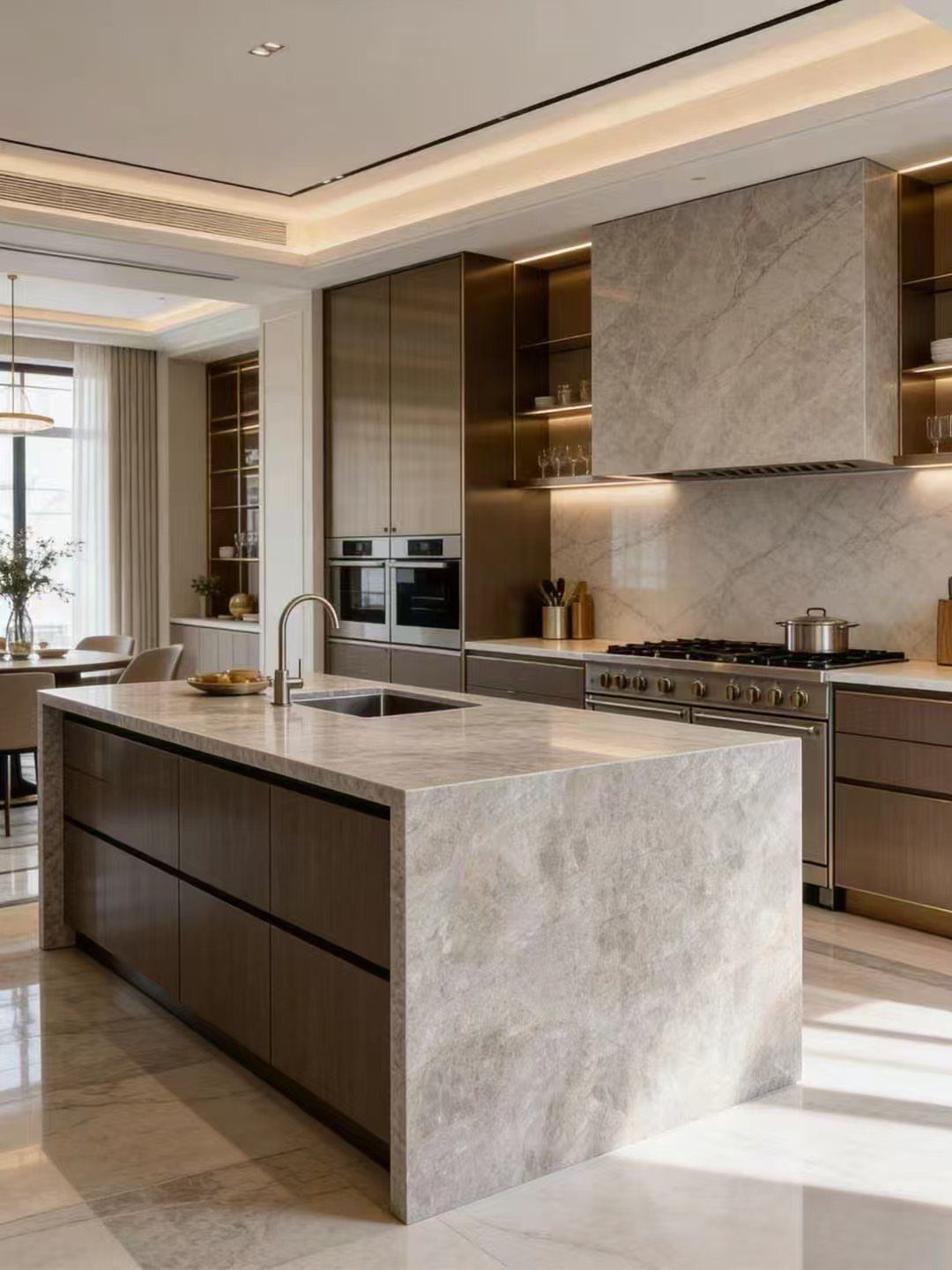
Stone that keeps going past the counter edge and down the island’s sides makes the end panels part of the design instead of a cabinet afterthought.
Here the light grey veining runs the full height, and the brown cabinetry beside it keeps the cool stone from feeling icy.
I’d use this on an island, not a wall run, since the sides are the part everyone sees from the room. Expect to pay for more stone and more fabrication than a flat top needs.
2. Butcher Block

Dark wood against white cabinets gives a kitchen contrast without adding a single color. A butcher block top also works as a prep surface, so you can chop right where the sink and stove are.
I like pairing it with a black farmhouse sink and a gold faucet, because the wood’s warmth picks up the metal. Order a sample and set it beside your cabinet paint before you commit.
3. Soapstone Countertops

Soapstone is the surface I’d put next to a range. It’s dark, heat-resistant and non-porous, so a hot pan and a spilled sauce are less of a worry.
Deep grey soapstone also balances light wood cabinets, and pairing it with a stone backsplash keeps a rustic kitchen from drifting toward orange.
Choose it if you cook a lot and want a surface that looks better with a lived-in feel.
4. Quartz Countertops
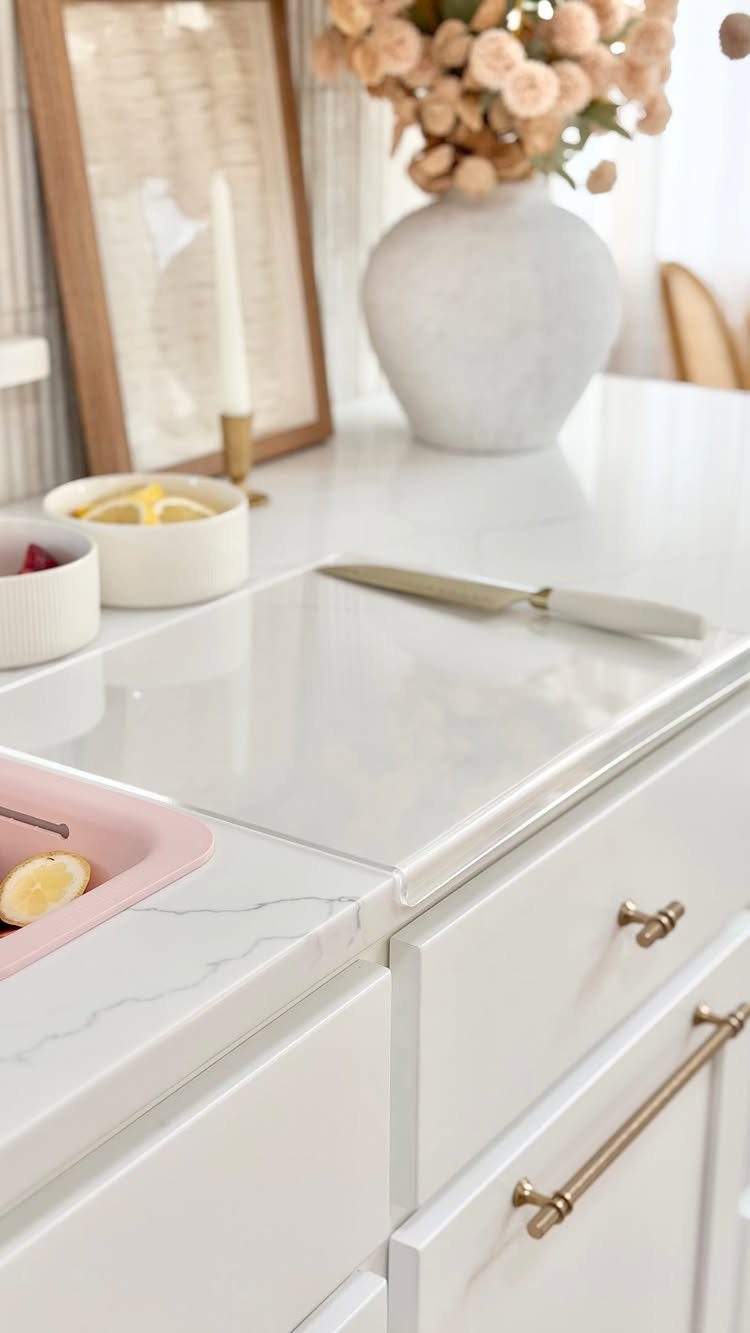
Quartz is what I suggest when someone loves marble but doesn’t want to baby it. It’s engineered, so you get the white base and grey veining in a lower-maintenance surface.
Pick a slab where the veining reads soft instead of heavy, especially in a small kitchen. A built-in cutting board section, like this one, is a handy extra for prep, though it’s an add-on you’d request separately.
5. Marble Countertops

No two marble slabs match, which is the whole appeal: the veining and mineral deposits differ from one piece to the next. View the actual slab, not a small sample, before you buy.
Light stone around black gas burners looks sharp, but marble is softer than quartz and can etch from acidic spills like lemon juice.
Wipe spills quickly. If that sounds like too much attention, quartz is the calmer option.
6. Marble-look Countertop with Matching Tile Backsplash

A backsplash cut from the same pattern as the counter makes the whole wall and worktop read as one surface.
Here the white base and grey veining carry up behind the stove and sink, and the white cabinets stay quiet around them.
This gets you the elegant marble look at a friendlier price and with less upkeep than real stone. Compare the counter and tile samples together in your own kitchen light, since whites can drift warm or cool.
7. Waterfall Stone-effect Countertop
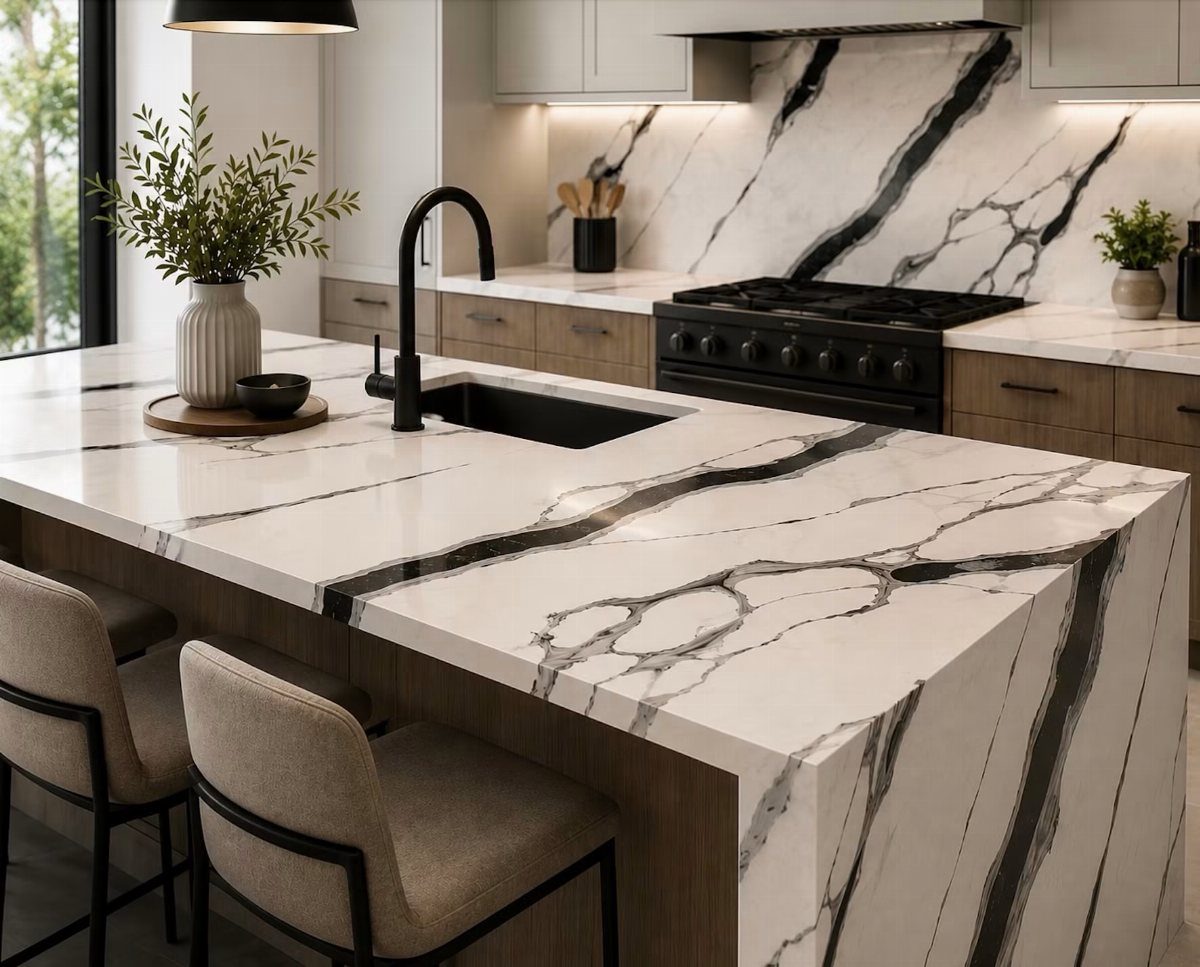
A waterfall edge, where the countertop turns down into the side panel, is what sells this look, and the textured, gritty finish gives it more depth than a flat white slab.
The black sink and faucet pick up the dark veins, which keeps the whole kitchen reading as one scheme.
I’d choose this for an island where the side panel faces the room. Check that the backsplash pattern matches the counter, since a mismatch is easy to spot.
8. White Porcelain Countertop
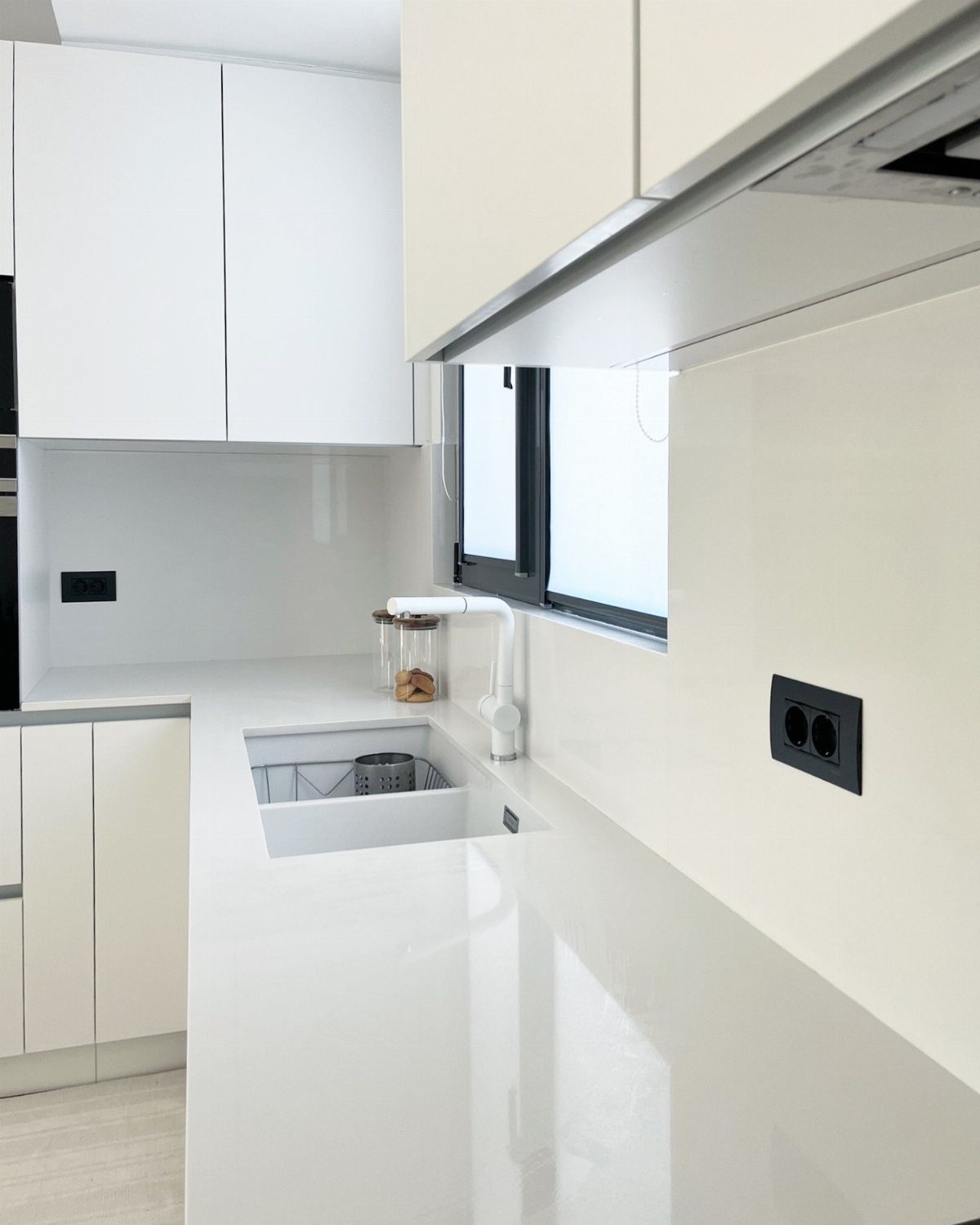
A plain white surface does more for a small kitchen than most layout changes. With white cabinets and an integrated sink, there are fewer seams and edges to break up the room, so it feels wider and brighter.
I’d pick this if you want calm over drama. Order a sample and view it next to your cabinet color in daylight and at night, because whites shift between warm and cool.
9. Glossy Polished Porcelain Countertop
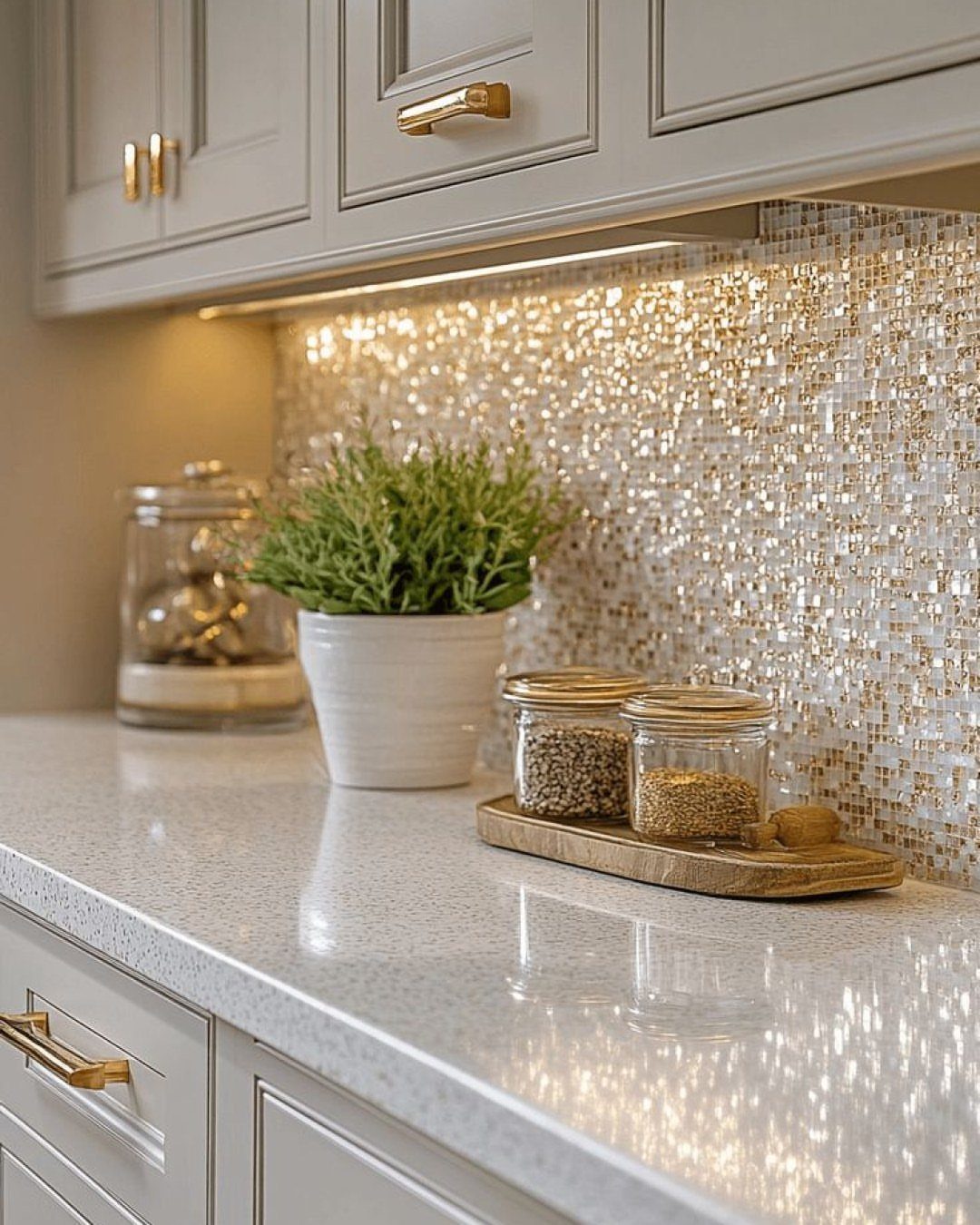
Polished porcelain bounces light back up under the cabinets, which is why this counter seems to sparkle. Against a busy mosaic backsplash, the plain glossy top gives your eye somewhere to rest.
I like a gloss finish for a kitchen that gets little natural light.
Glossy surfaces show smudges and water spots, so I’d keep a microfiber cloth handy. If that sounds tiresome, go for a matte porcelain.
10. Veined Porcelain Countertops and Backsplash
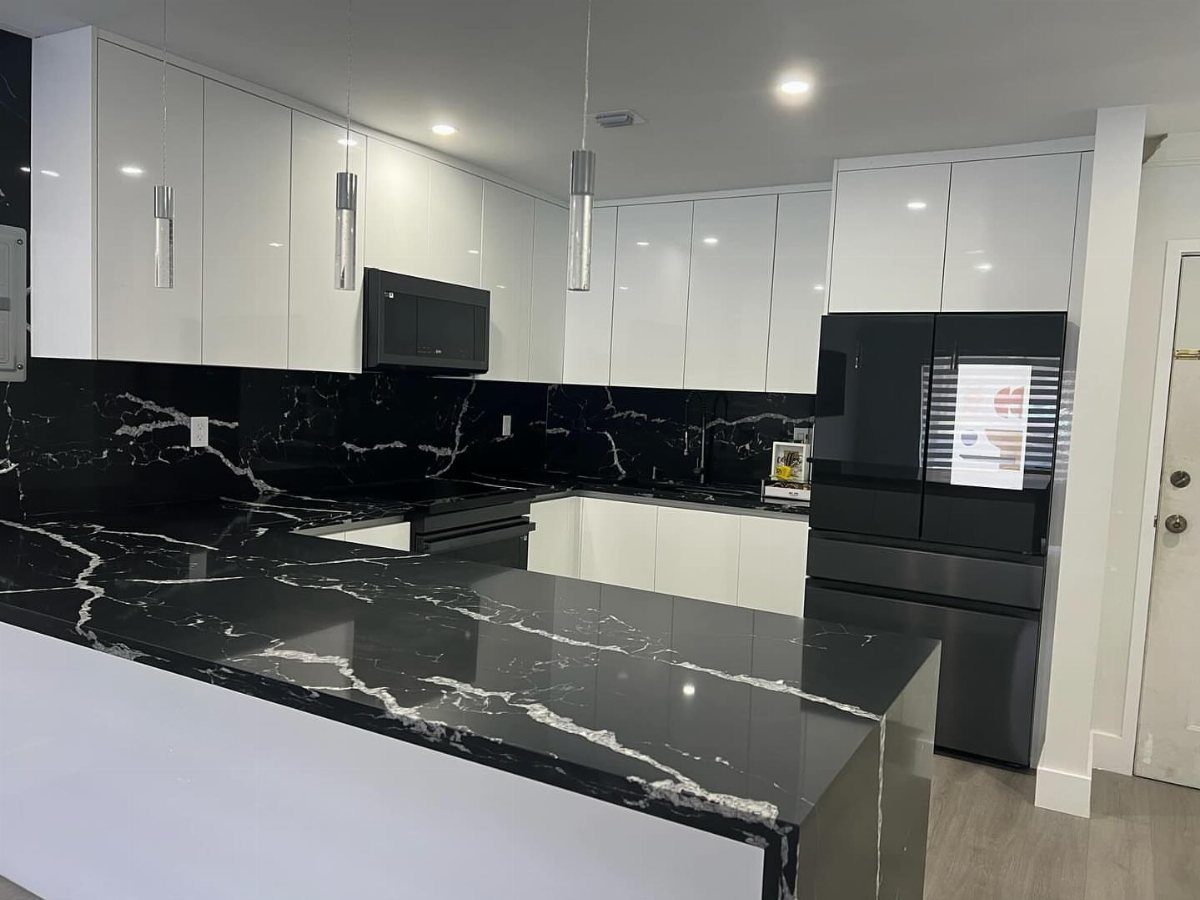
Running the same black veined porcelain up the wall as well as across the counter makes one dark, continuous surface. Against white cabinets it reads graphic, and the silver pendants add a cool metallic note.
I’d use this when you want drama without painting the whole room dark.
Pick a slab with veining you’d enjoy looking at, since it covers a lot of wall. Solid colors give a quieter version of the same idea.
11. Mixed-media Countertops
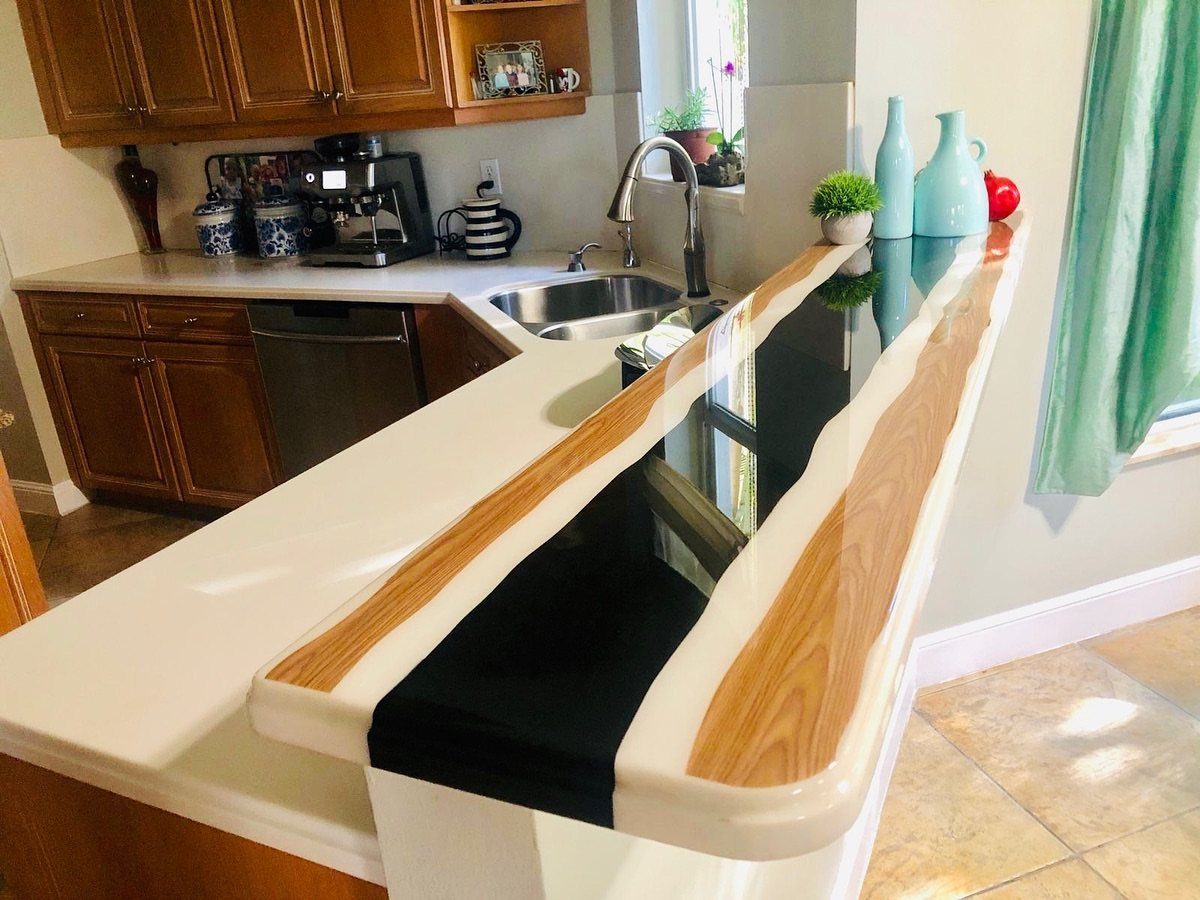
Mixing materials lets one counter do several jobs: a white section for prep, wood borders for warmth, and a glossy black river through the middle as the accent.
The wood echoes the cabinets, so the black feels planned instead of random.
I’d keep it to 3 materials, as here.
More than that starts to look busy. Ask your fabricator how the seams between materials will be finished.
In addition to opting for materials that complement the space’s aesthetic, Cassandra Thurston, founder of her namesake design firm in New Jersey, advises they also “stand up to the demands of daily use depending on your lifestyle.”
12. Concrete Countertops

Grey concrete gives a kitchen an industrial edge that stone and quartz don’t, and a white rectangular sink sets off its mottled tone. A black faucet keeps the palette tight and the look deliberate.
It’s an unexpected choice, and I like that.
Plan on a custom top, which means more lead time and cost than a stock slab. If you want the look with less fuss, choose a concrete-effect surface.
Frequently Asked Questions
What are the newest countertop trends?
Soapstone and porcelain are the two I’d point to.
Soapstone is dark, heat-resistant, non-porous and low-maintenance, which puts it in direct contrast with the all-white quartz and marble look. Porcelain suits most kitchen styles, and it looks especially tidy when large-format slabs are paired with matching large porcelain tile.
What are some modern countertop ideas?
Porcelain is the easiest modern pick: a plain white slab with an integrated sink has fewer seams and edges, so a small kitchen reads wider and brighter.
Black veined porcelain carried up the backsplash gives a dark, graphic look against white cabinets. A waterfall edge that runs stone down the sides of an island also looks current, though it costs more for the extra stone and fabrication.
Poured or precast concrete gives a raw, industrial look, though it means a made-to-order slab, a longer wait, and a higher price than most laminate or butcher block.