Which table suits you depends on what the kitchen has free: a bare wall, a base cabinet, or just open floor.
A bare wall calls for the Murphy Table or the BJURSTA drop-leaf, a base cabinet fits the Cabinet-Slide Table or the Pull-Out Kitchen Table, and open floor is where the Castered Dining Table and the Bradley extendable earn their keep.
The Murphy Table and the Wall-Fold Kitchen Table nearly vanish when closed, while the Bradley Extendable Dining Table looks like any full-size dining table.
1. Murphy Table
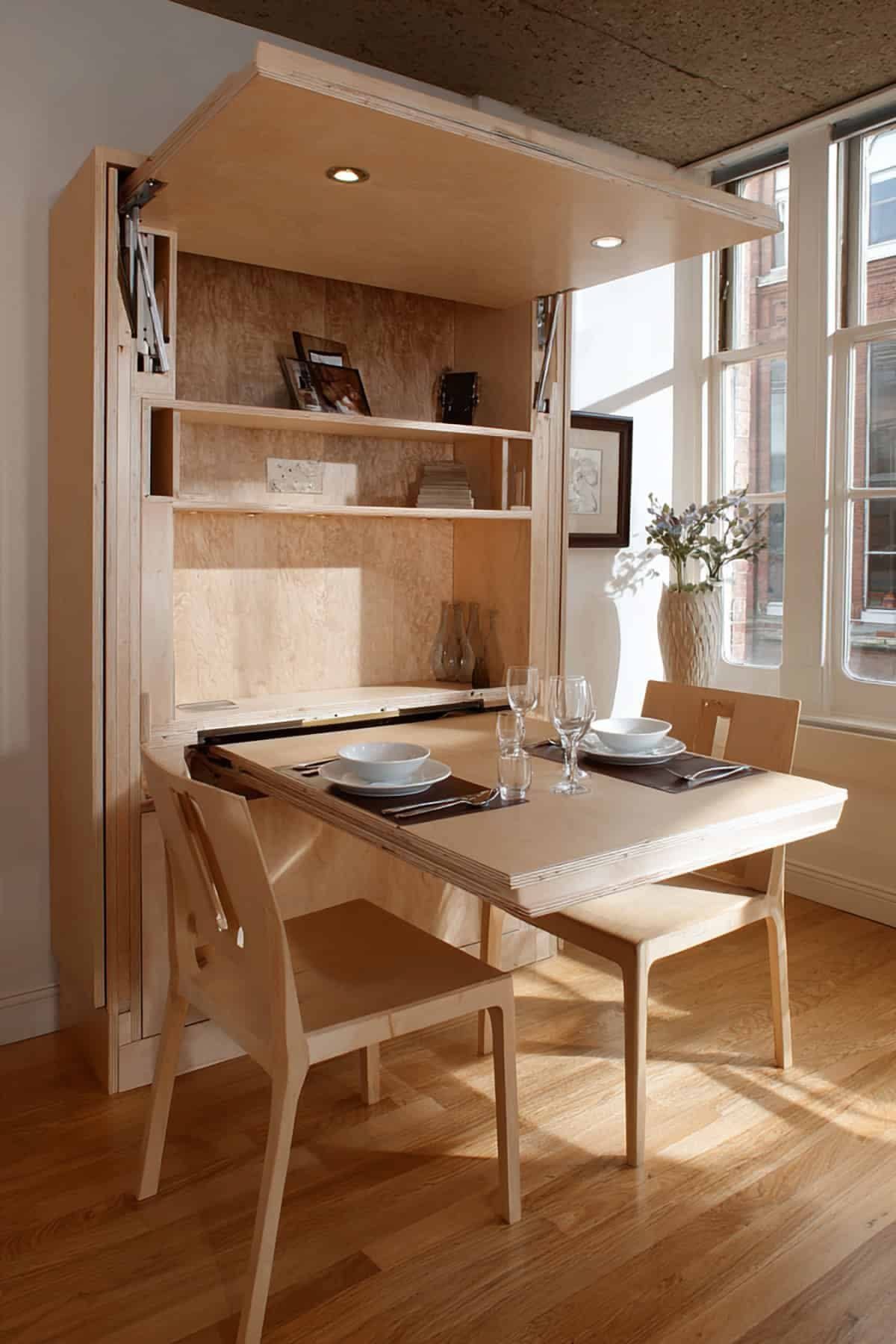
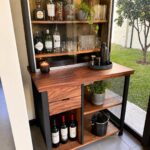
Closed, a Murphy table reads as a wall cabinet, and that disguise is the whole appeal. Folded down, it seats a pair at a proper table with no legs taking up floor.
I’d match the wood tone of the table to the shelving around it, as it is here, so the unit looks built in rather than bolted on. Matching chairs that tuck fully under finish the look.
Murphy beds have been around for years, and at some point, somebody genius decided to apply that drop-down, hide-away concept to tables.
2. Castered Dining Table

Wheels do the hiding on this one. Roll the table to the wall or into a corner and the center of the kitchen is open again.
I like that it carries its own storage for linens and cutlery, so setting the table doesn’t mean walking to a drawer across the room.
If you’re shopping for casters, I’d pick ones that lock, so the table stays put once everyone sits down.
3. Pull-Out Kitchen Table

The legs attach after it’s extended, so clear the floor in front of the unit before you pull.
I’d keep the table the same color as the cabinet fronts. White on white, it vanishes when pushed back in.
4. Bradley Extendable Dining Table

Extension leaves usually need a closet shelf of their own. Here they’re tucked inside the slab itself and flip up with a lever, so there’s nothing to store and nothing to lose.
A dark wood top like this one looks like an ordinary dining table until the leaves rise. I’d choose it over a drop-leaf if I wanted a solid, full-size top without any fold lines.
5. BJURSTA Wall-Mounted Drop-Leaf Table

Folded up, a wall-mounted drop-leaf table doesn’t vanish completely. It leaves a small ledge on the wall, which I find more useful than a blank panel.
Wood against a white wall looks warm and clean. Raise the leaf for a meal, then drop it and the kitchen goes back to being a kitchen.
6. Expandable Folding Dining Table

Ribbed wood gives a table visual weight even when it’s closed up small.
A light finish with a ribbed base reads as furniture rather than a space-saving gadget, which matters in a living area where the table sits in plain view.
Extend it only for meals and leave it compact the rest of the time. That keeps the rug and the walkways around it clear.
7. Wall-Fold Kitchen Table

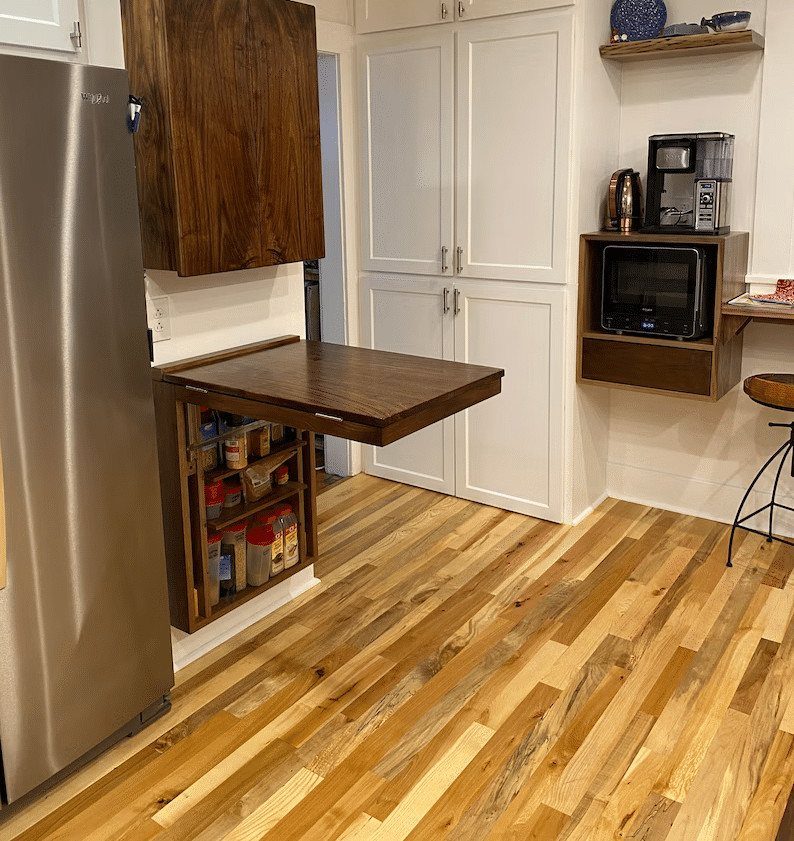
A fold-down table with a spice rack built underneath does two jobs from one patch of wall. The rack stays put while the tabletop swings up and down, so the jars never have to move.
Keep the wood tone close to the cabinet fronts, ideally within one shade of them, and a wall-fold table reads as part of the kitchen instead of an add-on.
I’d leave the wall below clear while it’s folded up so the leaf can drop without catching on anything.
8. Shelf-Unit Fold-Out Table

Hiding a table inside a tall shelving unit means the storage and the seating live in one footprint. Close it up and you get a slim wooden tower; open it and 2 chairs tuck right beneath.
Matching the chairs to the unit’s wood keeps the whole corner looking like one piece of cabinetry.
9. Cabinet-Slide Table

A wooden top that slides out of a cabinet gives you a dining surface exactly where you already have a base cabinet or island. Push it back and the front is just another door line.
A hard backdrop like brick suits this table, because the warm wood stands out without extra styling. Clear the counter edge and floor in front before pulling it out, so nothing snags.
10. Under-Counter Table

Wheels make an under-counter table easy to live with: pull it out, roll it where the light is better, and slide it home when the meal is over.
A light wood top suits a white kitchen because it adds warmth without a heavy visual block.
I’d choose this over a fixed table for a narrow kitchen, since the counter keeps its full run and nothing sits out between meals.
11. Compact Drop-Leaf Table

Keep the leaf down and a small square drop-leaf table sits flush against a wall or cabinet run. Lift it for a second place setting and the tabletop grows without a second piece of furniture.
Upholstered chairs soften the wood and make a corner feel like a proper dining spot. I’d pick a square top over a round one here, because it pushes tight to cabinetry and wastes less floor.
12. Extendable Counter Leaves

Leaves that swing out from the counter and stand on their own legs turn a work surface into a dining table. Fold them away and the counter goes back to holding the espresso machine.
White leaves against light wood look crisp, and I’d keep the counter styling minimal so the extended table doesn’t feel crowded. Check that the legs can stand clear of your walkway before you commit to this one.