
The ideas here run from a greenery garland and ornaments already in your storage box to a berry-printed tablecloth and seasonal napkin accents, so price rarely decides which one you use.
Table space does: once the plates, glasses and serving dishes are down, the strip of table left over sets how much decor fits.
Anything around 3 feet high puts a wall between the people on either side, so on a narrow table I’d keep to a low garland with pillar candles woven in, and save the fuller tray for a wide table.
1. Greenery Table Garland

A garland laid down the middle of the table does the work of a runner and a centerpiece at once, which makes it the cheapest way to dress a long dining table.
Against a busy plaid cloth, I’d keep the greenery loose and full so it holds its own.
Set the candles into the garland rather than beside it.
They sit lower, the green frames them, and the table keeps its middle clear of tall objects. Leave room at each place for plates and glasses, so the garland stays in the center strip.
2. Low Table Centerpiece

Guests who can’t see each other across the table end up talking only to their neighbors. A centerpiece that stays low fixes that, and I’d choose it over a tall arrangement for any dinner where conversation is the point.
The tray keeps everything corralled, and you can lift it off in one move when the platters arrive. If the table is narrow, trim the tray’s contents to a single row so serving dishes still fit beside it.
3. Fruit Centerpiece

Stacking fruit into a cone turns a snack into a centerpiece shaped like a small Christmas tree. A wooden pedestal gives the arrangement height and a clear shape, and mixed colors read as ornaments without a single bauble.
Use fruit the guests will actually eat, since the arrangement stays useful after the meal.
I’d build it close to dinnertime so nothing bruises or sags, and keep a bowl nearby for peels and cores. It costs less than most store-bought centerpieces and disappears happily by dessert.
4. Personalized Place Settings

Writing a guest’s name on their own place makes a seat feel chosen, and it takes no more than a small frame and a steady hand.
A gold frame holding the name on the plate does the job of a place card and a bit of decor together.
Layer the setting: charger first, then plate, then the framed name on top, with gold cutlery alongside.
A sprig of greenery and a candle nearby finish it. For a budget version, skip the frames and write names on card stock; the layering still carries the look.
5. Silver Dollar Eucalyptus
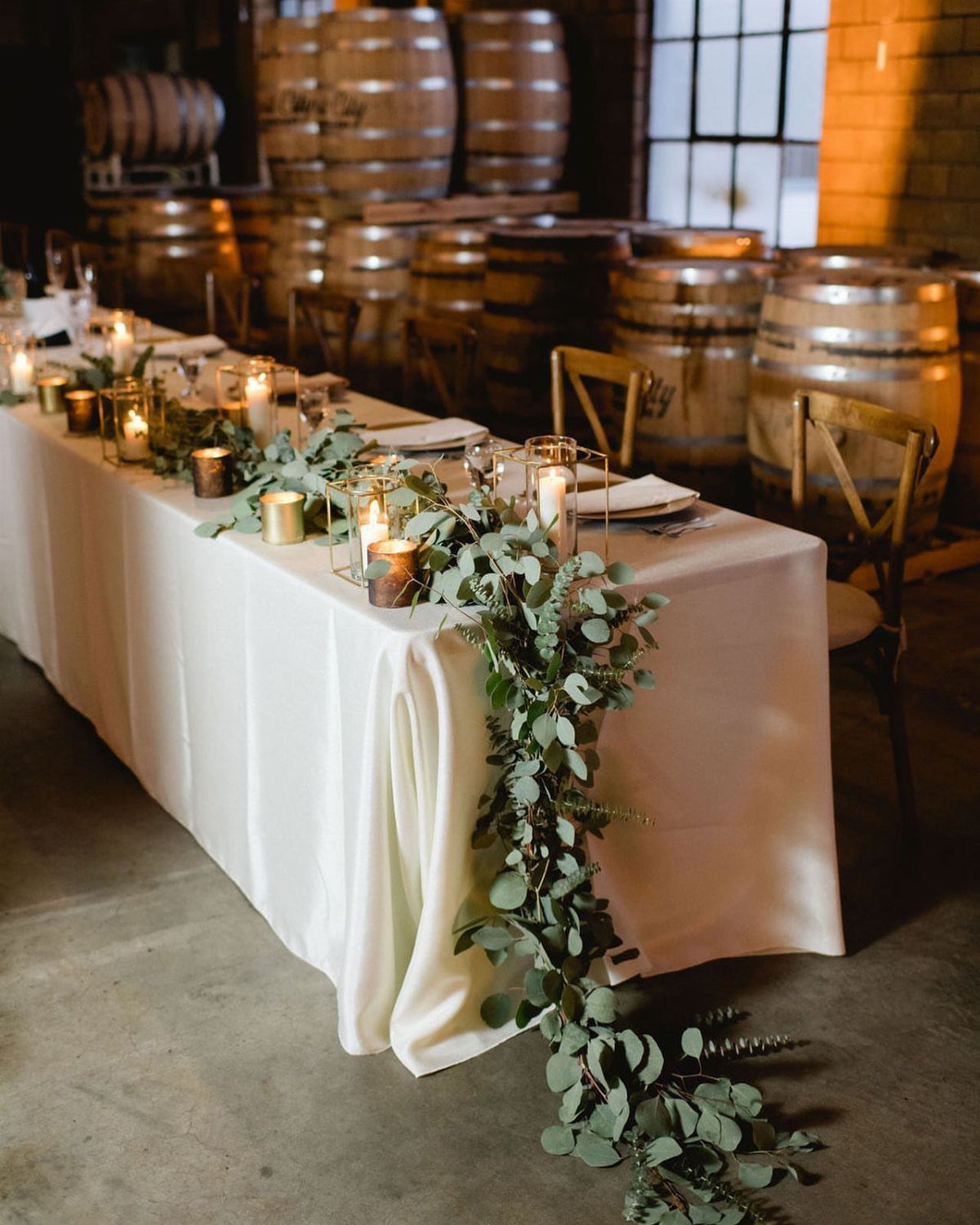
Silver dollar eucalyptus has round, gray-green leaves that read cooler and softer than pine, so it suits a white tablecloth better than a dark, heavy garland would. Run it down the center and let it drape slightly at the ends.
Candles tucked among the stems add warmth against all that pale green.
I like this for a rustic or barn-style room, where the muted color picks up the wood tones. Keep the candles in holders that sit firmly, and trim any stems that lean toward the flames.
6. Seasonal Napkin Accents

A plain napkin starts reading as a planned detail once you add a plaid bow.
Fold the cloth napkin simply, set it on the plate, and tie the ribbon across the middle; a red napkin with plaid ties in with a plaid placemat underneath.
I’d keep the bow the only pattern on the plate, or match it to the placemat, so the setting doesn’t fight itself.
Ribbon costs a few dollars and the whole job takes a few minutes per place, so it’s an easy upgrade for a crowded table.
7. Christmas Table Candles

Three tapers standing in a greenery centerpiece give the table its focal point and its light in one move. Their thin lines rise out of the green and pull the eye up from the plaid below.
I’d choose tapers over a crowd of short votives for a dinner like this.
Light them just before guests sit down so the flames are fresh when the food arrives. Candles are among the cheapest ways to make a set table look finished.
8. Ornament Centerpiece

One glass vase, a bag of ornaments and a few sprigs of greenery make a centerpiece with no real skill required. Pack the ornaments in until the vase is full, then tuck the greenery in at the top.
The red ones here look bold against the green, and ornaments from your own tree box work as well as new ones.
Set the vase on a wooden tray so the small houses and trees have an edge to sit within; the tray ties the pieces into one arrangement instead of a scatter of loose objects. That part is optional.
9. Christmas Color Palette

Pick 2 colors plus green and hold to them. Red and gold, as in this bowl of ornaments with berries and pinecones on top, is the classic pairing, and it works because nothing else competes.
Then repeat those colors on the table: gold cutlery, red napkins, candles in either shade.
I’d rather repeat two colors three times than add a third color once. Whatever you already own in those shades counts, so shop your own shelves first.
While many opt for red and green for a Christmas table, you can also think outside the box. Ghislaine Viñas suggests approaching your table the same way you would a design project.
10. Berry-Printed Tablecloth

A printed border does the decorating before a single ornament comes out of the box. White cloth with a berry and holly edge frames the table, so the middle can stay simple.
I’d keep everything else quiet: plain glasses, solid napkins, maybe a couple of small trees.
Let the print be the only pattern in the room. If the cloth carries the look, you can spend nothing else on the centerpiece.
11. Neutral Plates with Evergreen

Plain white dishes with a dark rim are already most of the way to Christmas. Evergreen branches laid between the plates and a few gold accents finish the job, so you skip buying holiday dinnerware that sits in a closet.
Short lettering on the plates, like the "Let it snow" here, adds a seasonal note. I like this for anyone who wants a festive table without a new set of dishes.
12. Decorative Linen

A red checkered cloth carries the season on its own. Spread it, set the places, and the table already reads as Christmas from the doorway.
With a pattern this strong, I’d keep the dishes plain and the walls calm, as in this white room.
One garland is plenty. A patterned cloth also hides the small spills a crowded dinner brings, which makes it a practical pick for hosts with kids at the table.
13. Party Crackers

Scraps of patterned and striped fabric, tied off with red and green ribbon, turn a cracker into a small gift. Lay one across each plate, or heap them in a bowl at the center.
I like them as an icebreaker.
Guests pull one with the person beside them, and the first laugh lands before the first dish is passed. Mismatched prints suit a table with mixed dishes, and fabric from your own sewing basket works fine.
14. Gingerbread House Centerpiece

Building a gingerbread house with the kids fills an afternoon and gives you the centerpiece when you’re done. Group a few small houses into a village, as here, and let white tapers rise among them for height and light.
I’d let the children decide where each house sits. A crooked roof reads as charm, and a child who built the middle of the table will want to see everyone admire it.
15. Ornament Trees

Cover a cone with ornaments and you get a tabletop tree that needs no branches. Mixed colors look collected rather than matched, and ornaments from your own storage box do the job, so the cost can stay near zero.
Set it in a white vase, as here, and add a few white bottle brush trees beside it. The pale pieces calm the color and keep the ornament tree as the one loud thing on the table.
16. Mantel Box Centerpiece

A wooden mantel box moves to the table with half the work already done.
Fairy lights threaded through the greenery add a glow once the room dims. If the box normally lives on the mantel, it can go back there after dinner with everything still in place.
17. Gold Tray Centerpiece

Put the tallest piece at the back of a gold tray and build forward from it. Here a white vase of pine branches and fairy lights anchors the group, with gold reindeer and small red and white trees in front.
Glass cloches over the candles turn them into display pieces instead of just a light source.
Gold, white and red is a tight palette, and I’d stay inside it rather than add another color, so the tray reads as one arrangement.
18. Quilted Christmas Runner

Patchwork already carries plenty of pattern, so a quilted runner in red and green wants quiet dishes around it. A solid red plate, as here, picks up the fabric without competing.
The runner covers only the center strip, which leaves the wood showing at the sides.
That suits a table with a good finish. A bowl of cranberries and a few mugs finish the setting, and the runner folds away to come out again next December.
19. Moss and Candle Runner

Moss laid down the center of a long wooden table gives it a forest-floor look with almost no styling.
Set pillar and taper candles in glass holders along the green, in uneven groups, and the glow reads as lanterns in the woods.
White dinnerware keeps the plates from competing with all that texture. Keep the holders clear of the moss edges so nothing dry sits close to a flame.
20. Festive Dinner Table Setting
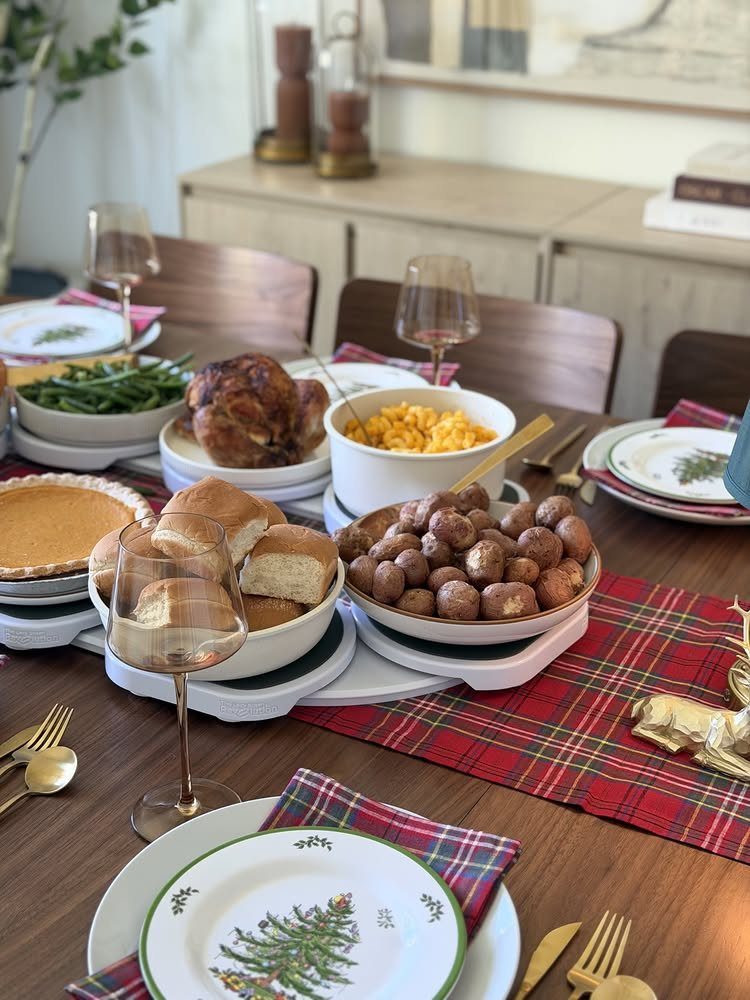
Red plaid on both runner and napkins ties a full table together, and I’d let it be the only pattern besides the plates. Gold cutlery adds warmth against the red without a single extra decoration.
With turkey, sides and pie all landing at once, the runner has to stay narrow enough to leave room for the dishes. Pick illustrated plates you already own, so the budget goes to the food.
21. Evergreen Window Garland

Hung around the window, a thick evergreen garland puts the Christmas decor where the room’s best view already is. Gold ribbons and white ornaments pick up the lights, and fairy lights behind sheer curtains glow after dark.
Space the ribbons evenly down both sides so the frame looks balanced. A window beside the dinner table lets guests enjoy the garland from their seats, and it takes up none of the table.
22. Red and Green Table Styling

Red tapers standing in evergreen branches on a white cloth make the simplest red and green table I know. The white base lets the red and green read clearly, so extra colors would only crowd the table.
Cut the branches short enough to lie flat between the dishes, and keep the candles clear of the green.
Dishes with a Christmas shape, like a tree-patterned casserole or a salad arranged as a wreath, repeat the palette on the food itself and cost nothing in decor.
23. Winter Village Table Setting

Scenic tablecloths do most of the decorating, and a winter village print puts a whole snowy street under the plates. Keep the dishes plain white, as here, so the print stays the scene.
A small bowl of red berries and a pair of red candles are enough on top.
I’d stop there. A cloth this detailed doesn’t need a tall centerpiece blocking it, and the print is still fully visible when the table is set.
24. Pink Floral Centerpiece

Pink is an unexpected color for Christmas, and it works best when frosted leaves and gold branches tie it back to the season. Artificial flowers last past the dinner, so the arrangement can come out again for other holiday meals.
Put white taper candles in the middle of the stems for height. I’d keep the cloth white so the pink is the only color on the table, and keep the stems well below the flames.
25. White Winter Table Decor
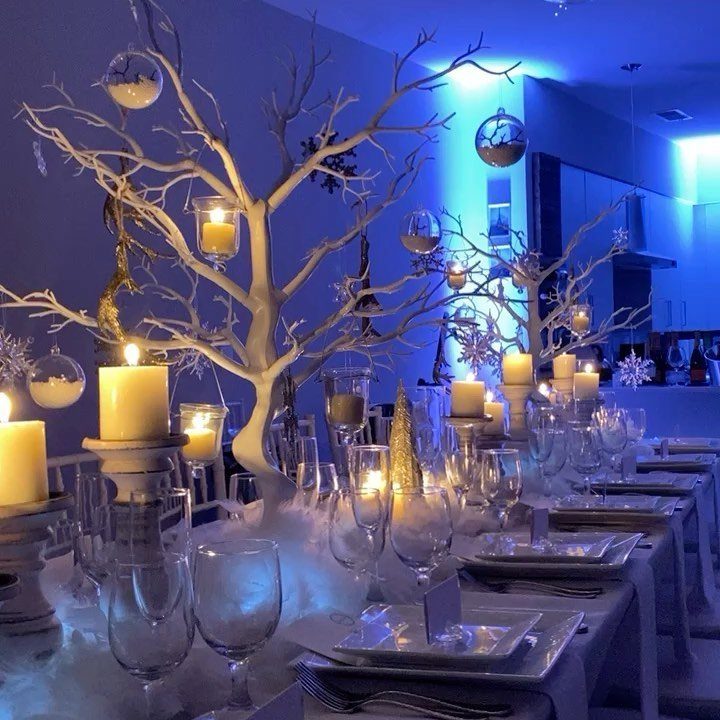
Cool white and blue turns a dinner table into a snowy night. White branches run down the center with candles tucked among them, and faux snow scattered over the cloth finishes the frozen look.
I’d keep every piece white or clear so the blue room light does the coloring.
Faux snow is cheap, and a few handfuls go a long way. Scatter it thin and keep it back from the candle bases.
26. Holiday Table with Lanterns
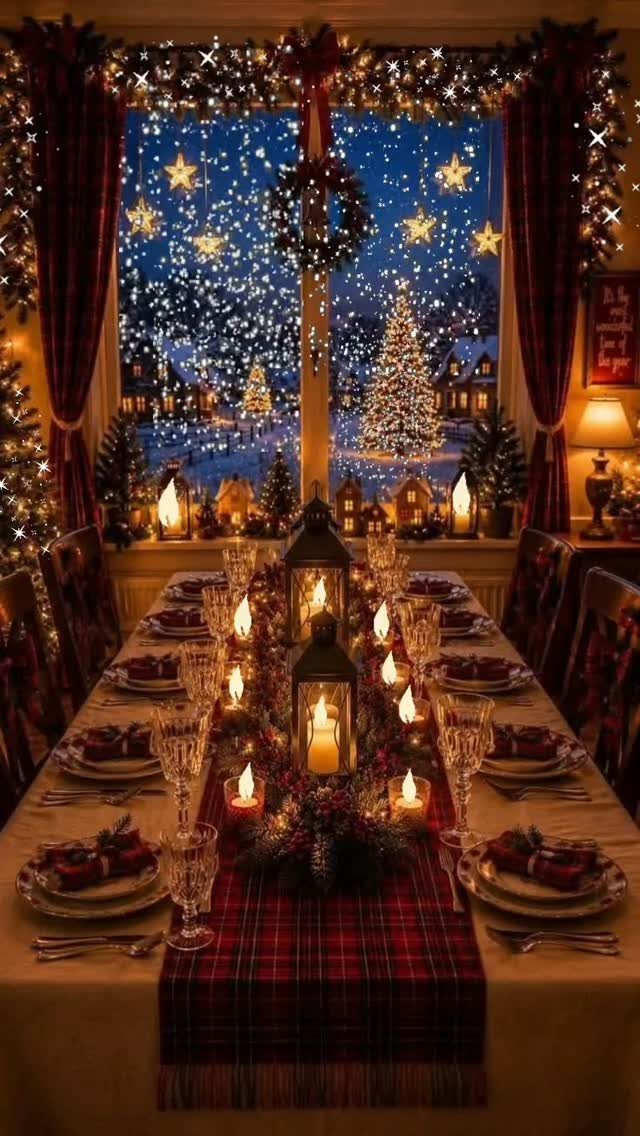
Lanterns put the candlelight inside glass, so the flames sit steady while the red plaid runner carries the color underneath. Line them along the runner with a few candles between, and the table glows from end to end.
A table beside a window gets a bonus: at night the glass doubles the light. I’d keep the runner as the only pattern and let the lanterns be the one shiny thing on the table.
27. Christmas Fruit Tree

Grapes, strawberries and blueberries stacked into a tree make a centerpiece guests can eat. Build it on a glass stand so the fruit sits up high and the dishes below stay clear.
Fruit is cheap to buy and needs no decor budget.
I’d assemble it close to dinner so it looks fresh at the table. Red napkins pick up the strawberries, so the whole setting reads as one palette.
Use Existing and Affordable Materials
Greenery costs nothing if you know where to look.
Clip it from your yard, the edge of a walking path or a hedgerow, or from the back and bottom of a real Christmas tree, where branches get trimmed anyway to fit the stand.
Take cuttings only from your own land or places where cutting is allowed, and take a little from several spots so no plant looks stripped.
Shake out dust and bugs, then let the branches sit indoors before they go near the table.
Thrifted finds can cover the rest. Mismatched jars, candle holders and small dishes cost little, and I’d tie twine or ribbon around them so odd pieces read as a set.
Practical Table Setting and Space
Start with the menu and the drinks, then set only what they call for. Every place gets a water glass; add wine or champagne glasses if you’re pouring them, and a soup spoon only if soup is on the menu.
Rehearse the layout before the day.
Set the plates, glasses, flatware and cloth napkins, then put empty serving dishes down the table. If they don’t fit, I’d thin the decor before the dinnerware.
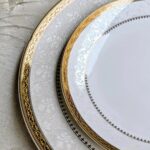
Black and white plates stacked on a wood charger give a modern table a grounded, natural feel, and a small wreath set at the center of each place setting finishes the look without crowding the dishes.
White plates with a bold Christmas design look timeless on a dark charger, and a design that strong needs little beside it.
Keep Entertaining Comfortable
Aim for a table people feel comfortable at, not one they’re afraid to touch. Simple greenery is elegant on its own, and less is more: stop adding once the table still has room to breathe.
Test sightlines before guests arrive. A centerpiece 3 feet tall blocks the view across the table, so sit in a few chairs and check that you can see the person opposite.
Low options are easy.
A run of garland down the middle of the table with a few pillar candles tucked in does most of the work, and a cake stand or shallow bowl holding a handful of ornaments fills any gap.
The table stays relaxed, and guests are more likely to linger and talk.
Frequently Asked Questions
What are some unique ideas for Christmas dinner?
Pieces that guests can eat or play with set a dinner apart. Pile apples or pears into a cone on a wooden riser and it reads as a small tree.
Wrap scraps of patterned fabric around a cardboard tube, tie the ends with red and green ribbon, and you have party crackers for each guest to pull with the person beside them.
Food can follow the theme too, like a salad laid out in a ring to look like a wreath. Each one is cheap and does two jobs at the table.
What are some creative ideas for decorating a Christmas table?
Lay moss down the center of a long wooden table and set pillar and taper candles in glass holders along it in uneven groups, which gives a forest-floor look with little styling.
A village of small gingerbread houses with white tapers rising among them works too, and kids can choose where each house goes.
For a bigger move, hang a branch from the ceiling over the table like a woodland chandelier, which also leaves more room on the table for food.