
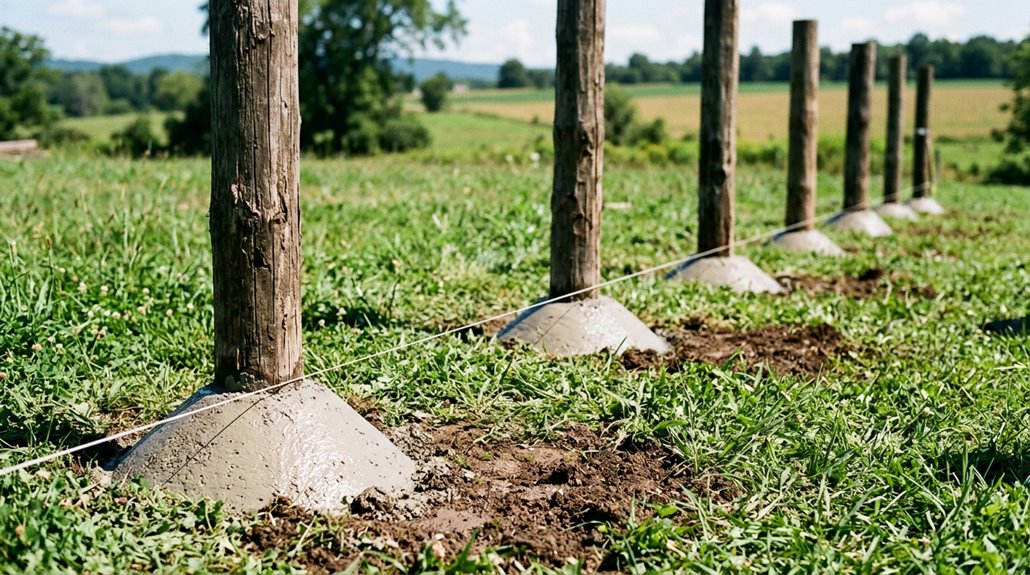
Most folks grab two bags per post and overspend by 30–40%. A standard hole needs roughly 1.5 bags, not two. Your actual number depends on hole size, depth, and whether you’ve got gravel at the bottom, which cuts concrete volume by about 20%. Frost line matters too. Colder climates need deeper holes and more concrete, sometimes doubling your bag count. Corner and gate posts demand 50–100% extra for stability. Get the specifics right, and you’ll avoid wasting cash on your estimate.
How Many Bags of Concrete Do You Actually Need?
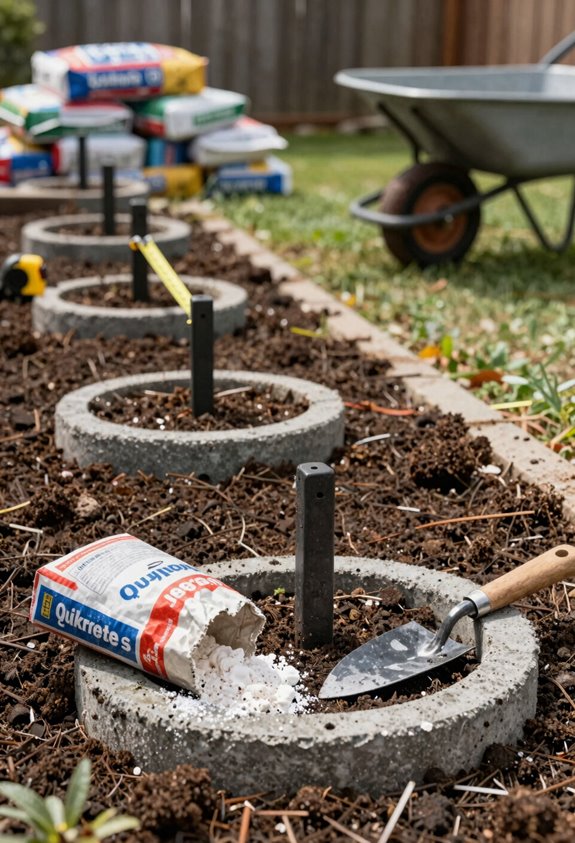
don’t overthink it. Start with 1.5, adjust based on your specific hole, and you’ll nail it.

T Post Insulator: the t post extenders insulators are applicable to farms, pastures, and the use of electric insulators to set barriers and manage their farmland; Adapting wire, polyethylene wire, polyethylene, polyethylene rope

Why Post Depth and Hole Size Matter for Concrete Volume
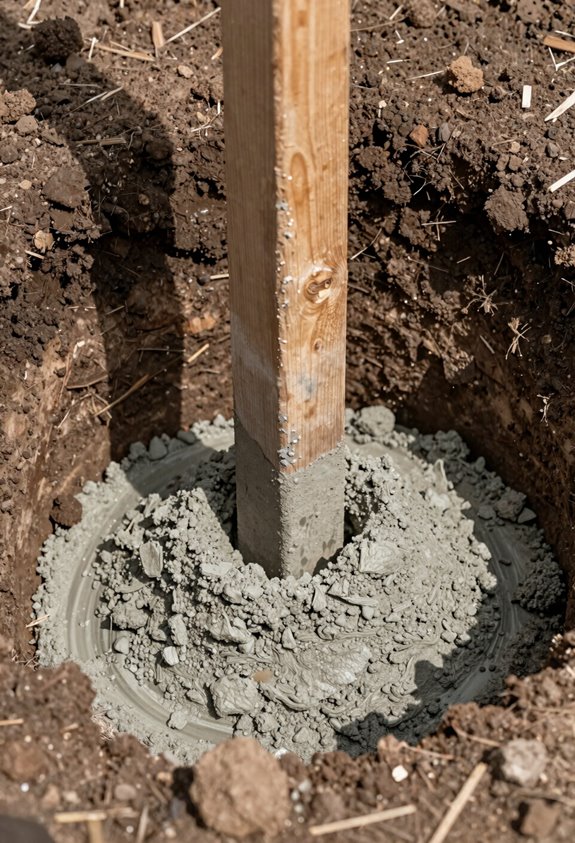
Why does hole size matter when you’re setting a fence post? Your hole diameter and post depth directly determine how much concrete you’ll actually need. Getting this wrong means either wasting money or ending up with a wobbly fence.
Consider these measurements:
- Post depth should be roughly one-third of your post length (so a 6 ft post gets buried about 2 ft), aligned with your local frost line to prevent shifting
- Hole diameter typically runs 8–12 inches for standard posts, with bigger holes needed for corner posts to distribute lateral stress
- Concrete volume depends on calculating your hole’s total volume, then subtracting what the post itself displaces
Accurate measurements ensure your fence remains stable through winter conditions and across seasonal temperature changes.

Thickened Hard Steel: Made from thickened solid hard steel, the increased thickness significantly enhances its hardness, making the post anchor strong, durable, and resistant to deformation.

Ideal for securing and stabilizing a nominal 4" x 4" post to a wood post or surface

4 Pack - 4x4 Black Powder-Coated Deck Post Connector Bracket
Calculate Concrete Volume: The Simple Formula
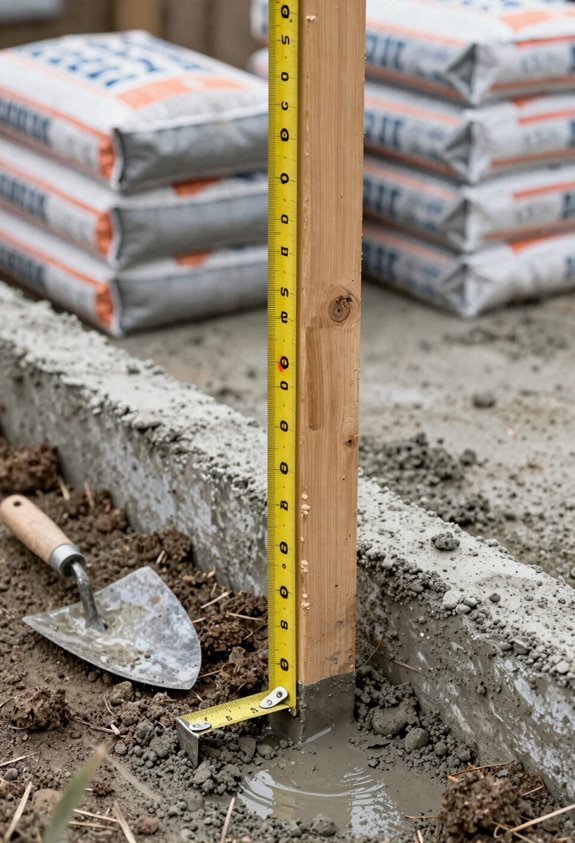
I’m going to walk you through the actual math. It’s simpler than you’d think. You basically need to imagine your hole as a cylinder (just a tube shape, really), and you’ll use this formula: V = π r² h, where r is half your hole’s diameter and h is how deep you’re digging. Most folks miss that your fence post itself takes up space in that hole, so you’ve gotta subtract what the post displaces. A typical 4×4 post takes up about 0.21 cubic feet of concrete over a 30-inch depth, which gives you the actual amount of concrete you’ll need to pour.

Comprehensive Fence Cover: enhance the cohesion of your outdoor space with a complete set of 4 vinyl hole covers; These quality items provide an integrated fence cover that elevates the overall aesthetic, fulfilling your needs for a visually harmonious environment

Multiple Uses – This lightweight 30-inch fence post is ideal for use around gardens, as well as for temporary fencing, crowd control, boundary marking, and more

FENCING INSULATOR: Electrical fencing is the most common choice among livestock managers and commercial farm owners. This means using the relevant fencing accessories too, like the round post insulator that is designed to secure electrified wires on fencing posts.
Cylindrical Hole Volume Formula
Digging a fence post hole requires knowing exactly how much concrete you’re pouring. Pour too much and you waste money. Pour too little and your post will shift around like a wobbly tooth.
Use this straightforward approach:
- Measure your hole: diameter and depth are critical factors
- Apply the formula: V = π × r² × h (radius squared times height)
- Subtract the post: the wood displaces concrete, so account for it
For a standard 12-inch hole at 30 inches deep, calculate roughly 1.96 cubic feet of hole volume. Once you subtract what your 4×4 post displaces, you get your net concrete volume. Then divide by 0.375 cubic feet per bag to determine exactly how many bags you need.
Accounting For Post Displacement
Once you’ve got your hole dimensions locked in, you need to account for post displacement. The chunk of wood you’re about to stick in the ground takes up space and will displace some of that concrete you’re planning to pour. A 4×4 fence post displaces roughly 0.21 cubic feet, which sounds tiny until you realize you’re subtracting it from your hole volume. Calculate your hole volume the normal way, then subtract what that post takes up. For a typical setup, you’re looking at around 1.71 cubic feet of actual concrete needed instead of 1.92. That difference means fewer concrete bags per hole, closer to five bags instead of six. This detail saves you money across multiple fence posts.
How Frost Line Depth Changes Your Concrete Needs
Where you live changes everything about how much concrete you actually need, and it all comes down to something called the frost line, which measures how deep the ground freezes in winter. Down South, you might get away with shallow holes since frost barely penetrates, but up North where it freezes hard and deep, you’re digging way further down and dumping significantly more concrete into that hole to keep your posts from heaving up and down with seasonal freeze-thaw cycles. A Minnesota winter versus a Georgia winter can double or triple the amount of concrete bags you’re buying for the same fence project, resulting in a totally different job.

4 Pack - 4x4 Black Powder-Coated Deck Post Concrete Anchors

[Durability]: Made of 14-gauge high durability steel with a black powder coating finish, it can prevent cracking, peeling, and rusting, ensuring a long-lasting service life.

2 Pack - 4x4 Zinc Plated Deck Post Concrete Anchors
Regional Frost Line Variations
Why does concrete depth matter so much for fence posts? Frost line variations across regions are significant and directly impact your concrete volume and post-hole depth.
Regional frost line requirements vary considerably:
- Southern zones (0–12 inches) need minimal depth, making projects quicker and cheaper
- Mid-Atlantic areas (12–24 inches) require moderate digging and concrete investment
- Midwest and Northern regions (30–48+ inches) demand serious concrete volume and effort
When planning a fence in colder climates, deeper frost line requirements mean more concrete bags, bigger holes, and longer installation times. Setting posts below that regional frost line prevents heaving during freeze-thaw cycles, keeping your fence straight and stable for years.
Depth Impact On Concrete Volume
How deep you’re digging changes everything about your concrete game. When your frost line pushes down, like 48 inches in the frozen north, your hole depth increases dramatically, which means you’re pouring significantly more concrete volume than you’d planned. The impact is substantial.
Deeper embedment depth directly impacts how many bags you’ll need. You’re not just going deeper; you’re creating a bigger concrete envelope around your post to fight frost heave. That stability you’re gaining comes at a real cost in materials. Skip this step in harsh climates, and you’re guaranteeing fence failure down the road.
Special Concrete Requirements for Corner and Gate Posts
When setting corner and gate posts, you’re dealing with something fundamentally different than a straight fence line. These spots take considerable stress and require serious reinforcement because they handle significantly more load than standard line posts.
What works:
- Gate posts need 50–100% more concrete than regular posts since they’re constantly being pushed and pulled from opening and closing
- Corner posts often use larger post holes, sometimes two to four inches bigger in diameter, for better stabilization
- Bell footings add extra strength, widening the bottom and requiring about one additional bag per post
Plan for 10–15% extra material beyond your calculations. The overage prevents weak spots that develop over time.

SOLVE YOUR DIMENSIONAL MATH: Calculate and convert quickly and accurately with ConcreteCalc Pro's powerful built-in solutions, work in and convert between building...
How Gravel Layers Reduce Concrete Needed
I’ve found that adding a 4–6 inch gravel base serves an important drainage function. Water drains away from your concrete instead of pooling there, which prevents rot and corrosion from deteriorating your post’s foundation. That gravel layer also means you don’t need as much concrete filling the hole, representing about a 20% reduction in a typical setup. When calculating concrete needs, subtract the gravel depth from your total hole depth.
The gravel benefit varies based on your soil conditions. If you have sandy, well-drained soil already, the gravel provides minimal additional benefit. However, if you’re dealing with thick clay or persistently high water underground, the gravel layer becomes a worthwhile investment.

Thickened Hard Steel: Made from thickened solid hard steel, the increased thickness significantly enhances its hardness, making the post anchor strong, durable, and resistant to deformation.

MAN-POWER SAVER: Sekcen fence post anchor supports your wood posts with no digging, concrete or mess while keep the post sturdy and long lasting; fits standard 4 x 4 (lumber size 3.5” x 3.5”) post. It truly is a time saver and man-power saver!

[4x4 Post Caps] Crafted from premium matte-finished ABS, the SIEDiNLAR 4x4 post caps offer a sleek, Whether you're updating your porch railing, deck posts, or fence line, these post caps add a clean, uniform finish that enhances your home's curb appeal with consistent style and quality throughout your outdoor space.
Drainage Benefits And Moisture
Ever notice how concrete just sits there getting soggy when water hangs around? That’s where gravel saves the day. Gravel provides several key benefits for keeping your posts dry and strong:
- Moisture control: A gravel layer beneath your concrete acts like a moisture barrier, preventing water from pooling against the post base
- Improved drainage: Water flows through gravel instead of settling, which reduces concrete deterioration over time
- Smaller concrete volume needed: Since gravel handles drainage duties, you’ll actually need less concrete depth, sometimes 20% less depending on your soil
In clay or wet areas, gravel significantly improves post longevity. You’re shifting responsibility away from the concrete itself, letting it focus on holding your fence upright instead of battling moisture. This simple addition extends the functional lifespan of your fence structure.
Concrete Volume Reduction Calculations
Adding gravel to your post hole reduces the concrete you need. The gravel layer sits at the bottom, and you subtract its depth from your total hole depth. If you’ve got a 30-inch hole with 6 inches of gravel, you’re only pouring concrete for 24 inches. That’s your net concrete volume, the actual amount required.
This calculation delivers practical benefits. Fewer bags means lighter work and reduced costs. You’re not compromising stability or strength, just allocating materials efficiently based on the gravel’s structural contribution.
Soil Type and Weather: When You Need Extra Concrete
What happens when you dig that post hole and realize you’ve hit clay so hard you can barely push a shovel through it? That’s when you need extra concrete. Soil type and weather conditions seriously impact your concrete volume needs.
Here’s what works:
- Clay or high water table soils require deeper holes and additional concrete to fight moisture and frost movement
- Freeze-thaw cycles in cold regions demand extra concrete to prevent heaving (that annoying pushing-up of posts)
- Tough soil conditions call for 10–15% extra concrete as your safety margin
Weather matters too. Heavy rain or wind days require more concrete for quicker set and better durability. Spending a little extra now prevents the expense of replacing fence posts later.
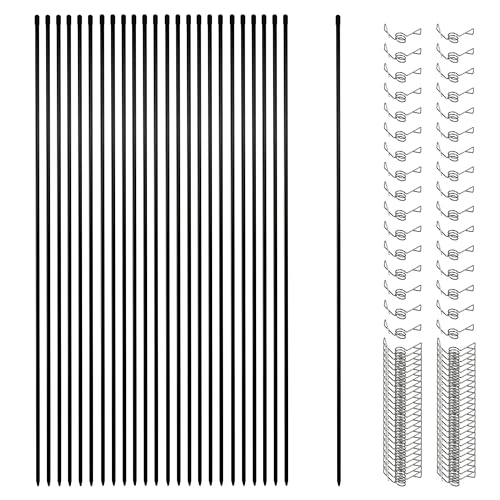
【Versatile Usage】The 45.3-inch fiberglass electric fence posts are highly functional, offering numerous benefits to different property owners. These adaptable posts can be employed to set up garden boundaries, establish temporary barriers for events, manage large crowds, or mark construction zones. Their flexibility makes them an essential tool for a wide range of fencing requirements.
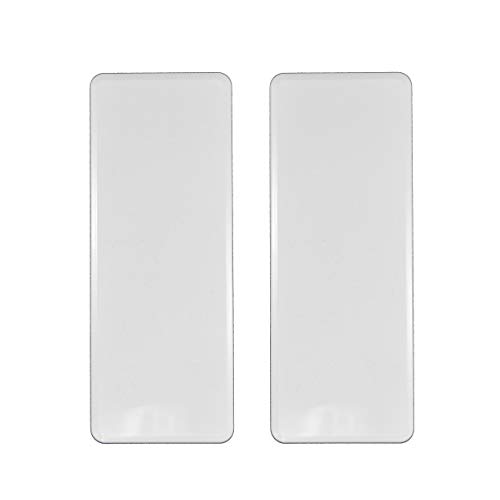
FINISHED FENCE HOLE COVER: Give your fences a finished look with Weatherables Fence Post Hole Cover, made from white vinyl and designed to fit true 1.75in x 3.5in route holes to hide the hole from view for a finished and complete look.

【NQN Upgraded Electric Fence Screw in Ring Insulators】This electric fence insulator ring is the newest generation product with 13 laps Self-tapping screws, more firmer and tighter than others. Matching NQN Patent Design Socket, this can connect to the electric drill directly, more labor-saving and efficient. With Excellent Insulation, High Strength, Sun and Rain Protection, Anti-weathering, nondeformable features, which more Eco-friendly, completely harmless to people, pets and wildlife.
Accounting for Post Displacement in Your Calculations
You need to subtract the post itself from your hole volume. When figuring concrete volume, a 4×4 post takes up real space inside your hole and won’t be filled with concrete. For a typical 10-inch hole diameter at 30 inches deep, you have about 1.15 cubic feet total. Once you account for post displacement, roughly 0.21 cubic feet, your net concrete needed drops to around 0.94 cubic feet. This is the difference between grabbing three bags and two-and-a-half bags from the store. Forgetting this step causes many people to buy extra bags unnecessarily. Subtract the post, calculate your net concrete, and you’ll determine the right amount.

Fits 4”x4” vinyl fence post .150 wall or less

HIGH QUALITY - Made of impact resistant plastic, sturdy and weather-proof.

【48 inch height with Green color】The total length is 48inch, and the height above the ground is 38inch after installation, provides additional visibility to animals, making it easier for them to see the fence and avoid attempting to cross it. The height can also be adjusted by attaching the electric fence wire or tape at different notches or hooks along the post's length. The green color blends well with natural surroundings.
Common Estimation Mistakes That Waste Material
Why do so many folks end up with leftover concrete bags stacked in their garage? Estimation mistakes happen to the best of us, and they’re frustrating when you’re standing there with half-empty bags.
Here’s what trips people up:
- Assuming one bag always works (spoiler: it doesn’t, especially for corner posts)
- Overestimating with two bags per hole when the concrete volume doesn’t actually need it
- Ignoring gravel impact at the bottom, which reduces your bag count per hole considerably
The real issue is that online calculators often overstate needs, suggesting three or four bags when you’d actually use less. Throw in post displacement and proper gravel placement, and suddenly your estimation mistakes cost real money. Typical practice sits around 1.5 bags per standard post, which is considerably less wasteful than what those calculators suggest.
What Happens When You Use Too Little Concrete
As tempting as it is to skimp on concrete and save a few bucks, cutting corners on your footings sets you up for a fence that will fail faster than expected. When you skimp on concrete volume, your posts can’t distribute weight properly into the soil, causing cracks and detachment. Posts lean under pressure, struggling against wind and ground shifts because they lack proper post stability. In freeze-thaw climates, inadequate concrete volume becomes a critical problem. Frost heaves the post upward, creating instability. Repair means completely removing and reinstalling everything with proper concrete volume. You’re not just fixing it; you’re redoing the whole job. Getting proper concrete volume right the first time prevents costly repairs, material waste, and structural failure.

Bold typography design featuring the slogan 'Sorry I'm Late There Was A Rock At 30 Inches #fenceinstaller' with a large illustrated boulder surrounded by dirt and smaller...
Precision Tools for Pouring Concrete Into Tight Holes
Once you’ve got your post hole dug and ready, the real challenge is getting wet concrete down into that tight space without creating air pockets or leaving gaps that compromise structural integrity.
Using the right tools makes all the difference:
- MudMixer or continuous mixer – Keeps concrete flowing steadily so you’re not fighting lumpy batches
- Precise chute extension – Guides your pour directly to the bottom, eliminating those frustrating voids
- Stabbing rod – Your covert weapon for consolidating concrete in 4–6 inch layers and punching out trapped air
Skipping these tools leads to problems. A fence post installed with proper consolidation techniques lasts decades, while one poured without them fails prematurely. The difference lies in eliminating voids and ensuring complete concrete contact with the post and soil.
When to Use Concrete vs. Other Post-Setting Methods
Now that you’ve got the technique down for pouring concrete properly, you don’t always need to use it. For standard line posts in decent soil, compacted backfill or gravel works fine. You’re basically saving yourself concrete bags per post with less labor involved. However, corner posts and gate posts require real concrete footings because they handle serious wind loads. Backfill versus concrete depends on your soil quality and post height. Low-tension installations allow you to skip concrete entirely, relying instead on tensioned methods. Match your post-setting methods to what your fence actually needs, not what the internet tells you to buy.